Pagina's

Showing posts with label review. Show all posts

Saturday, October 3, 2020

Some Thoughts About Final Fantasy 13-2

After finishing Final Fantasy 13, I moved right along to its sequel, Final Fantasy 13-2. Direct sequels aren't very common in the Final Fantasy series and 13 is of particular note because it has two. Considering the ways in which FF13 deviated from the series' conventions I was excited to see how these direct sequels would learn from and iterate upon its predecessor. Today we're talking about Final Fantasy 13-2, a direct sequel that takes place two years after Final Fantasy 13.

Timeless Beauty (Presentation)

The environments in Final Fantasy 13 could really take your breath away, and 13-2 is no different. As a matter of fact, you visit so many locations at so many points in time that it has greater visual variety. You'll be exploring the usual valleys and fields, but highly technologically advanced locations as well - and just about anything in between. I found myself constantly distracted by the dozens of beautiful views this game has to offer.
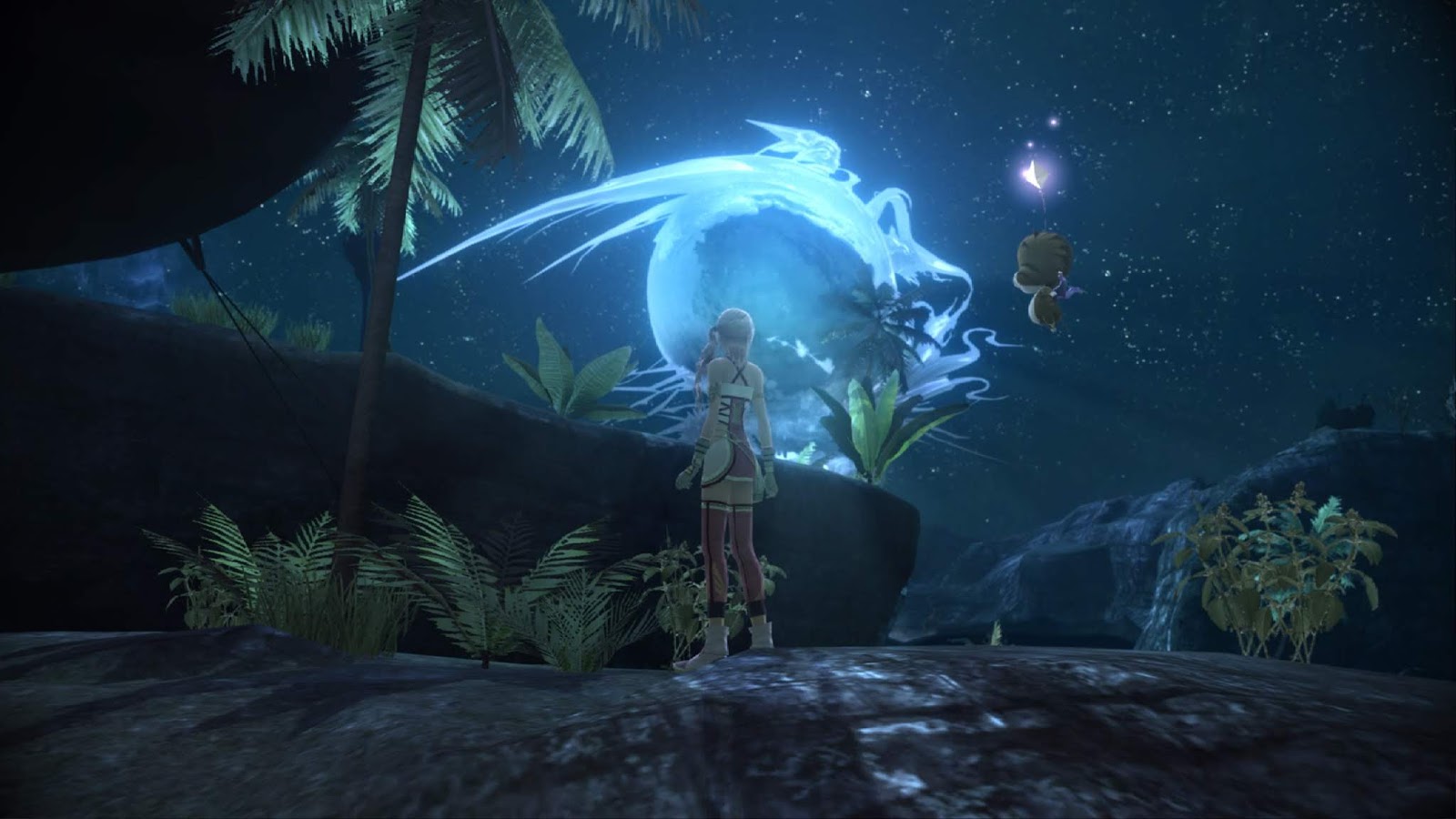


A lot of the enemies and music are re-used from Final Fantasy 13. It makes sense, considering it takes place in the same world, but it's still something to consider. We'll get into the gameplay side of this later, but 13-2 has a lot more optional content and a lot more NPCs to talk to for sidequests. Their voice acting is generally fine, but there's a very limited amount of different models with very limited animation. It can be a little bit grating to watch the repetitive mouth flapping of the same face you've seen a few dozen times after watching the truly gorgeous cutscenes reserved for the game's important characters.

13-2's soundtrack can be described as having higher highs and lower lows than its predecessor. Most of the battle themes you'll hear are excellent, combining synth with orchestra to emphasize the game's journey through different time periods.

https://www.youtube.com/watch?v=wdframgnBVE

But some tracks have an almost 'grunge metal' feel to them, with screaming vocals that absolutely do not fit the beautiful landscapes and emotional story of a Final Fantasy game. The track that plays when you ride a red Chocobo, 'Crazy Chocobo' is infamous at this point. Listen at your own risk:

https://www.youtube.com/watch?v=hEUOOgNzOv4

In short, FF13-2 offers more visual variety, especially in environments, but NPC and enemy designs are still regularly re-used and not particularly impressive in the former's case. The soundtrack recycles some tracks from 13, but the original pieces are mostly excellent. A few of the tracks are bad.

Time's Teachings (Gameplay)

Final Fantasy 13-2 is an evolution of Final Fantasy 13 in many ways. In this segment, I'll focus on the ways 13-2 differentiates itself in its exploration and battle system.

The endless complaints about Final Fantasy 13's overly linear nature were clearly heard and applied to 13-2.  While there are still linear segments, the game opens up almost immediately and many of its environments feature branching paths or are completely wide open. Not only that, there are many optional locations and time periods to visit for players who explore thoroughly. As free and open as the exploration is, though, the areas and time periods can feel a little disjointed because you access them from a somewhat disorganized level select screen referred to as the 'Historia Crux.' This is a small price to pay for the sheer amount of freedom and optional content, however.

Some small things were added to the exploration in 13-2 as well. You can now jump at will, and you can find secret treasures hidden in the environment by using your companion Moogle's special detecting ability or by throwing him to treasures out of your reach, an act that he very much doesn't appreciate. Enemy encounters have also been reworked; FF13 did away with random encounters entirely with enemies simply existing in the overworld. 13-2 partially returns to the traditional system, with enemy encounters appearing at random in the overworld, but not necessarily initiating a battle like the JRPGs of old. Once an enemy appears, the player can choose to try to run away, or deal a first strike on the enemy to gain an advantage in battle. This system allows you to grind certain types of enemy more easily, but can be frustrating in cramped areas when faster enemies that can actually chase you down spawn. 

In FF13's linear environments, there weren't many NPCs you could actually interact with. In 13-2, however, there are a boatload of NPCs with sidequests and lore, although most sidequests boil down to finding an item in the area or killing a specific enemy. The best sidequests play with the game's theme of time travel and have you visit an area in multiple different time periods to figure out what to do. The game even has a lot of dialogue options, but we'll discuss those in more detail under the story segment.

One final thing to mention about the exploration is that sometimes, to progress, you need to resolve a 'paradox' by solving a puzzle. These puzzles offer some welcome variation when done on occasion, but can often overstay their welcome by either being simple and repetitive or frustratingly hard. As an example of the former, there are puzzles where you just connect crystals of the same color over and over again. As an example of the latter, there are complex clock puzzles that would take more time to explain than they're really worth, but basically, you move the arms of a clock to numbers which then decide how many steps you can move the arms of the clock again, and using this method, you need to find a way to have the clock stop at every point without ever landing on the same point again. If that sounds confusing, that's because it is.

So, all in all, the exploration has changed a lot. But what about the battles?

Final Fantasy 13 shifted a lot of the focus in battles from actively choosing options to preparing and switching between 'paradigms,' where you assign each character a role like Commando or Medic. Final Fantasy 13-2 uses the same system but expands upon it in a few ways. For starters, your characters throughout the entire game are Serah and Noel, and you decide which Roles to teach them when as you level them up. This means that you not only need to think about which paradigms to use, you also need to choose between improving your current roles/paradigms or learning new ones. 

It is a little disappointing to only have 2 characters instead of Final Fantasy 13's six, but the other addition to the battle system makes up for it: monster taming. Most monsters you encounter can be tamed and acquired for use in battle. The third party member in any paradigm is a tamed monster of your choice and there are dozens upon dozens of monsters you can tame, level up, combine with each other for powerful passive abilities and even name and equip with cute cosmetics. 

Unlike Noel and Serah, tamed monsters only ever have one Role, but that makes sense considering the sheer amount of tameable monsters you can acquire.

Next to the major additions, there are also minor conveniences. A paradigm shift now happens without a small cutscene demonstrating to which role each character has switched, and if the character the player is controlling gets knocked out, you automatically switch to the other instead of getting an instant game over.

You'll notice that these additions do indeed expand on the system that was present 13, but don't fundamentally change it. I have a lot of respect for the decision to not throw the baby out with the bathwater here. A lot of people complained about the streamlined battle system in 13 because it was different, not because it was actually fundamentally flawed on a game design level. It's very satisfying to plan out some perfect paradigms and then watch your team destroy an enemy with little effort thanks to your thinking ahead, and this game pushes that system even further with added convenience and customization.

I think most of the changes made in 13-2 are for the better, but there are a few bad ideas mixed in. One of those is the quick time events in cutscenes. Usually the finishing blow against a boss is handled by awkwardly performing a series of timed button presses over a cutscene, which feels unnecessary and pretty tedious. It feels completely contradictory to how the battle system works - you've spent all this time planning ahead, setting up your Paradigms and switching between them - now watch an elaborate cutscene where Noel and Serah destroy the boss while you press the buttons it tells you to. Considering this only happens after major boss battles, though, it's not too much of a bother.


All in all, Final Fantasy 13-2 is a shining example of listening to feedback while maintaining your vision. Exploration was massively expanded, with huge open areas and optional content to explore. Random enemy encounters in the overworld generally allow for easier grinding and monster taming, but can be tedious if faster enemies spawn in enclosed areas. The 'paradox' puzzles add nice variety but outstay their welcome if you're trying for full completion.

13-2's battle system is fundamentally like 13's but with more customization. The quality of life improvements and extensive monster taming system make this one of the most fun and addictive JRPGs I've played, though the QTEs tacked at the end of some boss battles can sour the mood a little bit.

Broken Timeline (Story)

As its name implies, Final Fantasy 13-2 is a direct sequel to Final Fantasy 13. As such, there will be Final Fantasy 13 spoilers in this segment.

The Premise

The story of Final Fantasy 13-2 takes place a few years after Final Fantasy 13. It's immediately apparent that something is different from what we remember. Lightning survived the events of FF13, but when the story begins in 13-2, it's believed by everyone that she died in the battle to save Cocoon and disappeared alongside Vanille and Fang. The only person who remembers otherwise is her sister, Serah, who is one of the two main characters in this game. This premise is immediately quite interesting and it's hard not to feel sympathy for Serah. She's spent a few years knowing her sister ought to be alive because she actually remembers it happening, but almost everyone else thinks she's just been in denial all this time, incapable of accepting the simple truth.

She finally sees her memories validated when Lightning, who is now stuck in a place outside time known as Valhalla, sends a person called Noel her way. Noel is the second main character in FF13-2, a hunter from a horrific future where all of humanity has died out and he is the last remaining person. Noel brings Serah a message from Lighting; that the timeline has been messed with, leading to Lightning's disappearance and the existence of this awful future. Noel and Serah set off on a journey through time together to find Lightning and prevent this apocalyptic future from ever taking place. To help, Noel has also brought Mog to help Serah. Mog is a Moogle who can transform into a bowsword and be wielded as a weapon.

After Serah time travels for the first time the story structure goes on a little bit like this: Serah and Noel enter a new area and time period and discover there is a 'paradox' to resolve before they can move on. Paradoxes are things that don't belong in that specific time or location but have ended up there due to the damage the timeline has suffered. They resolve the paradox, open one of the 'time gates' in the area, move on to a new time/location and the cycle repeats. Along the way, they gather clues as to what caused the timeline to change the way it did in hopes of ultimately saving Lightning and the future itself.


The Characters

The protagonists of the story are Serah Farron and Noel Kreiss. Serah is a returning character from FF13, where she played a central role in the story as Lightning's sister and Snow's fiancée. A major goal in the story of FF13 was to save Serah from her crystallized state, which makes it interesting that the roles are reversed in this game, with Serah setting out to save her sister Lightning. Noel Kreiss is a new character, a time traveler from a distant future he wants to prevent from ever happening. They're accompanied by Mog, a Moogle sent by Lightning to help Serah. Serah is a very likeable and sympathetic character and we can empathize with her goal of reuniting with her sister. She does have some character flaws, like a dangerous temper, but this unfortunately doesn't come up very much in the story, which may lead some people to feel she's a bit too perfect as a person. Even though the premise of the story very much makes it look like this is all about Serah, I actually felt Noel was the real 'central' character. The journey to reunite with Lightning often feels like it takes a back seat to the journey to save the future he's from, and most character relations and interactions revolve around him. For example, Caius and Yeul (more on them later) have a connection to Noel, and when returning characters like Snow appear, they mostly clash with Noel while Serah stays in the background. To push this point further, the leitmotif that appears in all the battle themes comes from 'The Last Hunter,' which is Noel's theme. I'm conflicted about this because I think it's great they brought a new, well fleshed out character to the table but it's disappointing to see Serah fall into the background again after she spent most of the last game frozen as well. Mog is a cute character, but he's mostly there for comedy and doesn't have much to learn or achieve in the story outside of an optional quest about his home. But the victory animation where Serah hugs him is heart meltingly adorable, so at least there is that.

The antagonist of the story is a mysterious man called Caius Ballad. He fights with Lightning at the very beginning and follows the protagonists through their time travels, fighting them or hindering them at every opportunity, proclaiming that changing the timeline is a 'sin.' He's accompanied by a mysterious girl called Yeul. Caius is easily the most sympathetic and interesting villain from these three games. I can't fully explain why without getting into spoilers, but to give a brief overview: he's been made immortal to serve as Yeul's guardian, but Yeul is not immortal. She, instead, dies and is reborn as a new person time and time again. Witnessing this girl die over and over and over is what drives Caius to do the things he does in the story and paints his otherwise horrible actions in a sympathetic light. Yeul herself doesn't really have the opportunity to become an established character because every time you encounter Caius, he's with a different Yeul from a different timeline. As a result, who I'm calling 'Yeul' is actually a group of several different characters with the same voice and appearance, none of whom get very much time to be developed. It makes for an interesting character concept, though, and some Yeuls get more screentime than others.

The returning characters from FF13 are a mixed bag. Lightning provides a strong opening for the story but then passes the torch on to Noel and mostly stays in the background for the rest of the game. Characters like Fang, Sazh and Vanille barely appear at all. 


That leaves Snow and Hope, and I have a lot to say about both. I'm very disappointed in the way Snow is, or rather, isn't implemented in this story. After Serah confides in him that she remembers Lightning being alive, he proves himself the worthy fiancé by believing her without hesitation and going off to find Lightning, something that makes me like him even more than I already did. But then he just stayed away for 3 years, never coming back to Serah. When you run into him again, he's gained a stupid haircut and a new fal'Cie brand. Even weirder, there's barely any chemistry or interaction between him and Serah at this point. I really don't understand this, but the best I can think of is that the developers wanted to leave room for a Serah and Noel romance instead. Snow mostly just clashes with Noel and disappears from the story after you fight alongside him in one of the time periods, with much of what he did in the past years relegated to the data logs you can read. Most encounters afterwards are optional. Hope, on the other hand, plays a much better role in the story. He's grown up into a renowned scientist who is playing an important role in the recovery of society now that the fal'Cie are no longer functional. He believes Serah and Noel are indeed time travelers and is very eager to help them for the sake of the friends he fought alongside in FF13. He and his attempts to help facilitate a better future play a major part in the story across multiple time periods, and I only wish other characters from the first game had this kind of presence as well.

Thinking back on FF13-2 made me realize that the game's cast of important characters is pretty small. This might be a consequence of people complaining about how convoluted the story got in FF13. The only other significant side character I can think of is Alyssa, Hope's assistent. Because she's with Hope, she gets a lot of screentime, and she's actually an interesting character. The only other newcomer that sticks out to me is Chocolina, an enthusiastic Chocobo girl and trader, but she only really comments on the story rather than being part of it. Her origins aren't even explained in the main story. 

Pacing & Progression

FF13-2's story can often feel like many smaller stories stringed together. The overarching story has a strong presence near the beginning and end, but sometimes feels like it takes a backseat to the immediate threat or conflict in each given time and place. In a few words, the story feels episodic and disjointed. Many threats and enemies occur simply as a result of "meddling with the timeline," and don't really relate to Caius at all. Other conflicts do relate to Caius, but this is only explained if you happen to come across a specific bit of lore or an alternate ending. This problem only gets worse if you take the time to do all the optional content as it becomes available.

It should be said that just because parts of the story are disjointed, that doesn't mean each individual part is bad. I'll keep it vague to prevent spoilers, but at one point in the story, you enter a city in the future. This city is in a truly awful state, a miserable place to be for you and all its inhabitants. Due to some actions in the past, you then create an alternate 'good future' version of this city. Entering this 'good future' version was one of my favorite moments in the game because it communicates so clearly that the future can be changed. It's a hopeful thought that plays into the overarching story quite nicely and gives a clear sense of progression that most other areas lack. 


Quests & Optional Content

Due to the disjointed nature of the story we established earlier, it can sometimes be hard to follow. Many things are explained in the data logs, and a lot of lore is hidden within optional areas or quests. Some of the best character moments and interactions, especially between the FF13 original cast, are found in worlds that can be completely skipped over if you simply want to go straight to the end. This could've been a cool extra if the main story wasn't so starved of good interactions between the original FF13 cast to begin with. But with the caveat that some of the optional content probably should've been integrated in the main story, there is a lot of good optional content. Each unique location in the Historia Crux has its own story and its own problem to solve.

The Ending

This segment and article have already run on for much too long, so I can't fully do the discussion about FF13-2's ending justice here. But if you've heard anything about the game, you'll know that the way it ends is controversial and my opinion on it is very mixed as well. If people are interested, I may write an article just about the ending.

In Summary

FF13-2s story starts with a strong premise and characters with understandable and believable motivations, but the overarching story often falls into the background and ends up feeling disjointed in the middle. It may be disappointing to FF13 fans just how meager the presence of the original FF13 cast is and how few their interactions are. There are many highlights, however, like the antagonist Caius and several very compelling optional locations and quests.


After All (Conclusion)


Final Fantasy XIII-2 is, in most ways, a perfect example of how to make a sequel. It takes FF13's attempt at streamlining JRPG combat and makes it more involved, faster, more customizable and all-around more fun. The QTEs are a mistake, but they're rare enough that they don't ruin the experience. It allows for much more open exploration and has many hours of optional content to offer that doesn't just involve talking to a stone that asks you to kill some enemy.  Its presentation expands and experiments, and this is generally a success as well - I come back to its battle themes almost every day when I need something exciting to listen to. 

The only major disappointments the game presents are in its story. While its opening and arguably ending are strong, the main quest often falls into the background of only tangentially related conflicts. The cast from FF13 has a limited presence and many things are not well explained in actual dialogue and scenes, being resigned to data logs instead. That's not to say that the separate fragments of story are not good, but that they sometimes lack a proper connection to each other, and rarely ever connect back to Final Fantasy 13.

All in all, a great sequel - the story just wasn't what I hoped it would be.

_

Wow! It's been a few months since I wrote any articles. I've been stuck on this one for a while because I wanted to articulate how good 13-2 is, but also how many frustrations I have with the story. I hope it was a good read and I hope my next article won't take as long. Stayed tuned, and all feedback is appreciated!


Monday, September 2, 2019

Some Thoughts About 'Bloodstained: Ritual of the Night'

Ritual of the Night represents another Kickstarter project by a group of dedicated developers to revive a series the company that originally made it abandoned. In this case, the man at the helm is Koji Igarashi, the designer of famous PlayStation classic Castlevania: Symphony of the Night. Bloodstained: Ritual of the Night is a spiritual successor, a revival of Symphony's flavor of Metroidvania which is sometimes called Igavania after its designer.

I was recently able to experience this game, and streamed it from start to finish. I'd like to share some thoughts about it. I'll focus on what the game learned from its predecessors, and to contrast, on what's brand new.

Ancient Rituals, New Rituals (Gameplay Comparison)

Ritual of the Night draws from many of its Castlevania predecessors. Like any Metroidvania worth its salt, it offers a huge area to map out and explore as you gain more abilities and knowledge, but it's easy to name a few specific inspirations.


The game draws from Symphony of the Night - including its name -  but actually has very strong parallels with Castlevania: Aria of Sorrow and Dawn of Sorrow. Like Soma, the protagonist of those games, Miriam absorbs the abilities of the demons she fights. In Soma's case, he collected their souls; in Miriam's case, she collects their "shards" - which is functionally the same thing. In fact, Miriam's abilities as a Shardbinder are a logical evolution of that system after Order of Ecclesia had its own iteration with Shanoa's Glyphs. Soma could equip an offensive, defensive and passive soul - 3 in total. Miriam can equip 5, and the additions can be attributed to modern hardware. The GBA and DS don't have many buttons to manouver with and no joystick, so the Directional Shards that Miriam can use could never work on those systems - they require 360 degree rotation, after all. These new shards offer Miriam some mobility and attack options no other Castlevania hero has had. and the sheer amount of shards in so many categories means you could play the game a dozen times and still find new synergies.


Bloodstained: Ritual of the Night has a town with friendly NPCs. Like in Aria and Dawn, these NPCs buy and sell items. Like in Castlevania: Order of Ecclesia, the townspeople also give you quests. There are also many parallels between Ritual's story and that of another Castlevania, but you'll have to play it to find out which. Another point about the town - Ritual of the Night has dedicated crafting system. Johannes, the Alchemist, can craft all sorts of items for you - and even food items, which give you permanent stat increases. The permanent stat increases represent something completely new for the 'Igavania' genre. I had an absolute blast trying to make as many dishes as possible. I've always really appreciated games that incorporate cooking, like The Legend of Zelda: Breath of the Wild or Paper Mario (I will use any excuse to bring that game up) - after all, what's more relatable than improving yourself by eating good food?


Miriam also moves at a good speed and has many possible ways to attack enemies depending on your preference. Guns, swords, spears or a good kick to the face; whatever suits you, and every playstyle has secret combos to discover and experiment with. These combos can even be mastered so they can be used with even more weapons. Combine that with the aforementioned shards, all of which can be upgraded in two ways for even greater effects, and you've got hundreds of ways to play. The variation is truly impressive.

All in all, Ritual of the Night is the sum of many great ideas across the Castlevania franchise with improvements across the board and a few great new ideas. It plays it fairly safe, but it's everything a revival of the genre could hope to be.

Rebirth (Presentation)

Ritual of the Night got a lot of flak when the first gameplay footage came out. With weak lighting and a distinct lack of vibrant color and contrast, people began to worry that they might have another Mighty Number Nine (a famous example of a Kickstarter game that failed to meet expectations) on their hands. But instead of ignoring the fans or labeling them as haters, the dev team took the criticism to heart and delayed the game to overhaul the visuals completely. And the results really do speak for themselves - Bloodstained: Ritual of the Night turned out very pretty indeed. It's fascinating that Ritual of the Night represents a rebirth for its particular kind of Metroidvania, but that the game itself also had such an extreme overhaul.


The characters and enemies are all very distinctive, and the amount of detail is appreciated - for example, each weapon has a unique look and each equippable hat or headpiece shows up on Miriam in game as well. You can also customize various other facets of Miriam's appearance, like her hair, hair color, skin color and clothes, among others. There are a few decorative objects in the background that could use a few more polygons, though, and Miriam's swimming animation is very odd and basic (she basically stands upright and waves her arms a bit). But while there are minor rough edges, all in all the game looks beautiful.


The game has voice acting, and I feel the voice actors did a good job. Unfortunately, there are some problems with how the game uses the voice acting; for example, some attacks will cause Miriam to call out the name of the attack or some other vocalization, every single time the attack is used. In a hectic battle where you're trying to sneak attacks in every second, hearing Miriam's voice clips repeat can get pretty grating. This is purely a problem with the implementation of the audio. For example, why not give a voice clip a 10-second cooldown after it's been used so you don't get so many repeats? Many of the voice clips could've used a few more takes, as well, just for variation. Implementation aside, though, the performances are great. It should also be mentioned that the game stars David Hayter, famous for doing the voice of Solid Snake, as Zangetsu. It also stars Robert Belgrade, who did the voice for Alucard in Symphony of the Night on the PlayStation. It's a real treat to hear David Hayter's gravely voice from Zangetsu, and seeing Robert Belgrade symbolically return to the role he's most known for is poetic, not to mention his excellent performance and deep voice.


The soundtrack is brilliant and I have no gripes with it whatsoever. Michiru Yamane, the genius composer responsible for so many classic Castlevania soundtracks, handled this game's soundtrack and she outdid herself again. Every track represents the atmosphere of the moment or environment perfectly, and many of them instilled a sense of wonder in my as I listened to them. The Garden of Silence is one of my favorite tracks:


The game's presentation has a few rough edges in its visuals and audio implementation, but the plentiful creative designs, great looking models, great performances and excellent soundtrack make it a treat worth experiencing. 

Shards of a Story (Narrative)

Bloodstained: Ritual of the Night's overarching story is very similar to the Igavania Metroidvania's that came before at its core. A castle has been summoned from Hell, and it's up to our hero with her special powers to send it back where it came from. The backstory is a little different, though, as there's no Dracula in control of the castle this time. Rather, the castle was summoned by Gebel, a Shardbinder (people who can absorb and use demon powers, like Miriam), as revenge for how the Alchemists sacrificed the lives of so many Shardbinders to summon demons to our world. As Miriam and Gebel were friends, she makes her way to the castle to see what has happened to her old friend and what has driven him to take such drastic measures - and to stop him by force if necessary.


As usual, I don't want to spoil the story, so I'll keep this vague:

There are a few emotional moments in the story, and while they are well written, we spend so little time with the characters that the impact is lessened a bit. The game is definitely not focused on its story too heavily, with much of it hidden in optional conversations with the alchemist Johannes and on the bookshelves you can encounter. You spend much of your time exploring, and it can be easy to forget all about Gebel and the tragic story of the Shardbinders when you're just running through the halls kicking demons to death and having a great time. But even though the time you spend with them is limited, the characters are pretty well realized and the dialogue is enjoyable. Miriam in particular is a very likeable protagonist with a friendly and enthusiastic demeanor, in contrast to Shanoa from Order of Ecclesia who was (justified by the story) lacking in emotion and expression.

In short, the story is fine; it offers enough justification to move the game along and has interesting and entertaining characters, but it mostly stays in the background and can easily be ignored, for better or for worse. This does mean that when emotional scenes come along, they may be less impactful.

Conclusion

Bloodstained: Ritual of the Night is everything it sets out to be. Learning from the best ideas of its predecessor while implementing a few new ones, it's truly a revival of the 'Igavania.' It's big, it's fun and there are more ways to play than you can count. Its visuals thankfully got a necessary overhaul before release, and the results are a shining example of how taking feedback to heart can lead to major improvements. There are rough edges, but it's hard to be judgmental when you see how far the game has come. The game's audio is fine, with only some repetitive voice clips potentially harming your immersion. The soundtrack is a magnificent work of art. The story, like the game, is classic - but with new elements. It unfortunately stays in the background to the point that you may not get invested, but this will vary from player to player.

_

And that's it. I had the pleasure of streaming this game, and it was a really amazing experience for me. Streaming the game definitely helps me get my thoughts out as I play through the game. If you've played Bloodstained: Ritual of the Night, did you enjoy it? What were your favorite Shards? How did you customize Miriam? All thoughts are welcome in the comments below and I'd be happy to answer any questions.


Monday, August 26, 2019

Some Thoughts About 'Nine Hours, Nine Persons, Nine Doors'

Nine Hours, Nine Persons, Nine Doors (which I'll refer to as 999 from this point) is a puzzle game which alternates between visual novel sections and escape room segments. It's famous for its inventive puzzles, complex story and branching narrative based on your choices. I have a history with this game - when it came out in 2010 (amusingly, 9 years ago) a few critical plot details were spoiled for me. That, combined with my lack of confidence in my ability to solve the escape rooms, dissuaded me from playing the game for a long time. Just a few days ago I saw the game's PC rerelease was on sale, and decided it was finally time for me to try it.

Find a Way Out (Gameplay)

The main 'gameplay' in 999 is in the escape rooms. You're given a quick overview of all the rooms and angles, and a simple objective: Find a way out. The way it controls is no different from what you'd expect in a point & click adventure. You click on objects in the environment to interact with them, either to examine them, pick them up or use an item on them. You can also combine items you've picked up to potentially create new items. The game does take advantage of the fact that the items are in 3D; papers will often have hidden messages on the back that you can only find by rotating them, and holding items at a certain angle may help you figure things out.


The item menu is clearly designed to be simple, so the items are big and central. This is usually fine, but scrolling through or finding the right combination can be a little tedious if you're carrying a lot of items. This usually won't happen if you're solving a room in the right order, but it can happen.

In escape rooms, you're stuck with a few predetermined angles that you can move between. This is a bit restrictive, but it ensures that wherever you look, there will be something of interest.


If I had one point of criticism that isn't just a minor quality of life improvement, it's the inconsistencies with which information is stored. You have an item menu for items, but there is also a 'file' menu where important papers are stored. Some papers end up under items, some under 'file' which is a bit harder to reach. This would be easy to fix by combining the item and file menus and simply allowing for more text to be displayed on the item menu.

Beyond that minor gripe, I had a great time solving all the rooms and it was always a good feeling when you slowly see the exit open as soft music begins to play and you're greeted with a simple, clear message:


From Two Screens to One (Presentation)

I played the PC version of 999, which is a remake of the DS version. There are clear improvements - all characters have larger resolution portraits and animations, the music has been redone and the visual novel sections have been provided with full voice acting - and you can pick the original Japanese version or the English translation, whatever suits you. This is a very significant improvement and makes the remake worth looking into even for people who played the DS original.

The characters and unique illustrations for important situations look great, but the escape rooms - which seem like they're changed the least from their DS versions - are very simple and varied in quality. In the picture above, you'll have noticed that they had to tack the word 'cheese' onto those yellow blocks to get across what it is. There are also many items that really could've used some more polygons and better textures, but in the end, it gets the job done - and the characters are still the main attraction. Each one is very distinctive.


As I mentioned earlier, the soundtrack has also been redone. It's very effective at what it does and the tracks lend a lot of tension to the rooms. Most of the tracks aren't exactly the kind I would listen to for fun, but there are a few standout tracks I really did enjoy. Here's an example:


Branches (Story)

999's story is worth the price of entry all by itself and I don't want to spoil it, so I'll keep this short and just list a few general selling points to convince you to try it:

- 999 has an intense, high stakes story. As its name implies, 9 people are put together in a deadly situation and forced to play a sadistic game known only as the Nonary Game. In this game, they players have only 9 hours to escape with their lives. Who do you trust? Who do you group up with?

- The cast of characters is distinct and well written. You'll undoubtedly take a shine to a few of the characters and start to dislike certain others; they're all very unique and it's a treat to see how they respond to each other and the various situations they end up in.

- 999 has a branching narrative and multiple endings. The real fun is in seeing all the different ways things can go and the game has a few useful functions to help you out with that. From the start, you have access to a flowchart that shows you exactly where the story branches and where critical decisions happen. You can jump to any part of the flowchart at any time, no strings attached, so if you regret your decision or want to try a different combination of choices, you're welcome to do so.


Conclusion

999 is a puzzle game with sharp writing, amazing characters and a branching narrative - not to mention vibrant animated portraits for the characters and heart pounding music tracks from start to finish. The game's escape rooms will challenge your puzzle solving skills, though they do lack some conveniences and aren't visually appealing. If you love story and puzzles, get this game. If you're only into story or only into puzzles, consider getting it on sale. It's bundled with its sequel that I am currently playing and will share my extended thoughts on in the future. Check it out here:


Monday, August 19, 2019

Some Thoughts About 'Cogs'

I stumbled on another game I've had for years and simply never took the time to start. Today, I'm sharing some thoughts about Cogs, a sliding puzzle game with a few twists.

Old Fashioned in a Good Way


Cogs' visuals have aged a little bit, but they still hold up surprisingly well. The game revolves around sliding puzzles - but instead of completing an image, you're completing a machine. On top of the sliding panels are cogs (of course) or pipes, and you're tasked with making sure all the cogs connect and make a specific cog move, or to guide flowing glas to a balloon.


Because the game is all about cogs and steam, its visuals consist entirely of wood and metals. This lends the game a pleasant old-fashioned atmosphere with some hints of steampunk, though purely aesthetically and not thematically. It's very satisfying to see it in motion; having a machine spring to life thanks to your efforts offers great feedback for your actions compared to just popping up a "stage clear!" message like so many puzzle games do. It gives the puzzles a "real" purpose instead of being a series of abstract pieces you put together in an arbitrary order.

The music also matches up perfectly, and is very relaxing and pleasant - though there isn't too much of it.


Let it Slide

The game's aeshetic is beautiful and the simple joy of watching a machine activate because you solved a puzzle is worthwhile, but what about the actual gameplay?

At its core, Cogs is a pretty basic slide puzzle game - but that doesn't mean it has no tricks up its sleeve. For example, many of the puzzles use 3D space, forcing you to think about how the moving parts will interact across multiple sides of the machine.


In the prior section, I gave praise to the game's use of moving parts as a way to make a sliding puzzle into a way to operate a machine. The game takes advantage of this on a gameplay level as well, with some of the harder puzzles requiring timing - for example, you may have to set up the cogs so that they activate two machines at the exact same time, forcing you to time when exactly you put the slides in place. This adds yet another dimension to the puzzles that your average sliding puzzle simply doesn't have.

The game is short, simple and sweet, so I don't really have any problems beside this minor nitpick: you have to pause to restart; I think games with short puzzles really benefit from having a quick restart button or option, as the game rewards you for completing puzzles with as few moves and in as little time as possible.

Those are my thoughts. Cogs is a simple but enjoyable sliding puzzle game with a charming presentation and a few twists that keep it interesting. Check it out if puzzles or intricate contraptions are your thing.

Some Thoughts About 'Ticket to Ride'

While digging through my backlog, I discovered I acquired turn-based strategy game 'Ticket to Ride' years ago, possibly from a Humble Bundle. I decided to give the game a quick look.

In Ticket to Ride, you and the other players take on the role of a railroad tycoon, connecting as many cities as possible by drawing cards with train carts and locomotives or building railroads each turn. When I opened the game and noted its fairly simplistic presentation, it was obvious: This is a digitized version of what was originally a traditional boardgame. Apparently it's pretty popular, but I hadn't heard of it before now.

Losing Charm

Now, the game is fun, and I'll talk a bit more about that later, but it's immediately apparent that a lot was lost in the transition from traditional to digital. One of the game's charms in its traditional form is placing the little train carts of your color down onto the routes between cities, clearly indicating that you've claimed them. Just look at how charming and appealing this looks:


In the digital version, the adorable train carts are replaced by colored squares on a flat map. It does the job, but it has no charm whatsoever:


If there is ever a new iteration of this game, adding a little depth could go a long way. Changing the perspective, or even having simple 3D models of the plastic pieces, would be perfect. There's a reason why engines like Tabletop Simulator have garnered an audience; the feeling of messing around with pieces on a board, even digital, has an appeal of its own that can't be underestimated.

As a matter of fact, some fans have actually made Ticket to Ride in Tabletop Simulator, showing that the "official" version couldn't quite scratch the itch that the original boardgame did.


That's the Ticket

In spite of some missing details, however, the game itself functions perfectly well. It's a turn-based strategy game that's easy to pick up and understand, and the digital version has the advantage of telling you when and why a certain action cannot be taken - for example, if you're trying to claim a route between two cities because you think you have enough train carts but you're missing the necessary locomotive to make it happen. If that happens, the game will stop you and explain why the move is against the rules without wasting your turn.

Another great advantage of this digital release: It has a thriving online community. Before I wanted to post my impressions, I really wanted to try an online game but I dreaded how long it might take to find one. But there were many games to join and you could just as easily start your own, much to my delight. I wanted to try a simple match with one other player, so I did just that - and in my home territory of Europe, of course.


The game may initially seem like you just need to get the right train carts and just keep building between the cities, but planning ahead is actually very important. You can choose which 'tickets' you're trying to validate (that is, which cities you are trying to create a route between). If you claim a ticket, you'll lose points if you fail to connect the cities by the end of the game, but if you wait too long, it can be too late; your opponent could claim the necessary tracks or you could run out of carts. There's a nice bit of risk/reward involved. 

Unfortunately, planning ahead isn't my strong suit, so my opponent proceeded to crush me into the ground.


But all in all, I had a good time with the game. It's a fun concept that's simple and easy to understand. I just wish they could've preserved some of that original board game charm. If you're into turn-based strategy or just really like trains, you might want to look into this game.


Thursday, November 1, 2018

Deltarune

We've finally had our first look at the successor to Undertale, Deltarune. I played through the first 'episode.' It'll take some time for me to form coherent opinions, so here's some ranting and wild speculation. I'll update this post as more thoughts and facts come up. I'm also going to include unmarked, HEAVY SPOILERS for Undertale and episode one of Deltarune. Beware!

Timeline Woes
Due to the characters involved and their relationship(s), this game cannot exist in the same "timeline" as Undertale. There are monsters living on the surface, yet our protagonist Kris seems to be the only human. To complicate matters further, his facial features and skin tone are reminiscent of Frisk (also note the name similarity), but his shirt and position in the timeline (recognizes both Toriel and Asgore as parental figures, has a sibling type relationship with Asriel) adds up more for Chara.

My current speculation is that we are in an alternate universe where humans were forced underground and the monsters stayed up above. Kris seems to be the only human around, a fact that is further emphasized by the fact that Susie initially keeps calling him freak.

To make matters even more complicated, there's our adorable and peace-loving companion throughout this adventure. Ralsei is a self-proclaimed PRINCE FROM THE DARK, explicitly establishing himself as separate from the Humans and Monsters in the prophecy, and yet...
... he's Asriel. it makes sense in a way, because he was also the prince of the underground in Undertale... and yet! This makes matters even stranger because Asriel is explicitly known to the world above and is supposedly enrolled in a university elsewhere. I speculate that Ralsei is Asriel from a different timeline, since this entire game seems to be playing with the idea of an alternate universe. It's still very strange that Kris doesn't really react, while Susie actually seems shocked. If my theory is true, that leaves two possibilities: Either Kris knew all along, or this Asriel doesn't look like his brother, the 'other' Asriel.


Every time I dig into the game, things seem to raise more questions than they answer, but I'm very excited to see where this is going.

One more thing, the game distinguishes the creatures from the underground as a separate 'class' of beings, referring to both monsters and humans as Lighteners. This sets the game's theme as being a typical light vs dark story, though it's up to the player whether they want to conquer dark (by being violent) or recovering the balance (by being peaceful).

Or is it? One more thing the game emphasized is that your choices don't matter. It says this several times, especially near the start. It makes me wonder if the outcome of the story will vary as much as it could in Undertale, or if it won't; Toby Fox likes to play with the conventions of the genre, so perhaps this is a play on the illusion of choice? I actually wrote an article about the way Undertale handles choices if you're interested, you can read it if you click here.

UPDATE 2-11-18: Toby Fox posted a Q&A, which you can check here:

http://www.twitlonger.com/show/n_1sqn3p9

He answered quite a few questions. Among other things, he confirmed that Delta Rune exists in a separate "universe" from Undertale and seems to imply one does not impact the other. I'm sceptical, though, because it is my belief that Kris and Susie entered another world or timeline through the closet in their school. Being a "separate" universe or timeline does not actually separate it from the story in Undertale.

Furthermore, and this puzzles me even more, he says the ending will be the same regardless of your choices. Undertale, I feel, had something profound to say about finding peaceful resolutions; it seems Delta Rune's outcome is ultimately always the same. I find it strange that Ralsei clearly states the contrary, however. It makes me wonder if this is a bit of deception on Toby's part. Perhaps the outcome will be the same in some ways, and not in others? We'll have to wait and see.
_

UPDATE 2-11-18: After reviewing some gameplay footage, I have a few thoughts about the Lightners and Darkners.

After the adventure Kris and Susie wake up in an abandoned room in the school surrounded by many things they encountered on their adventure (poker cards, etc). It could all have been a dream, but both Kris and Susie remember the adventure and Susie still has her injury from the final battle.


All this got me thinking about what the Darkners really are.


Seam describes the Lightners as being Gods, but not just that - the Lightners are specifically named as the creators of Darkners and those who gave them purpose. And all the Darkners are based on manmade objects; the shopkeeper above is a plushy toy, Rudin and Hathy are poker cards, there are statues and poker chips, Lancer is a spade... It got me thinking that perhaps, the underground in Delta Rune is a place of lost toys.

Gameplay Joys
The battle system is basically an evolution of its predecessor, removing random encounters and introducing multiple party members. The interface buttons are a little small, though, which might be troublesome for people with impaired vision. I have little to say about it, beyond that I think it's great. Any excuse to hear more of Toby's musical talent is fine with me, and the added animations and in-battle dialogues add even more flavour.

_

Also,


That is all.

I'll share more thoughts as more gets revealed and I take more time to do research.

Saturday, June 16, 2018

Rakuen (Review)

I don't usually post 'traditional' reviews on this blog, but I really wanted to share my thoughts on this game with you. I posted this review on Steam first, but felt it would be worth uploading here as well.

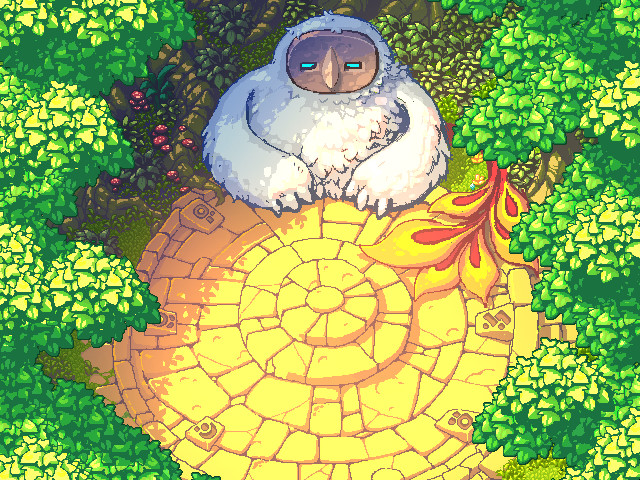
Rakuen is a beautiful adventure/puzzle game about a Boy and his Mom. The Boy has to stay in the hospital, but using a special storybook, his Mom shows him the way into the magical world of Morizora's Forest. This game is played from a top down perspective like an RPG Maker game.


Story:

I don't want to spoil anything, but I will offer a general overview: The hospitalized Boy visits Morizora's Forest in hopes of getting a wish from the forest guardian Morizora. But to get his wish, he needs to help the other patients resolve their problems by going through their history and finding out what led them to where they are. As a result, the story is filled to the brim with charming and interesting characters who you really get to know as you work to help them out. And of course, there are plenty of emotional moments. There are lines that'll make you laugh, and there are lines that'll hit you like a punch in the gut. If you're looking for a story with powerful emotions across the board, look no further.

Presentation:

Having heard Laura Shigihara's work in Plants vs. Zombies and To The Moon, I had lofty expectations for the soundtrack, but even those were surpassed. The soundtrack is filled to the brim with beautiful tracks, from atmospheric pieces to melodies that will get the most stoic people teary eyed. Not only are Laura's amazing vocals present, she has also brought in several guest vocalists who all perform their pieces admirably as well.

The visuals are also strong, with plenty of recognizable character designs and vibrant areas. The visuals and story work together in smart ways, too; the colors in the hospital are much more desaturated than the bright colors of Morizora's Forest, for example.

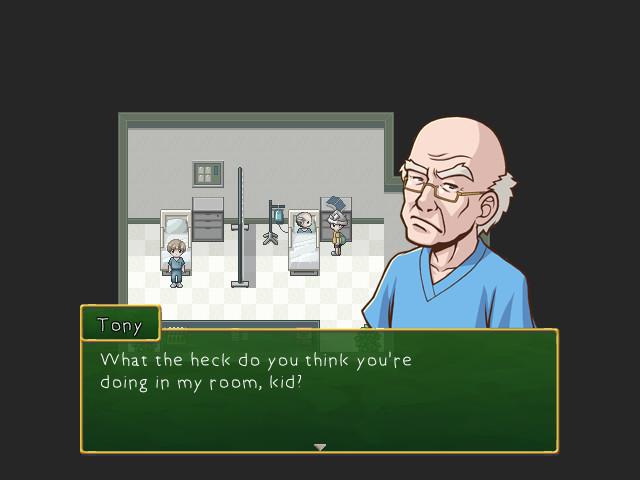
My only minor problem, if you can even call it that, is that some characters in Morizora's Forest don't have many character portraits. Tony Bear could have used maybe one more portrait, just to shake it up. Not a completely unique pose, just a few more facial expressions, like his human counterpart.


Gameplay:

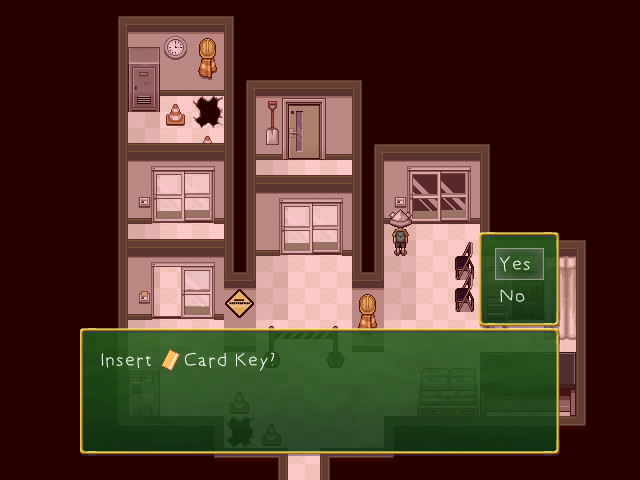
Rakuen mostly revolves around exploration with some light puzzle solving. Fortunately, the puzzles generally tie into the story and history of the characters you are helping out. They are usually not very challenging but offer a nice change of pace. Some areas are reminiscent of classic RPG Maker horror games like Ib and The Crooked Man in how they require you to figure out the environment and its interacting pieces.


My one minor problem with the gameplay, I would say, is that the game asks if you want to look at or read something a bit too often. Sometimes you'll be looking at an item with two separate 'do you want to read it?' or 'do you want to look?' questions. I understand why this is - there are lots of things to read, and you don't want to accidentally read the same thing twice, but in that case it might have been better to separate it into two interactable items instead.

Conclusion: 


Rakuen is a beautiful game with amazing visuals and music as well as a powerful story, with plenty of fantastical and frightening places to explore. Any complaints I could have are too minor to make a difference. Recommended for everyone.

Try it here: https://store.steampowered.com/app/559210/Rakuen/

Saturday, October 28, 2017

Some Thoughts on 'Doki Doki Literature Club!'

I generally use this blog to write longer articles analyzing certain details I like about games, but I'd like to change it up a bit and just offer my general thoughts on this remarkable visual novel. I may follow up with a more in-depth article in the future. I strongly recommend that you play it before reading this or any other material, since it is completely free:

http://store.steampowered.com/app/698780/Doki_Doki_Literature_Club/

Even if you don't mind the spoilers, we will be discussing a few disturbing topics. 

With that out of way, let's get started!

Doki Doki Literature Club! appears, on the surface, to be a pretty normal dating sim. Your only clue that something isn't right - if no one spoiled it for you - is a content warning near the start. Once you pass it, nothing could make you believe you're playing anything but a sweet little dating sim. Of course, you'll remember that content warning and the rumors you've heard and won't trust the game at first. But Doki Doki has a lot of tricks up its sleave to catch you off guard, no matter how well prepared you believe yourself to be.

Doki Doki sets up its story like any dating sim might, starting with a schoolday that our featureless protagonist begins with his childhood friend. She coaxes him into joining the literature club, causing him to be surrounded by 4 girls, 3 of which are romantic options in the game. Sayori is the aforementioned childhood friend, Natsuki is a rude and passionate girl who secretly loves cute things and Yuri is a shy and polite girl who not-so-secretly loves horror and dark subject matter. Monika is the friendly but somewhat passive leader of the literature club. You may notice that these girls generally fit into common anime and manga tropes. Natsuki, for instance, is a very clear example of a tsundere and the game even acknowledges this fact. Pointing out these tropes is not intended as a condemnation, as tropes are merely tools and how they're used, not if they're used, is decisive.

From left to right: Sayori, Natsuki, Yuri.

The skeptical player may expect the tropes to quickly give way to a horror experience of some kind, but as the story progresses the characters are fleshed out properly with unique illustrations for each character's 'route.' The game even has a unique system whereby, at the end of an in-game day, the player has to "write" a poem by selecting 20 words or subjects. Each word or subject appeals to a different girl, so your word choice will affect which of the girls will be most impressed with your work. Having well established characters and a distinctive mechanic very effectively sells Doki Doki as the cute dating sim it always seemed to be.


Doki Doki Literature Club continues its harmless streak for a long time. Even for a fast reader who isn't skipping anything, it may still take about an hour to reach the game's 'turning point.' It would, however, be unfair to claim that it takes an hour for the game to give you any clues. The girls' poems say a lot upon reflection, and Sayori's poems in particular. Depending on how much you read into her words, her eventual suicide will be more or less expected.

So, what started out as a sweet dating sim about poetry ended up taking a very dark turn where a character who had been struggling with depression commits suicide. It's a powerful twist and quite thought provoking, but skeptical players probably weren't too surprised. The game's presentation and mechanics may have lulled them into a sense of security, but as soon as the topic of depression came up, one could guess what might happen next.

Except, while Sayori's suicide marks the turning point, it's only the beginning of what lurks beyond the surface of Doki Doki Literature Club. As the player sees Sayori's hanging body, the game shows visual glitches and even programming errors before abruptly announcing 'END' and kicking you back to the title screen. Not only have all the player's files now been deleted, Sayori's picture on the title screen has been replaced with a glitchy mess and the 'new game' button is similarly unreadable. It's very obvious now that a lot more is going on in this game than just a dating sim with a dark twist at the end.

Unsettling glitches.

If the player gathers his or her courage and starts a new game, they'll start the story again... but in this version, Sayori never existed and the player character is directly invited to the literature club by Monika. The story seems quite similar, but it would be a mistake to simply skip through the text. The new playthrough is riddled with strange visual glitches and some of the character dialogue has been replaced with "interesting" lines that exaggerate the character's quirks.

Yuri's dark perspective becomes a lot more explicit.

Yuri and Natsuki, who had a passionate but friendly rivalry in the initial playthrough, interact in a much more aggressive way. This is notably the first time the game actually begins to use foul language; on a first playthrough the game's language is squeaky clean.


The tonal shift from the entire first playthrough is shocking and very effective.

And it's not just the character's tone or dialogue - many expectations that were set with the initial playthrough are turned on their head. On top of visual glitches, there are unusual zooms, distortions and filters. The text box can get interrupted mid-line and the player even receives unsettling "tutorial" messages. This contrasts strongly with the more static, traditional presentation the game maintains during the initial playthrough.


But what does all that amount to? To put it one way, meta horror or horror that breaks the fourth wall. Doki Doki Literature Club breaks your expectation of a visual novel by adding a dark twist. But then it breaks your expectation of the twist by adding a meta layer to it where the dead character is now deleted from the game and it's up to you to discover why, how and by who.

Recently, games like Undertale and Oneshot have used the world outside the confines of the game to strengthen their story and gameplay. Many games have broken the fourth wall over the years, often in the name of comedy, and the cult hit Eternal Darkness even used the fourth wall as its canvas for horror. But Doki Doki Literature Club's 'meta narrative' could only work for a visual novel, and in fact, could only ever work for a dating sim specifically. 

CONCLUSION (kind of):

Doki Doki Literature Club subverts your expectations not once, not twice, but many times. Its initial fun and charm make way for a depressing twist, followed by a terrifying mystery as you replay the game with one fewer character and completely different rules for the writing, visuals and tone. Clean writing becomes rough, with much more swearing and lots of glitched text. Static visuals with only subtle animations are replaced with unsettling zooms, filters and little animations. Some parts fast forward and some rewind, completely outside your control. The way it sets its expectations and then subverts them could only ever happen in a visual novel, and its 'meta narrative' where characters are changed or even deleted ties into this.

In a follow up article, I'll explain just why Doki Doki's 'meta horror' and 'meta narrative' is so well designed and so perfectly suited to a visual novel. I hope you'll join me for that one, but until then... I hope you have a great day!