It's (almost) October again, and the month of Halloween always inspires me to experience and write about new horror experiences. The first game we're talking about this month is Detention, a puzzle exploration game set in 1960s Taiwan under martial law. You take on the role of Fang Ray Shin - called Ray for short - a girl who wakes up in her school with seemingly no one else around. She has to find a way out while avoiding various supernatural dangers.
Extracurricular Lessons (Gameplay)
Detention is a point and click adventure where the character moves along a twodimensional plane. In that regard, it's very by-the-books; you interact with objects by clicking them, you can drag items from your inventory onto interactable objects in the environment to use them and so on. You similarly enter doors simply by interacting with them.
The gameplay differs where the horror comes in. In Detention, you'll mostly encounter two types of ghosts - the Lingered and the Lantern Ghost, both of which must be avoided in a specific way. The Lingered are common humanoid ghosts that stalk the otherwise quiet halls of the school and will attack anything alive they come across. To avoid them, you need to hold your breath when they approach and they will simply pass you by. Holding your breath slows you down, however, and is only temporary - so you need to watch the Lingered carefully and pick the right moment to start holding your breath. Lantern Ghosts are much less common but also harder to deal with; when they approach you, the only way to avoid detection is to turn away, hold your breath and don't move. The Lantern Ghost will smell Ray, detect no signs of life and move on... unless you fail to take the proper steps, in which case she'll get grabbed and killed. Food offerings can be put down on the ground to lure away the Lingered, but this is required only once - when the mechanic is first introduced. I never needed it again after that, though I suppose it's nice to have for people who find the patrolling Lingered too unpredictable.
The enemies initially make the game rather tense, but they lose their impact pretty quickly. Having to hold your breath may seem scary, but the time period is generous and even if a Lingered detects you, you don't die immediately. All in all, they're easy to avoid and the penalty for detection is mild for Lingered. The Lantern Ghost is more threatening because it can kill you instantly, but it's very slow and uncommon. I died only once in the game, and this was due to an instant death trap that I thought was a bit cheap. I won't spoil exactly what happens, but I needed to hold my breath in a situation where it was never implied I should - the danger was not properly introduced like with the two aforementioned ghost types.
As quickly as the fear from the enemies may fade, the game's saving grace is that it is pretty short to begin with, so the enemies disappear once you start to get used to them. In fact, about halfway through, the game's focus shifts almost entirely to puzzles. The atmosphere and visuals are still disturbing at this point (more on that in the next segment), but the gameplay doesn't resemble a horror game anymore. There are no more hostile ghosts at this point. There are story reasons for this, but it makes the pacing feel strange; the 'hold your breath' mechanic loses all relevance at this point. If they wanted to shift the focus to puzzles, it might've been a cool idea to use holding your breath in a puzzle; like maybe a secret message will only appear if you're not making any sound. At least that way, the mechanic would've stayed relevant instead of being tossed out just like that after being your main method of self defense. Even so, the puzzles represent one of the game's greatest strengths. Many of them are interesting and inventive, though none of them are very hard.
One last nitpick: Certain rooms have important scenes or a particularly frightful atmosphere, and the main character cannot run in these rooms; she'll just slowly shuffle forward. This is fine for the most part, but sometimes you can enter these rooms before you have what you need to activate the scene, causing you to shuffle all the way into the room at a snail's pace only to realize you don't need to be there yet. You then have to slowly shuffle out of the room again. It's a slight waste of time, but nothing serious.
All in all, Detention plays like a point and click adventure. It has a few interesting mechanics to represent the horror part of its genre that certainly build tension when first introduced, but it gives up on them shortly before they get stale. During and after this, it focuses mainly on puzzles which are easy but entertaining and inventive. There are a few problems with the gameplay, but it works well enough.
Oppressive Atmosphere (Presentation)
The game makes a strong visual impression. People often describe life under totalitarian reign as "grey" or "colorless," something reflected in the game's muted color scheme. Its graphics are built up from both drawings and what seem to be cut out photographs, leaning strongly into the historic realities the game portrays alongside the supernatural horrors.
The animations of the characters are slightly robotic, although this is actually to the game's benefit when it comes to the monsters. It's hard not to feel a chill when you see a humanoid figure run in from the dark, back bent at an awkward angle and arms outstretched toward you. In terms of appearance, the monsters aren't terribly inspired - they are all essentially undead humans of varying sizes - but the sound design really picks up the slack there. When you're in a hallway with one of the Lingered, you can't miss the distant sound of their alternating coughing, wheezing and laughing. This is what makes it really tense when you're holding your breath and sneaking past them - you never know if a sudden cough or chuckle is just incidental, or because you were noticed.
There isn't a lot of music, and when it's there, it's mostly diegetic (for example, there is actually a radio playing the music that the player character can interact with, rather than the music only existing for the player). It's all authentic Taiwanese music, and I've been told many of the tracks used were actually banned in 1960 - a nice touch. The sound design compliments the visuals well, each major area has its own atmospheric sound with the occasional noise that'll make you question if it was just in the background or actually an enemy waiting just around the corner.
The game's visuals are mostly gray, but it makes good use of splashes of color here and there. Most of the game is pretty grounded, but you'll run into some rather surreal setpieces as well, which all look very impressive once you wrap your head around them. I think the environments are the strongest part of this game's presentation, strikingly depicting both the totalitarian state of Taiwan as well as the frightening supernatural setting.
All in all, Detention's presentation does a great job of building a powerful atmosphere. Sparing use of color, frightening sound design and surreal rooms and locations compensate for slightly weak enemy designs and animations.
Freedom of Expression (Story)
In Detention, you play as two Taiwanese students in 1960. They are called Wei and Fang. One evening they wake up in their school and find it abandoned. It seems everyone left because of a typhoon warning, but the bridge to town is out so they're stuck. You are mostly in control of Fang, a senior student to Wei, and it's up to you to find a way out of the school while avoiding the supernatural horrors and finding out what the cause behind it all is.
While Detention is a horror game, its story is more tragic than scary. It revolves around the lives of students trying to get by in a society where even a vague or merely speculative association with China or communism could get you imprisoned, tortured or killed. The story focuses on how this affects the lives of Wei and Fang and the choices they make under this brutal regime as young people trying to find their way in life. I'm keeping it very vague here because I want to allow you the opportunity to experience this story for itself.
Not unlike Silent Hill, the game employs a lot of symbolism and wants you to think about the meaning behind certain scenes without giving you an explicit explanation for them. And like Silent Hill, the game has multiple endings. They key difference here is that the ending you get depends entirely on how well you understand the story. Without clarifying the context, near the end of the story you are asked a few questions. Answering these questions correctly means you properly understand the story (or got lucky) and this will lead you to the good ending. Answering them incorrectly will lead you to the bad ending. The puzzles are tie in with the story directly, however, so if you can get to the end, you can probably figure it all out.
I don't want to harp on this too much as the game was obviously not made by native speakers, but the English translation has several grammar and spelling errors. It's not a game breaker, but the game is short and doesn't have that much text, so I feel at least a little more time could've been spent on polishing that part up.
All in all, Detention has a strong story that is more tragic than scary, and revolves more around students trying to get by under a totalitarian regime than about kids running away from actual monsters. It misses the mark a little as a horror story, but it's a great story nonetheless. It's sad and beautiful in its own way.
Conclusion
Detention is a solid game and starts out as very unnerving and tense, even if it gives up on being a horror game after a while. Its inventive and surrealistic puzzles and engaging story will compel you to keep going long after the monsters have exited the stage. Its atmospheric presentation, solid story and unique setting make it more than worth a look. However, there are minor problems with its animations, errors in its text and it's quite short - around 3 and a half hours - so take note of that. If you love horror or point & click adventures, you can't go wrong with Detention. It's on Steam here:
https://store.steampowered.com/app/555220/Detention/
Other Thoughts
That's all I had to say about Detention, but there are interesting stories to tell about the developer, RedCandleGames.
This was news some time ago, but they actually developed and released a second game called Devotion. Unfortunately, due to a controversy involving something in the game that was interpreted as an insult towards the Chinese president, the company's right to sell the game was revoked and it was removed from sale on Steam - but not before it was also review bombed, apparently by sympathizers of the Chinese government. It's painful and tragic that a company responsible for such a beautiful story about freedom of thought and expression had their work censored from the Internet because of something so petty. I really hope Devotion will be sold again one day so I can share my thoughts on it as well, because seeing art get censored like this - now that is some real life horror.
_
That's all for today. Thank you for reading! I can't say for sure how many Scary Thoughts articles will be released this month, but at least I got this one done.
A blog for discussing the art and design of games, popular and obscure, triple A and indie.
Showing posts with label steam. Show all posts
Monday, September 30, 2019
Tuesday, September 17, 2019
Miwashiba's RPGs
Today, I'd like to talk about a lesser known game developer called 'Miwashiba.' This Japanese developer has created various games in an RPG Maker program, specifically the WOLF RPG Editor. Miwashiba's games were initially released for free, but have since been released on Steam for a small price. In this article, I want to talk about said games - in a sense, this article will be a collection of mini 'Some Thoughts About' segments.
LiEat
LiEat on Steam is actually not one game, but a collection of 3 short games in the same series. It was released on Steam on February 26, 2016. LiEat takes place in a world where humans and dragons coexist; but the dragons in this world are magical, humanoid creatures that are each born with a special ability. The protagonist of all three games, Efina, is such a dragon. When people tell lies, she can allow them to manifest as physical creatures and eat them.
The LiEat games set a few standards that all of Miwashiba's future games adhere to: they're mainly focused on story, have bad endings you can run into if you fail critical battles or miss vital details and they all have truly adorable artwork. In LiEat specifically, the game looks alright in general, but the unique scenes drawn for important story moments are especially charming.
LiEat's gameplay is pretty basic. Outside of battle, you walk around and interact with objects and people from a top down perspective. Battles are much like in any turn-based RPG, and about as basic as it gets. The range of abilities is limited to attacks that hit single enemies, attacks that hit multiple enemies and healing. Aside from bosses, of which there are few, the enemies are also all the same.
The real fun comes before battles. After all, where would a lie detecting dragon be most useful? When solving crimes and mysteries, of course. At certain points a character will make a few statements, and these statements will manifest as little lie creatures. You need to fight the correct one to progress the story, although there's no penalty for fighting the wrong ones as well. The concept of listening to "testimonies" and figuring out the lies would return in 1BitHeart, but we'll get to that one a bit later.
There's a separate mystery in each of the three games, but there is an overarching story as well about Efina's true purpose. Dragons are always born to a specific human, for a specific purpose. But I don't want to spoil the story or its conclusion, so you'll have to play it to find out what it all leads to. Will you be able to find Efina's true purpose?
To summarize it briefly, LiEat is a set of 3 short RPGs with a focus on story, cute art and some light exploration and battling.
Alicemare
Alicemare was released on Steam on 22 November, 2016. It's quite different from LiEat and a lot more like other popular games made in RPG Maker and Wolf RPG Editor - it could easily be listed with games like Crooked Man, Mad Father, Ib and so on. While you can explore and interact like in LiEat, it has no combat and is purely based on exploration and puzzles. And while it still has cute art, it is tagged as horror and has some disturbing scenes.
In Alicemare, the player takes on the role of Allen, a young boy who ends up at a mysterious orphanage. Allen explores the dreams, or nightmares, of the other children at the orphanage and learns dark secrets about each of them as a result. As the name implies, the game draws some inspiration from Alice in Wonderland and its dreamlike setting, even featuring characters such as the White Rabbit and the Cheshire Cat.
The game has a good atmosphere, but is very simple in terms of actual gameplay. It also has many endings depending on a difficult choice you have to make at the end, but like so many RPG Maker games, a 'perfect' ending can be reached by collecting all the little collectibles.
All in all, I really liked the game's atmosphere and visuals, but its gameplay was very basic and its story rather ambiguous. But it's a short and easy ride, so if you're looking for something a little spooky and atmospheric, you won't regret trying it.
So, in short, Alicemare is a purely exploration based Wolf RPG Editor game with light puzzle solving and a mysterious and spooky atmosphere.
1bitHeart
1bitHeart is Miwashiba's largest and most ambitious game project... as far as I know. It was released on Steam on August 28th, 2017.
The game is set in Japan, in the nearby future, where technology has progressed to a point where it dominates the lives of everyone. In this game we take on the role of Nanashi, a young man who spends most of his time indoors. He's quite intelligent, but rather socially awkward. He meets a girl called Misane and learns of a frightening plot to take control of people via hacking, which is entirely possible in this technology-dominated future where everyone is hooked up to technology one way or another. Together, the two set out to stop this evil plot and hopefully make some friends for the rather lonely Nanashi.
1bitHeart shares some fundamental qualities with the prior games, like the cute art and characters and mystery aspect, but there are many notable differences and improvements. First off, while the game is still mainly exploration based, it's a 2D side scroller now instead of using the top down perspective the other games did. I think this was a good decision; it makes going from A to B a lot more straightforward, and it allows for larger side view portraits of the game's many characters, which really allows the game to emphasize's Miwashiba's incredible skill at designing cute characters. The portraits themselves are also larger and much more detailed during dialogue.
The game doesn't have turn-based battles like LiEat, but it also doesn't solely hinge on exploration like Alicemare. Rather, it has its own unique systems. First, when hackers attempt to hack the player characters, you defend yourself with a series of directional inputs; it's pretty basic. The real fun happens during investigations and the subsequent confrontations. There are various cases to solve in the game's chapters, during which you gather evidence and information. You subsequently use this evidence in discussions with suspicious characters, in what is more or less a rudimentary version of the Cross Examinations in Ace Attorney or the Nonstop Debates in Danganronpa. Miwashiba clearly expressed an interest in mystery solving gameplay in LiEat, and in 1bitHeart, it comes to fruition quite nicely.
Speaking of Danganronpa, the game takes some structural cues from that series. Between the chapters, you'll get the opportunity to give gifts to the characters that hang around the city and trigger unique scenes with them once you become better friends. This leads to one of the game's most impressive parts: There are actual dozens of characters spread across the city, and each has several fleshed out scenes that form an overarching story with a conclusion - which vary from heartwarming to sad to hilarious. The end goal, of course, is for these characters to become the main character's friends. And as I mentioned before, each character has a unique design. It's impossible to ignore the amount of love and effort that was put into this game. The backgrounds during dialogue could use a little work, though - they look like basic shapes with Photoshop filters applied to them. They do the job, but that's about it. They pale in comparison to the amazing characters.
Even so, there are things to criticize about the character interactions as well. Like I mentioned, you need gifts to build up your friendship with characters, but you need money to buy gifts. You get money by playing Tetris-type minigames. You can spend as much time befriending characters as you want between the chapters, but it'll take a lot of grinding to get enough money to befriend everyone. Fortunately, it seems the developer was aware of this weakness, as there is a secret in the game to acquire endless money, and thus, endless gifts. You do this by interacting with a secret panel in the virtual world where the minigames are played. I recommend this approach if you were planning to befriend all the characters. You probably don't want to be playing Tetris for hours just to get a few scenes.
The game's soundtrack is fine, but I was truly baffled by the clash between the art and the music during the first confrontation - when I was greeted with something I can't do justice by describing it. Just view the adorable characters and colors and then imagine this playing as you watch that:
But most of the tracks suit the game and its pleasant atmosphere just fine:
Minor gripes aside, 1bitHeart is a truly impressive leap forward for Miwashiba. The game is comparatively long, consisting of several chapters, has a cast of dozens of characters with their own designs, stories and interactions, it has its own investigation and interrogation gameplay for mystery solving and so on.
1BeatHeart
Miwashiba has created a follow-up to 1bitHeart called 1BeatHeart, although it's focused more on muder mysteries than hacking and making friends. The art is even more detailed in this one, although it sheds some of its cuteness. Note the more muted colors:
This game has been translated, but is not officially released on Steam yet. I don't know if there are any plans to do so, which is why I've held off on playing it for now. If it turns out there are no plans, I may simply download the free version and share my thoughts at a later date. You can try the game yourself, if you're interested: http://vgperson.com/games/1beatheart.htm Do note that it'll spoil some events from 1bitHeart, though, so play that first if you care about chronological order.
The Faceless Double
Miwashiba has created an impressive library of adorable and interesting RPGs, but it's clear the well of creativity has not run dry. In fact, 'The Faceless Double' is currently in production, and is listed on Steam as 'coming soon' as of writing this article. We don't know a lot yet, but I'm already hooked just by reading the description:
"In this world, there sometimes appears a comet that grants wishes.
It is said that the comet will grant any wish – however, payment for a granted wish takes the form of a curse.
The people of this world called the comet “God”.
When Double awakened, he had lost his previous form.
He can’t remember how this happened.
Cloena proposes to Double that they embark on a journey to seek out God, in order to remove the curse."
Having a faceless, cursed figure seek out God sounds like a fascinating premise and invites you to speculate who this character, 'Double,' was before he lost his form and whether the 'God' in the story is benevolent, malevolent or neither. Either way, this journey of discovering one's purpose has been a prevailing theme in all of Miwashiba's games right from the start and I can't wait to see what new form it will take in this next adventure. From eating lies to exploring nightmares to saving the future from hackers to seeking out God - we're definitely going into new and exciting territory!
Closing Thoughts
I've been wanting to write this article for a long time. I discovered Miwashiba's RPGs just last year and immediately fell in love with the charming art and interesting settings. 1bitHeart is easily my favorite of the bunch, pushing both the art, mechanics and story to the best they've been, but all these games are worth playing as far as I'm concerned.
I'm also excited to try the game I haven't played yet, 1BeatHeart. I genuinely considered putting off this article to play through it first, but the game looks and feels so different from the other games that I think it needs its own article. I'm especially looking forward to seeing what Miwashiba makes of The Faceless Double as well, and hope we can expect an English version. Speaking of which...
Translators are often unsung heroes, so I want to give a quick shoutout to the individual who goes by 'vgperson.' If you've seen any Wolf RPG Editor or RPG Maker game from Japan translated to English, there's a good chance it was done by vgperson. They also make original works, and translate many things besides games as well. Check out vgperson's website to see what I mean: http://vgperson.com/
In writing this article, I misspelled Miwashiba's name as 'Miwashibi' and 'Miwashabi' various times, proving that I'm not good with Japanese names. I hope I haven't left any of those errors in here.
_
And that's it! Hopefully, I've convinced you to try at least one of these games! Or if you've tried them already, can you let me know what you think? Are there obscure RPG Maker or WOLF RPG Editor games I should know about? All comments are appreciated.
LiEat
LiEat on Steam is actually not one game, but a collection of 3 short games in the same series. It was released on Steam on February 26, 2016. LiEat takes place in a world where humans and dragons coexist; but the dragons in this world are magical, humanoid creatures that are each born with a special ability. The protagonist of all three games, Efina, is such a dragon. When people tell lies, she can allow them to manifest as physical creatures and eat them.
The LiEat games set a few standards that all of Miwashiba's future games adhere to: they're mainly focused on story, have bad endings you can run into if you fail critical battles or miss vital details and they all have truly adorable artwork. In LiEat specifically, the game looks alright in general, but the unique scenes drawn for important story moments are especially charming.
LiEat's gameplay is pretty basic. Outside of battle, you walk around and interact with objects and people from a top down perspective. Battles are much like in any turn-based RPG, and about as basic as it gets. The range of abilities is limited to attacks that hit single enemies, attacks that hit multiple enemies and healing. Aside from bosses, of which there are few, the enemies are also all the same.
The real fun comes before battles. After all, where would a lie detecting dragon be most useful? When solving crimes and mysteries, of course. At certain points a character will make a few statements, and these statements will manifest as little lie creatures. You need to fight the correct one to progress the story, although there's no penalty for fighting the wrong ones as well. The concept of listening to "testimonies" and figuring out the lies would return in 1BitHeart, but we'll get to that one a bit later.
There's a separate mystery in each of the three games, but there is an overarching story as well about Efina's true purpose. Dragons are always born to a specific human, for a specific purpose. But I don't want to spoil the story or its conclusion, so you'll have to play it to find out what it all leads to. Will you be able to find Efina's true purpose?
To summarize it briefly, LiEat is a set of 3 short RPGs with a focus on story, cute art and some light exploration and battling.
Alicemare
Alicemare was released on Steam on 22 November, 2016. It's quite different from LiEat and a lot more like other popular games made in RPG Maker and Wolf RPG Editor - it could easily be listed with games like Crooked Man, Mad Father, Ib and so on. While you can explore and interact like in LiEat, it has no combat and is purely based on exploration and puzzles. And while it still has cute art, it is tagged as horror and has some disturbing scenes.
In Alicemare, the player takes on the role of Allen, a young boy who ends up at a mysterious orphanage. Allen explores the dreams, or nightmares, of the other children at the orphanage and learns dark secrets about each of them as a result. As the name implies, the game draws some inspiration from Alice in Wonderland and its dreamlike setting, even featuring characters such as the White Rabbit and the Cheshire Cat.
The game has a good atmosphere, but is very simple in terms of actual gameplay. It also has many endings depending on a difficult choice you have to make at the end, but like so many RPG Maker games, a 'perfect' ending can be reached by collecting all the little collectibles.
All in all, I really liked the game's atmosphere and visuals, but its gameplay was very basic and its story rather ambiguous. But it's a short and easy ride, so if you're looking for something a little spooky and atmospheric, you won't regret trying it.
So, in short, Alicemare is a purely exploration based Wolf RPG Editor game with light puzzle solving and a mysterious and spooky atmosphere.
1bitHeart
1bitHeart is Miwashiba's largest and most ambitious game project... as far as I know. It was released on Steam on August 28th, 2017.
The game is set in Japan, in the nearby future, where technology has progressed to a point where it dominates the lives of everyone. In this game we take on the role of Nanashi, a young man who spends most of his time indoors. He's quite intelligent, but rather socially awkward. He meets a girl called Misane and learns of a frightening plot to take control of people via hacking, which is entirely possible in this technology-dominated future where everyone is hooked up to technology one way or another. Together, the two set out to stop this evil plot and hopefully make some friends for the rather lonely Nanashi.
1bitHeart shares some fundamental qualities with the prior games, like the cute art and characters and mystery aspect, but there are many notable differences and improvements. First off, while the game is still mainly exploration based, it's a 2D side scroller now instead of using the top down perspective the other games did. I think this was a good decision; it makes going from A to B a lot more straightforward, and it allows for larger side view portraits of the game's many characters, which really allows the game to emphasize's Miwashiba's incredible skill at designing cute characters. The portraits themselves are also larger and much more detailed during dialogue.
The game doesn't have turn-based battles like LiEat, but it also doesn't solely hinge on exploration like Alicemare. Rather, it has its own unique systems. First, when hackers attempt to hack the player characters, you defend yourself with a series of directional inputs; it's pretty basic. The real fun happens during investigations and the subsequent confrontations. There are various cases to solve in the game's chapters, during which you gather evidence and information. You subsequently use this evidence in discussions with suspicious characters, in what is more or less a rudimentary version of the Cross Examinations in Ace Attorney or the Nonstop Debates in Danganronpa. Miwashiba clearly expressed an interest in mystery solving gameplay in LiEat, and in 1bitHeart, it comes to fruition quite nicely.
Speaking of Danganronpa, the game takes some structural cues from that series. Between the chapters, you'll get the opportunity to give gifts to the characters that hang around the city and trigger unique scenes with them once you become better friends. This leads to one of the game's most impressive parts: There are actual dozens of characters spread across the city, and each has several fleshed out scenes that form an overarching story with a conclusion - which vary from heartwarming to sad to hilarious. The end goal, of course, is for these characters to become the main character's friends. And as I mentioned before, each character has a unique design. It's impossible to ignore the amount of love and effort that was put into this game. The backgrounds during dialogue could use a little work, though - they look like basic shapes with Photoshop filters applied to them. They do the job, but that's about it. They pale in comparison to the amazing characters.
Even so, there are things to criticize about the character interactions as well. Like I mentioned, you need gifts to build up your friendship with characters, but you need money to buy gifts. You get money by playing Tetris-type minigames. You can spend as much time befriending characters as you want between the chapters, but it'll take a lot of grinding to get enough money to befriend everyone. Fortunately, it seems the developer was aware of this weakness, as there is a secret in the game to acquire endless money, and thus, endless gifts. You do this by interacting with a secret panel in the virtual world where the minigames are played. I recommend this approach if you were planning to befriend all the characters. You probably don't want to be playing Tetris for hours just to get a few scenes.
The game's soundtrack is fine, but I was truly baffled by the clash between the art and the music during the first confrontation - when I was greeted with something I can't do justice by describing it. Just view the adorable characters and colors and then imagine this playing as you watch that:
But most of the tracks suit the game and its pleasant atmosphere just fine:
Minor gripes aside, 1bitHeart is a truly impressive leap forward for Miwashiba. The game is comparatively long, consisting of several chapters, has a cast of dozens of characters with their own designs, stories and interactions, it has its own investigation and interrogation gameplay for mystery solving and so on.
1BeatHeart
Miwashiba has created a follow-up to 1bitHeart called 1BeatHeart, although it's focused more on muder mysteries than hacking and making friends. The art is even more detailed in this one, although it sheds some of its cuteness. Note the more muted colors:
This game has been translated, but is not officially released on Steam yet. I don't know if there are any plans to do so, which is why I've held off on playing it for now. If it turns out there are no plans, I may simply download the free version and share my thoughts at a later date. You can try the game yourself, if you're interested: http://vgperson.com/games/1beatheart.htm Do note that it'll spoil some events from 1bitHeart, though, so play that first if you care about chronological order.
The Faceless Double
Miwashiba has created an impressive library of adorable and interesting RPGs, but it's clear the well of creativity has not run dry. In fact, 'The Faceless Double' is currently in production, and is listed on Steam as 'coming soon' as of writing this article. We don't know a lot yet, but I'm already hooked just by reading the description:
"In this world, there sometimes appears a comet that grants wishes.
It is said that the comet will grant any wish – however, payment for a granted wish takes the form of a curse.
The people of this world called the comet “God”.
When Double awakened, he had lost his previous form.
He can’t remember how this happened.
Cloena proposes to Double that they embark on a journey to seek out God, in order to remove the curse."
Having a faceless, cursed figure seek out God sounds like a fascinating premise and invites you to speculate who this character, 'Double,' was before he lost his form and whether the 'God' in the story is benevolent, malevolent or neither. Either way, this journey of discovering one's purpose has been a prevailing theme in all of Miwashiba's games right from the start and I can't wait to see what new form it will take in this next adventure. From eating lies to exploring nightmares to saving the future from hackers to seeking out God - we're definitely going into new and exciting territory!
Closing Thoughts
I've been wanting to write this article for a long time. I discovered Miwashiba's RPGs just last year and immediately fell in love with the charming art and interesting settings. 1bitHeart is easily my favorite of the bunch, pushing both the art, mechanics and story to the best they've been, but all these games are worth playing as far as I'm concerned.
I'm also excited to try the game I haven't played yet, 1BeatHeart. I genuinely considered putting off this article to play through it first, but the game looks and feels so different from the other games that I think it needs its own article. I'm especially looking forward to seeing what Miwashiba makes of The Faceless Double as well, and hope we can expect an English version. Speaking of which...
Translators are often unsung heroes, so I want to give a quick shoutout to the individual who goes by 'vgperson.' If you've seen any Wolf RPG Editor or RPG Maker game from Japan translated to English, there's a good chance it was done by vgperson. They also make original works, and translate many things besides games as well. Check out vgperson's website to see what I mean: http://vgperson.com/
In writing this article, I misspelled Miwashiba's name as 'Miwashibi' and 'Miwashabi' various times, proving that I'm not good with Japanese names. I hope I haven't left any of those errors in here.
_
And that's it! Hopefully, I've convinced you to try at least one of these games! Or if you've tried them already, can you let me know what you think? Are there obscure RPG Maker or WOLF RPG Editor games I should know about? All comments are appreciated.
Monday, August 19, 2019
Some Thoughts About 'Ticket to Ride'
While digging through my backlog, I discovered I acquired turn-based strategy game 'Ticket to Ride' years ago, possibly from a Humble Bundle. I decided to give the game a quick look.
In Ticket to Ride, you and the other players take on the role of a railroad tycoon, connecting as many cities as possible by drawing cards with train carts and locomotives or building railroads each turn. When I opened the game and noted its fairly simplistic presentation, it was obvious: This is a digitized version of what was originally a traditional boardgame. Apparently it's pretty popular, but I hadn't heard of it before now.
Losing Charm
Now, the game is fun, and I'll talk a bit more about that later, but it's immediately apparent that a lot was lost in the transition from traditional to digital. One of the game's charms in its traditional form is placing the little train carts of your color down onto the routes between cities, clearly indicating that you've claimed them. Just look at how charming and appealing this looks:
In the digital version, the adorable train carts are replaced by colored squares on a flat map. It does the job, but it has no charm whatsoever:
If there is ever a new iteration of this game, adding a little depth could go a long way. Changing the perspective, or even having simple 3D models of the plastic pieces, would be perfect. There's a reason why engines like Tabletop Simulator have garnered an audience; the feeling of messing around with pieces on a board, even digital, has an appeal of its own that can't be underestimated.
As a matter of fact, some fans have actually made Ticket to Ride in Tabletop Simulator, showing that the "official" version couldn't quite scratch the itch that the original boardgame did.
That's the Ticket
In spite of some missing details, however, the game itself functions perfectly well. It's a turn-based strategy game that's easy to pick up and understand, and the digital version has the advantage of telling you when and why a certain action cannot be taken - for example, if you're trying to claim a route between two cities because you think you have enough train carts but you're missing the necessary locomotive to make it happen. If that happens, the game will stop you and explain why the move is against the rules without wasting your turn.
Another great advantage of this digital release: It has a thriving online community. Before I wanted to post my impressions, I really wanted to try an online game but I dreaded how long it might take to find one. But there were many games to join and you could just as easily start your own, much to my delight. I wanted to try a simple match with one other player, so I did just that - and in my home territory of Europe, of course.
The game may initially seem like you just need to get the right train carts and just keep building between the cities, but planning ahead is actually very important. You can choose which 'tickets' you're trying to validate (that is, which cities you are trying to create a route between). If you claim a ticket, you'll lose points if you fail to connect the cities by the end of the game, but if you wait too long, it can be too late; your opponent could claim the necessary tracks or you could run out of carts. There's a nice bit of risk/reward involved.
Unfortunately, planning ahead isn't my strong suit, so my opponent proceeded to crush me into the ground.
But all in all, I had a good time with the game. It's a fun concept that's simple and easy to understand. I just wish they could've preserved some of that original board game charm. If you're into turn-based strategy or just really like trains, you might want to look into this game.
Sunday, October 21, 2018
A Few Thoughts On Pinstripe
It's October, so I decided to take this opportunity to catch up on a few scary games I've been planning to play. These articles won't be full blown reviews - more like rants, really.
So, let's talk about Pinstripe. Pinstripe is a short puzzle platformer about a minister called Ted whose daughter is abducted, and he has to journey through a hellish winter landscape to save her.
Pinstripe's greatest virtue is obvious from the get-go: its presentation. It has a distinctive style with simple shapes like you'd see in a children's book, but the images depicted are disturbing to say the least. You could call it 'Burtonesque.'
The environments are visually powerful, but so are the characters. There are several characters - some of which are voiced by YouTube celebrities like PewDiePie and JackSepticEye. The game's antagonist, Pinstripe, is the standout character - a man with a sophisticated, polite air who seems to fly into random bouts of swearing and aggression when questioned or challenged in any way.
The story itself is another of Pinstripe's strengths. Who Pinstripe is and why he kidnaps Ted's daughter - there's enjoyment to be had in figuring out the clues as you explore the world. I don't want to give away too much beyond that - the game is pretty short, so it's best experienced for yourself.
It's sad to say, but I think Pinstripe's weakest part is probably its gameplay. That isn't to say it's really terrible; it's just rather basic and a bit rough around the edges. It has quite a few puzzles, many of which are rather fun to figure out. The game controls in 2D, but you can examine the clues you find in 3D much like in a detective type game. There's something to be said for finding a note, turning it around and finding a hidden message on the back. The puzzles never get terribly complex, however, usually requiring a simple number code, hitting switches in a certain order or playing a game of 'spot the differences' with two paintings. Complex or not, though, it's entertaining enough thanks to the way the puzzles are presented.
The game also requires you to do some platform challenges - and there is some polish missing there. More than once, Ted got his feet stuck on a small outcropping or nothing. Ted has very little sense of momentum, just starting and stopping instantly. The general issues with collision and physics were pretty minor all in all, but noticeable.
Later in a game, you are asked to backtrack through the world to acquire a large number of the game's signature collectible, frozen oil drops. There are a few new interesting puzzles on this return trip, but in most of the areas you'll be performing the exact same action - fire your slingshot through the fire onto flammable mushrooms so they explode and yield more collectibles for you. Considering it was required to progress the story, I felt this amount of backtracking was a little unnecessary for so short a game - but since the world was also pretty small, I can't say it was a huge bother.
Speaking of the slingshot, it is your primary means of self defense and environmental puzzle solving. It's basic enough, you aim the cursor and release to shoot a pellet where you aimed - and you can do this while moving as well. Beyond using fire to ignite your ammunition, the slingshot wasn't really expanded upon, but perhaps it's unfair to ask when you consider the game's length. You can acquire a better weapon and some neat extras on a second playthrough and some new areas can be accessed, so there is replayability in that regard.
Minor gameplay missteps aside, though, I had a great time with Pinstripe. Minor gameplay problems couldn't stop me from enjoying its story and presentation to the fullest, and I'm not going to lie, the ending made me feel some feelings. My overall impression of the game is positive, in spite of the prior rant - it's just nitpicking, really. So, in conclusion:
Pinstripe is a beautiful, short-and-sweet indie puzzle platformer. Its presentation and writing are excellent and supported by simple but fun puzzle gameplay and serviceable platforming. If you really like what you see, don't hesitate to get it. If you're not sure, wait for a sale and give it a shot then.
Labels:
game,
horror,
jacksepticeye,
kickstarter,
pc,
pewdiepie,
pinstripe,
steam
Saturday, June 16, 2018
Rakuen (Review)
I don't usually post 'traditional' reviews on this blog, but I really wanted to share my thoughts on this game with you. I posted this review on Steam first, but felt it would be worth uploading here as well.
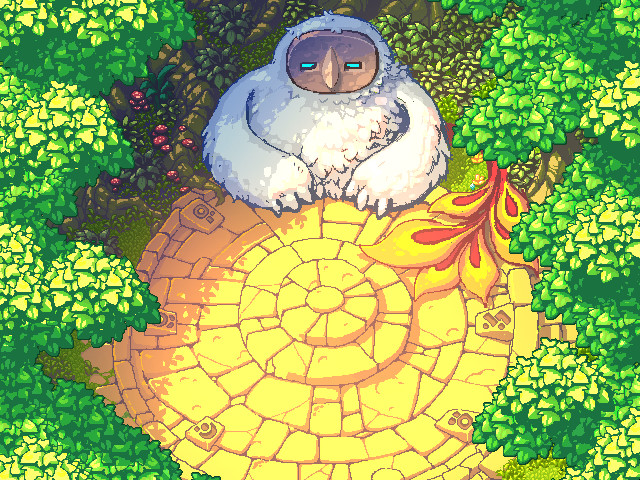
Rakuen is a beautiful adventure/puzzle game about a Boy and his Mom. The Boy has to stay in the hospital, but using a special storybook, his Mom shows him the way into the magical world of Morizora's Forest. This game is played from a top down perspective like an RPG Maker game.
Story:
I don't want to spoil anything, but I will offer a general overview: The hospitalized Boy visits Morizora's Forest in hopes of getting a wish from the forest guardian Morizora. But to get his wish, he needs to help the other patients resolve their problems by going through their history and finding out what led them to where they are. As a result, the story is filled to the brim with charming and interesting characters who you really get to know as you work to help them out. And of course, there are plenty of emotional moments. There are lines that'll make you laugh, and there are lines that'll hit you like a punch in the gut. If you're looking for a story with powerful emotions across the board, look no further.
Presentation:
Having heard Laura Shigihara's work in Plants vs. Zombies and To The Moon, I had lofty expectations for the soundtrack, but even those were surpassed. The soundtrack is filled to the brim with beautiful tracks, from atmospheric pieces to melodies that will get the most stoic people teary eyed. Not only are Laura's amazing vocals present, she has also brought in several guest vocalists who all perform their pieces admirably as well.
The visuals are also strong, with plenty of recognizable character designs and vibrant areas. The visuals and story work together in smart ways, too; the colors in the hospital are much more desaturated than the bright colors of Morizora's Forest, for example.
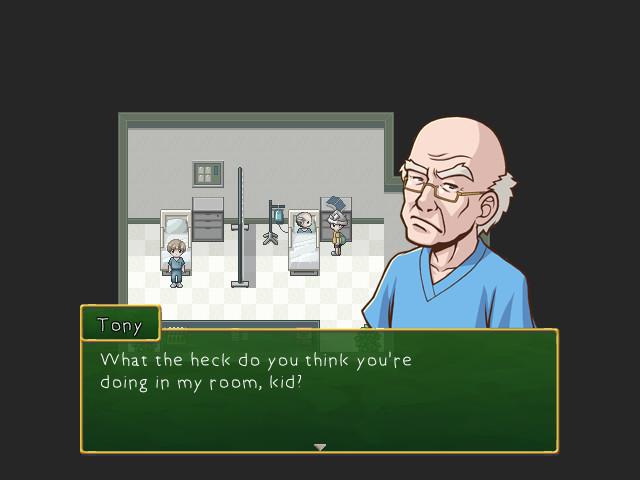
My only minor problem, if you can even call it that, is that some characters in Morizora's Forest don't have many character portraits. Tony Bear could have used maybe one more portrait, just to shake it up. Not a completely unique pose, just a few more facial expressions, like his human counterpart.
Gameplay:
Rakuen mostly revolves around exploration with some light puzzle solving. Fortunately, the puzzles generally tie into the story and history of the characters you are helping out. They are usually not very challenging but offer a nice change of pace. Some areas are reminiscent of classic RPG Maker horror games like Ib and The Crooked Man in how they require you to figure out the environment and its interacting pieces.
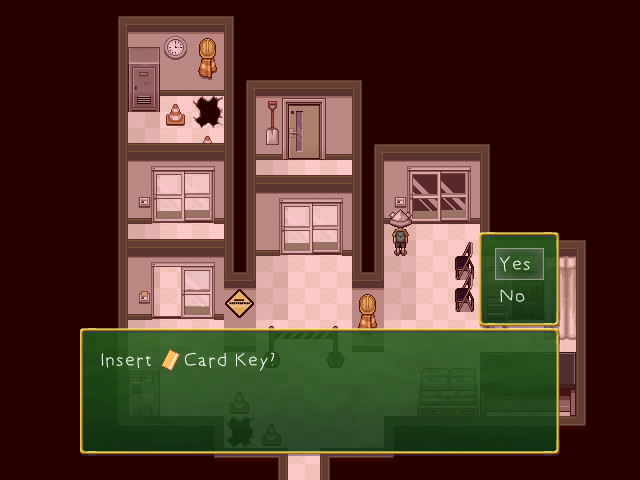
My one minor problem with the gameplay, I would say, is that the game asks if you want to look at or read something a bit too often. Sometimes you'll be looking at an item with two separate 'do you want to read it?' or 'do you want to look?' questions. I understand why this is - there are lots of things to read, and you don't want to accidentally read the same thing twice, but in that case it might have been better to separate it into two interactable items instead.
Conclusion:
Rakuen is a beautiful game with amazing visuals and music as well as a powerful story, with plenty of fantastical and frightening places to explore. Any complaints I could have are too minor to make a difference. Recommended for everyone.
Try it here: https://store.steampowered.com/app/559210/Rakuen/
Rakuen is a beautiful adventure/puzzle game about a Boy and his Mom. The Boy has to stay in the hospital, but using a special storybook, his Mom shows him the way into the magical world of Morizora's Forest. This game is played from a top down perspective like an RPG Maker game.
Story:
I don't want to spoil anything, but I will offer a general overview: The hospitalized Boy visits Morizora's Forest in hopes of getting a wish from the forest guardian Morizora. But to get his wish, he needs to help the other patients resolve their problems by going through their history and finding out what led them to where they are. As a result, the story is filled to the brim with charming and interesting characters who you really get to know as you work to help them out. And of course, there are plenty of emotional moments. There are lines that'll make you laugh, and there are lines that'll hit you like a punch in the gut. If you're looking for a story with powerful emotions across the board, look no further.
Presentation:
Having heard Laura Shigihara's work in Plants vs. Zombies and To The Moon, I had lofty expectations for the soundtrack, but even those were surpassed. The soundtrack is filled to the brim with beautiful tracks, from atmospheric pieces to melodies that will get the most stoic people teary eyed. Not only are Laura's amazing vocals present, she has also brought in several guest vocalists who all perform their pieces admirably as well.
The visuals are also strong, with plenty of recognizable character designs and vibrant areas. The visuals and story work together in smart ways, too; the colors in the hospital are much more desaturated than the bright colors of Morizora's Forest, for example.
My only minor problem, if you can even call it that, is that some characters in Morizora's Forest don't have many character portraits. Tony Bear could have used maybe one more portrait, just to shake it up. Not a completely unique pose, just a few more facial expressions, like his human counterpart.
Gameplay:
Rakuen mostly revolves around exploration with some light puzzle solving. Fortunately, the puzzles generally tie into the story and history of the characters you are helping out. They are usually not very challenging but offer a nice change of pace. Some areas are reminiscent of classic RPG Maker horror games like Ib and The Crooked Man in how they require you to figure out the environment and its interacting pieces.
My one minor problem with the gameplay, I would say, is that the game asks if you want to look at or read something a bit too often. Sometimes you'll be looking at an item with two separate 'do you want to read it?' or 'do you want to look?' questions. I understand why this is - there are lots of things to read, and you don't want to accidentally read the same thing twice, but in that case it might have been better to separate it into two interactable items instead.
Conclusion:
Rakuen is a beautiful game with amazing visuals and music as well as a powerful story, with plenty of fantastical and frightening places to explore. Any complaints I could have are too minor to make a difference. Recommended for everyone.
Try it here: https://store.steampowered.com/app/559210/Rakuen/
Subscribe to:
Posts (Atom)