It's hard to believe that the Witcher 3 will be 5 years old this year. When it was released in 2015, this open-world RPG was met with an overwhelmingly positive response. Of particular note was the fact that even seemingly small sidequests would often have interesting twists and choices on offer. I loved almost every second of this game when I played it, but one of the larger sidequests that tied into the main story disappointed me deeply. I want to explain why. Beware, this article assumes you have a basic understanding of the Witcher 3's plot, and there will be some spoilers.
The Underbelly of Novigrad
At one point in the story, Geralt's search for Ciri leads him to Novigrad, a city untouched by the war with Nilfgaard but dealing with its own battles, namely between the local religious cult and various crime syndicates. In his search, Geralt meets the leaders of the Novigrad gangs, one of whom is Sigismund Dijkstra, Redania's former spymaster. He's easily one of my favorite characters in the game. His wit and biting sarcasm make most interactions between him and Geralt a treat, and their begrudging cooperation is a highlight in an already compelling narrative.
https://www.youtube.com/watch?v=RiLasX4Q5ww
What's both entertaining and frightening about Dijkstra is that he figures out most of the things Geralt tries to hide from him. He always seems perfectly in control of the situation, and it's completely believable that he managed to thrive even among dangerous criminals. For instance, Dijkstra asks Geralt to investigate who broke into his safe. Geralt already knows it was his friend Dandelion, but keeps this from Dijkstra to prevent complications. However, Dijkstra figures it out soon after and calls Geralt out for omitting this information. I think it's important to establish this because it's part of why I really dislike a later quest.
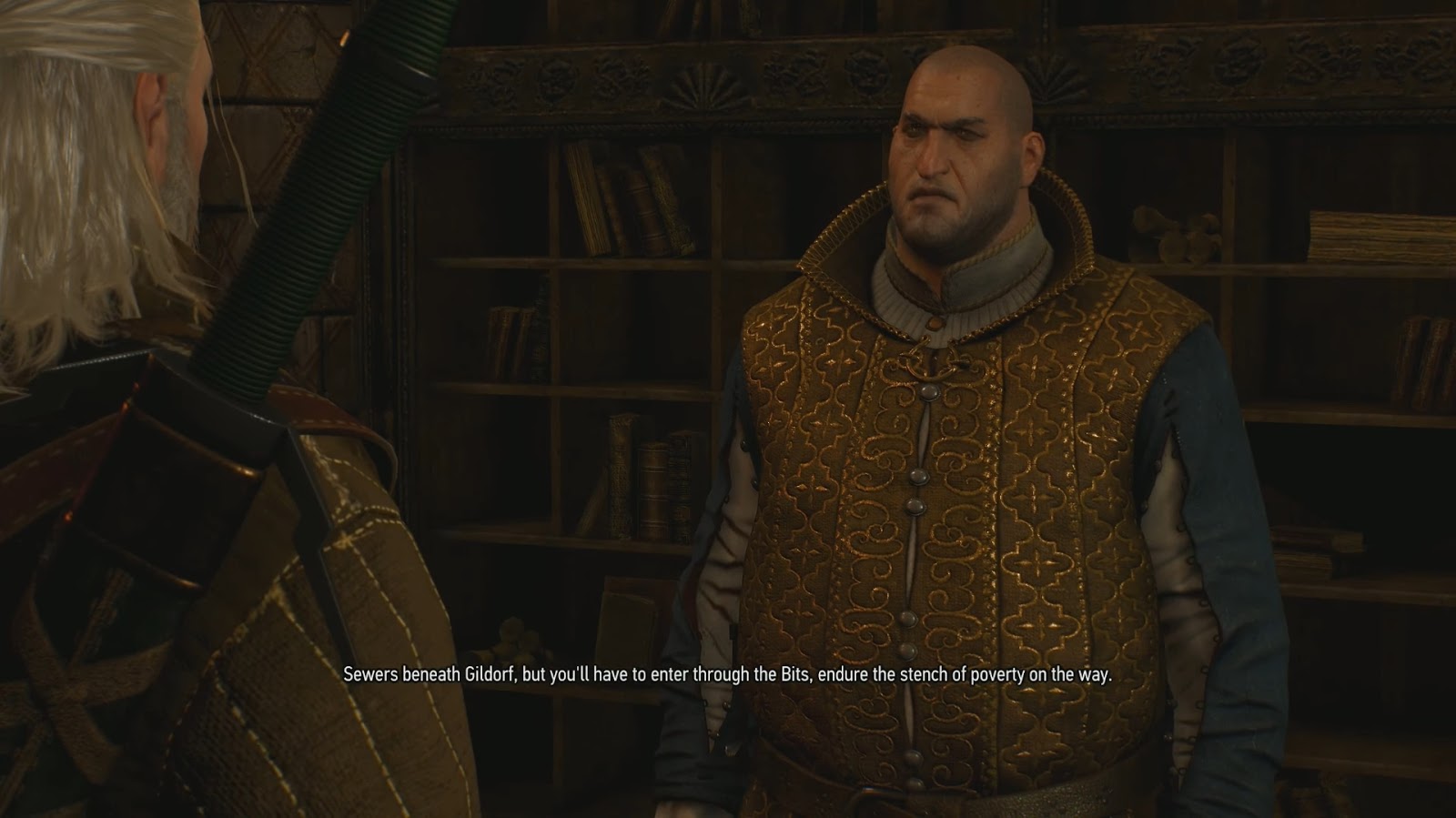
If you follow Triss' questline to its conclusion, Dijkstra will help you save the mages by shipping them out of Novigrad before the cult of the Eternal Fire can get them. This opens up a questline where Dijkstra reveals his true plans - he wants to assassinate Radovid, the king of Redania. Radovid is burning everyone and everything with even the vaguest relation to magic or alchemy, and Dijkstra wants to get rid of him to restore Redania to its former glory as a fair and just country. If you refuse to get involved, it ends there, but if you help Dijkstra and his co-conspirators with a small favor, a new line of quests opens in the endgame.
The War with Nilfgaard
In the final hours of the game, you return to Novigrad to prepare for the final battle. One of the main quests has you meeting Dijkstra once again, though not on the friendliest terms - he's holding someone captive that you need on your side for the finale. If you resolve the situation by breaking his leg, the questline is also lost, but if you persuade him by sharing critical information, he puts his plan to assassinate Radovid into action. This final quest in a long chain of quests is called Reason of State.
Dijkstra works together with Roche, a friend from the Witcher 2 and Thaler, a friend from The Witcher 1. Couple that with the fact that the Witcher 2 revolved around the shifting power in the Northern Realms after another king was assassinated, and it lends a sense of high stakes to this final step in a long journey of choices that could've locked you out of attempting this if you made any mistakes. If you choose to get involved, Geralt needs to personally lure Radovid from the safety of his ship so the assassination can play out, and it's appropriately exciting and climactic.
The assassination goes as planned, more or less, but then the aftermath plays out. The conspirators reveal that they have a deal with Nilfgaard; if they were to successfully assassinate Radovid, Temeria could remain its own state with its own laws and leadership, albeit as a vassal state of Nilfgaard. This is an interesting turn of events, and the game allows you to share your thoughts on whether this is a good idea, but then the quest takes a drastic turn.
Dijkstra reveals that he no longer wants to stand by the deal with Nilfgaard. Now that Radovid has been eliminated, he intends to unite the Northern Realms himself and repel Nilfgaard completely. He then proceeds to do the stupidest, most out-of-character thing in the game and bluntly claims that his co-conspirators have to die for his plan to work. He bluntly tells Geralt to just go away while he does this, and you are left with the choice of either letting him kill characters you've known for two or three games or fighting back, in which case he is unceremoniously killed in the following battle.
I don't necessarily dislike the idea of the conspirators disagreeing on the exact terms of how the Northern Realms will be ruled, but Dijkstra coming out swinging and deciding to kill his co-conspirators while assuming Geralt won't do anything about it is just stupid, especially because Roche and Thaler are his friends. He invokes the supposed Witcher neutrality regarding political affairs, but conveniently forgets that Geralt literally involved himself in their political assassination, making the expectation of neutrality completely ridiculous at that point. Earlier he even told Geralt that Witcher neutrality is just an excuse Witchers hide behind when he tries to get him involved in the assassination, so why does he suddenly think it's going to matter when he's about to backstab some people Geralt knows? And perhaps this temporary lapse in judgment could be forgiven, but if he had any of the brains that he clearly had when he was first introduced, he would immediately back down if Geralt showed resistance. After all, he should know full well that he and his two random bodyguards can't win against Geralt and several armed combatants. But he doesn't, and if you choose to defend Roche and Thaler, a short battle ensues where you easily kill Dijkstra and his men. A thoroughly anticlimactic end for what was one of the greatest characters in the game. If you allow Dijkstra to do what he wants, he successfully kills Thaler and Roche and proceeds to successfully defend Temeria from Nilfgaard. This outcome is decent enough, but it comes at such a high price in terms of character deaths and your own morality, that almost no one will consider it preferable.
In Summary
I hope I was able to articulate why this particular questline disappointed me so much. To go over it one more time:
Dijksta, a highly intelligent and scheming character, involves Geralt and his friends in a political assassination plot. At the end of the questline, he decides to betray his co-conspirators and murder them, expecting Geralt to stay out of it and let him murder some old friends because of "Witcher neutrality" - even though Geralt sacrificed his neutrality to become part of the plot in the first place. When Geralt resists, he attempts to kill Geralt too, even though he should know he can't win the fight, having seen Geralt's combat skills. In a few minutes, a complex and brilliant character is turned into a mustache twirling moron to manufacture a "choice."
Even so...
Sidequests and Witcher contracts in the Witcher 3 are famous for being well written and often having a few surprises and interesting player choices up their sleeves. In general, Witcher 3 stands tall as one of my favorite open-world games with some of the best writing and characters we've seen in the game industry as a whole. That's the reason why a small blemish like I described in this article sticks out so much. But this quest was the one and only time that I was disappointed like that, and the rest of the game deserves all the praise it gets. I look forward to seeing what they made of Cyberpunk 2077, which releases next month!
_
It's been years since I played Witcher 3, but I just really wanted to get my thoughts out about this one. Thanks for reading, and please feel free to share your feedback.
A blog for discussing the art and design of games, popular and obscure, triple A and indie.
Showing posts with label red. Show all posts
Sunday, March 15, 2020
Monday, September 30, 2019
Scary Thoughts about 'Detention'
It's (almost) October again, and the month of Halloween always inspires me to experience and write about new horror experiences. The first game we're talking about this month is Detention, a puzzle exploration game set in 1960s Taiwan under martial law. You take on the role of Fang Ray Shin - called Ray for short - a girl who wakes up in her school with seemingly no one else around. She has to find a way out while avoiding various supernatural dangers.
Extracurricular Lessons (Gameplay)
Detention is a point and click adventure where the character moves along a twodimensional plane. In that regard, it's very by-the-books; you interact with objects by clicking them, you can drag items from your inventory onto interactable objects in the environment to use them and so on. You similarly enter doors simply by interacting with them.
The gameplay differs where the horror comes in. In Detention, you'll mostly encounter two types of ghosts - the Lingered and the Lantern Ghost, both of which must be avoided in a specific way. The Lingered are common humanoid ghosts that stalk the otherwise quiet halls of the school and will attack anything alive they come across. To avoid them, you need to hold your breath when they approach and they will simply pass you by. Holding your breath slows you down, however, and is only temporary - so you need to watch the Lingered carefully and pick the right moment to start holding your breath. Lantern Ghosts are much less common but also harder to deal with; when they approach you, the only way to avoid detection is to turn away, hold your breath and don't move. The Lantern Ghost will smell Ray, detect no signs of life and move on... unless you fail to take the proper steps, in which case she'll get grabbed and killed. Food offerings can be put down on the ground to lure away the Lingered, but this is required only once - when the mechanic is first introduced. I never needed it again after that, though I suppose it's nice to have for people who find the patrolling Lingered too unpredictable.
The enemies initially make the game rather tense, but they lose their impact pretty quickly. Having to hold your breath may seem scary, but the time period is generous and even if a Lingered detects you, you don't die immediately. All in all, they're easy to avoid and the penalty for detection is mild for Lingered. The Lantern Ghost is more threatening because it can kill you instantly, but it's very slow and uncommon. I died only once in the game, and this was due to an instant death trap that I thought was a bit cheap. I won't spoil exactly what happens, but I needed to hold my breath in a situation where it was never implied I should - the danger was not properly introduced like with the two aforementioned ghost types.
As quickly as the fear from the enemies may fade, the game's saving grace is that it is pretty short to begin with, so the enemies disappear once you start to get used to them. In fact, about halfway through, the game's focus shifts almost entirely to puzzles. The atmosphere and visuals are still disturbing at this point (more on that in the next segment), but the gameplay doesn't resemble a horror game anymore. There are no more hostile ghosts at this point. There are story reasons for this, but it makes the pacing feel strange; the 'hold your breath' mechanic loses all relevance at this point. If they wanted to shift the focus to puzzles, it might've been a cool idea to use holding your breath in a puzzle; like maybe a secret message will only appear if you're not making any sound. At least that way, the mechanic would've stayed relevant instead of being tossed out just like that after being your main method of self defense. Even so, the puzzles represent one of the game's greatest strengths. Many of them are interesting and inventive, though none of them are very hard.
One last nitpick: Certain rooms have important scenes or a particularly frightful atmosphere, and the main character cannot run in these rooms; she'll just slowly shuffle forward. This is fine for the most part, but sometimes you can enter these rooms before you have what you need to activate the scene, causing you to shuffle all the way into the room at a snail's pace only to realize you don't need to be there yet. You then have to slowly shuffle out of the room again. It's a slight waste of time, but nothing serious.
All in all, Detention plays like a point and click adventure. It has a few interesting mechanics to represent the horror part of its genre that certainly build tension when first introduced, but it gives up on them shortly before they get stale. During and after this, it focuses mainly on puzzles which are easy but entertaining and inventive. There are a few problems with the gameplay, but it works well enough.
Oppressive Atmosphere (Presentation)
The game makes a strong visual impression. People often describe life under totalitarian reign as "grey" or "colorless," something reflected in the game's muted color scheme. Its graphics are built up from both drawings and what seem to be cut out photographs, leaning strongly into the historic realities the game portrays alongside the supernatural horrors.
The animations of the characters are slightly robotic, although this is actually to the game's benefit when it comes to the monsters. It's hard not to feel a chill when you see a humanoid figure run in from the dark, back bent at an awkward angle and arms outstretched toward you. In terms of appearance, the monsters aren't terribly inspired - they are all essentially undead humans of varying sizes - but the sound design really picks up the slack there. When you're in a hallway with one of the Lingered, you can't miss the distant sound of their alternating coughing, wheezing and laughing. This is what makes it really tense when you're holding your breath and sneaking past them - you never know if a sudden cough or chuckle is just incidental, or because you were noticed.
There isn't a lot of music, and when it's there, it's mostly diegetic (for example, there is actually a radio playing the music that the player character can interact with, rather than the music only existing for the player). It's all authentic Taiwanese music, and I've been told many of the tracks used were actually banned in 1960 - a nice touch. The sound design compliments the visuals well, each major area has its own atmospheric sound with the occasional noise that'll make you question if it was just in the background or actually an enemy waiting just around the corner.
The game's visuals are mostly gray, but it makes good use of splashes of color here and there. Most of the game is pretty grounded, but you'll run into some rather surreal setpieces as well, which all look very impressive once you wrap your head around them. I think the environments are the strongest part of this game's presentation, strikingly depicting both the totalitarian state of Taiwan as well as the frightening supernatural setting.
All in all, Detention's presentation does a great job of building a powerful atmosphere. Sparing use of color, frightening sound design and surreal rooms and locations compensate for slightly weak enemy designs and animations.
Freedom of Expression (Story)
In Detention, you play as two Taiwanese students in 1960. They are called Wei and Fang. One evening they wake up in their school and find it abandoned. It seems everyone left because of a typhoon warning, but the bridge to town is out so they're stuck. You are mostly in control of Fang, a senior student to Wei, and it's up to you to find a way out of the school while avoiding the supernatural horrors and finding out what the cause behind it all is.
While Detention is a horror game, its story is more tragic than scary. It revolves around the lives of students trying to get by in a society where even a vague or merely speculative association with China or communism could get you imprisoned, tortured or killed. The story focuses on how this affects the lives of Wei and Fang and the choices they make under this brutal regime as young people trying to find their way in life. I'm keeping it very vague here because I want to allow you the opportunity to experience this story for itself.
Not unlike Silent Hill, the game employs a lot of symbolism and wants you to think about the meaning behind certain scenes without giving you an explicit explanation for them. And like Silent Hill, the game has multiple endings. They key difference here is that the ending you get depends entirely on how well you understand the story. Without clarifying the context, near the end of the story you are asked a few questions. Answering these questions correctly means you properly understand the story (or got lucky) and this will lead you to the good ending. Answering them incorrectly will lead you to the bad ending. The puzzles are tie in with the story directly, however, so if you can get to the end, you can probably figure it all out.
I don't want to harp on this too much as the game was obviously not made by native speakers, but the English translation has several grammar and spelling errors. It's not a game breaker, but the game is short and doesn't have that much text, so I feel at least a little more time could've been spent on polishing that part up.
All in all, Detention has a strong story that is more tragic than scary, and revolves more around students trying to get by under a totalitarian regime than about kids running away from actual monsters. It misses the mark a little as a horror story, but it's a great story nonetheless. It's sad and beautiful in its own way.
Conclusion
Detention is a solid game and starts out as very unnerving and tense, even if it gives up on being a horror game after a while. Its inventive and surrealistic puzzles and engaging story will compel you to keep going long after the monsters have exited the stage. Its atmospheric presentation, solid story and unique setting make it more than worth a look. However, there are minor problems with its animations, errors in its text and it's quite short - around 3 and a half hours - so take note of that. If you love horror or point & click adventures, you can't go wrong with Detention. It's on Steam here:
https://store.steampowered.com/app/555220/Detention/
Other Thoughts
That's all I had to say about Detention, but there are interesting stories to tell about the developer, RedCandleGames.
This was news some time ago, but they actually developed and released a second game called Devotion. Unfortunately, due to a controversy involving something in the game that was interpreted as an insult towards the Chinese president, the company's right to sell the game was revoked and it was removed from sale on Steam - but not before it was also review bombed, apparently by sympathizers of the Chinese government. It's painful and tragic that a company responsible for such a beautiful story about freedom of thought and expression had their work censored from the Internet because of something so petty. I really hope Devotion will be sold again one day so I can share my thoughts on it as well, because seeing art get censored like this - now that is some real life horror.
_
That's all for today. Thank you for reading! I can't say for sure how many Scary Thoughts articles will be released this month, but at least I got this one done.
Extracurricular Lessons (Gameplay)
Detention is a point and click adventure where the character moves along a twodimensional plane. In that regard, it's very by-the-books; you interact with objects by clicking them, you can drag items from your inventory onto interactable objects in the environment to use them and so on. You similarly enter doors simply by interacting with them.
The gameplay differs where the horror comes in. In Detention, you'll mostly encounter two types of ghosts - the Lingered and the Lantern Ghost, both of which must be avoided in a specific way. The Lingered are common humanoid ghosts that stalk the otherwise quiet halls of the school and will attack anything alive they come across. To avoid them, you need to hold your breath when they approach and they will simply pass you by. Holding your breath slows you down, however, and is only temporary - so you need to watch the Lingered carefully and pick the right moment to start holding your breath. Lantern Ghosts are much less common but also harder to deal with; when they approach you, the only way to avoid detection is to turn away, hold your breath and don't move. The Lantern Ghost will smell Ray, detect no signs of life and move on... unless you fail to take the proper steps, in which case she'll get grabbed and killed. Food offerings can be put down on the ground to lure away the Lingered, but this is required only once - when the mechanic is first introduced. I never needed it again after that, though I suppose it's nice to have for people who find the patrolling Lingered too unpredictable.
The enemies initially make the game rather tense, but they lose their impact pretty quickly. Having to hold your breath may seem scary, but the time period is generous and even if a Lingered detects you, you don't die immediately. All in all, they're easy to avoid and the penalty for detection is mild for Lingered. The Lantern Ghost is more threatening because it can kill you instantly, but it's very slow and uncommon. I died only once in the game, and this was due to an instant death trap that I thought was a bit cheap. I won't spoil exactly what happens, but I needed to hold my breath in a situation where it was never implied I should - the danger was not properly introduced like with the two aforementioned ghost types.
As quickly as the fear from the enemies may fade, the game's saving grace is that it is pretty short to begin with, so the enemies disappear once you start to get used to them. In fact, about halfway through, the game's focus shifts almost entirely to puzzles. The atmosphere and visuals are still disturbing at this point (more on that in the next segment), but the gameplay doesn't resemble a horror game anymore. There are no more hostile ghosts at this point. There are story reasons for this, but it makes the pacing feel strange; the 'hold your breath' mechanic loses all relevance at this point. If they wanted to shift the focus to puzzles, it might've been a cool idea to use holding your breath in a puzzle; like maybe a secret message will only appear if you're not making any sound. At least that way, the mechanic would've stayed relevant instead of being tossed out just like that after being your main method of self defense. Even so, the puzzles represent one of the game's greatest strengths. Many of them are interesting and inventive, though none of them are very hard.
One last nitpick: Certain rooms have important scenes or a particularly frightful atmosphere, and the main character cannot run in these rooms; she'll just slowly shuffle forward. This is fine for the most part, but sometimes you can enter these rooms before you have what you need to activate the scene, causing you to shuffle all the way into the room at a snail's pace only to realize you don't need to be there yet. You then have to slowly shuffle out of the room again. It's a slight waste of time, but nothing serious.
All in all, Detention plays like a point and click adventure. It has a few interesting mechanics to represent the horror part of its genre that certainly build tension when first introduced, but it gives up on them shortly before they get stale. During and after this, it focuses mainly on puzzles which are easy but entertaining and inventive. There are a few problems with the gameplay, but it works well enough.
Oppressive Atmosphere (Presentation)
The game makes a strong visual impression. People often describe life under totalitarian reign as "grey" or "colorless," something reflected in the game's muted color scheme. Its graphics are built up from both drawings and what seem to be cut out photographs, leaning strongly into the historic realities the game portrays alongside the supernatural horrors.
The animations of the characters are slightly robotic, although this is actually to the game's benefit when it comes to the monsters. It's hard not to feel a chill when you see a humanoid figure run in from the dark, back bent at an awkward angle and arms outstretched toward you. In terms of appearance, the monsters aren't terribly inspired - they are all essentially undead humans of varying sizes - but the sound design really picks up the slack there. When you're in a hallway with one of the Lingered, you can't miss the distant sound of their alternating coughing, wheezing and laughing. This is what makes it really tense when you're holding your breath and sneaking past them - you never know if a sudden cough or chuckle is just incidental, or because you were noticed.
There isn't a lot of music, and when it's there, it's mostly diegetic (for example, there is actually a radio playing the music that the player character can interact with, rather than the music only existing for the player). It's all authentic Taiwanese music, and I've been told many of the tracks used were actually banned in 1960 - a nice touch. The sound design compliments the visuals well, each major area has its own atmospheric sound with the occasional noise that'll make you question if it was just in the background or actually an enemy waiting just around the corner.
The game's visuals are mostly gray, but it makes good use of splashes of color here and there. Most of the game is pretty grounded, but you'll run into some rather surreal setpieces as well, which all look very impressive once you wrap your head around them. I think the environments are the strongest part of this game's presentation, strikingly depicting both the totalitarian state of Taiwan as well as the frightening supernatural setting.
All in all, Detention's presentation does a great job of building a powerful atmosphere. Sparing use of color, frightening sound design and surreal rooms and locations compensate for slightly weak enemy designs and animations.
Freedom of Expression (Story)
In Detention, you play as two Taiwanese students in 1960. They are called Wei and Fang. One evening they wake up in their school and find it abandoned. It seems everyone left because of a typhoon warning, but the bridge to town is out so they're stuck. You are mostly in control of Fang, a senior student to Wei, and it's up to you to find a way out of the school while avoiding the supernatural horrors and finding out what the cause behind it all is.
While Detention is a horror game, its story is more tragic than scary. It revolves around the lives of students trying to get by in a society where even a vague or merely speculative association with China or communism could get you imprisoned, tortured or killed. The story focuses on how this affects the lives of Wei and Fang and the choices they make under this brutal regime as young people trying to find their way in life. I'm keeping it very vague here because I want to allow you the opportunity to experience this story for itself.
Not unlike Silent Hill, the game employs a lot of symbolism and wants you to think about the meaning behind certain scenes without giving you an explicit explanation for them. And like Silent Hill, the game has multiple endings. They key difference here is that the ending you get depends entirely on how well you understand the story. Without clarifying the context, near the end of the story you are asked a few questions. Answering these questions correctly means you properly understand the story (or got lucky) and this will lead you to the good ending. Answering them incorrectly will lead you to the bad ending. The puzzles are tie in with the story directly, however, so if you can get to the end, you can probably figure it all out.
I don't want to harp on this too much as the game was obviously not made by native speakers, but the English translation has several grammar and spelling errors. It's not a game breaker, but the game is short and doesn't have that much text, so I feel at least a little more time could've been spent on polishing that part up.
All in all, Detention has a strong story that is more tragic than scary, and revolves more around students trying to get by under a totalitarian regime than about kids running away from actual monsters. It misses the mark a little as a horror story, but it's a great story nonetheless. It's sad and beautiful in its own way.
Conclusion
Detention is a solid game and starts out as very unnerving and tense, even if it gives up on being a horror game after a while. Its inventive and surrealistic puzzles and engaging story will compel you to keep going long after the monsters have exited the stage. Its atmospheric presentation, solid story and unique setting make it more than worth a look. However, there are minor problems with its animations, errors in its text and it's quite short - around 3 and a half hours - so take note of that. If you love horror or point & click adventures, you can't go wrong with Detention. It's on Steam here:
https://store.steampowered.com/app/555220/Detention/
Other Thoughts
That's all I had to say about Detention, but there are interesting stories to tell about the developer, RedCandleGames.
This was news some time ago, but they actually developed and released a second game called Devotion. Unfortunately, due to a controversy involving something in the game that was interpreted as an insult towards the Chinese president, the company's right to sell the game was revoked and it was removed from sale on Steam - but not before it was also review bombed, apparently by sympathizers of the Chinese government. It's painful and tragic that a company responsible for such a beautiful story about freedom of thought and expression had their work censored from the Internet because of something so petty. I really hope Devotion will be sold again one day so I can share my thoughts on it as well, because seeing art get censored like this - now that is some real life horror.
_
That's all for today. Thank you for reading! I can't say for sure how many Scary Thoughts articles will be released this month, but at least I got this one done.
Monday, July 29, 2019
Dutch Representation
Overwatch's latest hero, Sigma, was revealed recently - along with the fact that he's Dutch. I was rather delighted by this reveal. I haven't played Overwatch much lately, but the team puts a lot of effort and detail into each character and seeing a Dutch character brought to life like this is a remarkable experience. I look forward to seeing all the references to Dutch culture in his voice lines, sprays and skins. And all of this got me thinking about being 'represented' as a Dutch person.
During my childhood years, I consumed a lot of American (and some British) media and noticed that a lot of European countries would come up depending on the stories and setting. Germany, France and Italy were big names that characters would visit or at least refer to - but never really the Netherlands. And when the Netherlands would come up, the depiction would either be insulting (like Austin Powers' Goldmember) or just plain wrong, having the "Dutch" people speak German (like in the Bond movie Diamonds Are Forever). At the time, this irritated me a lot, but I've come to understand that there are simply many factors working against "proper representation" for the Dutch. For one, our country is tiny, smack dab in between of Great Britain, Germany and France and the English name for our language is Dutch, which sounds an awful lot like the Germans' name for German, 'Deutsch.' No events in recent history can set us as easy heroes or villains, either, and the Dutch accent is hard to pin down and imitate - not iconic at all. So rather than getting annoyed at lacking or incorrect representation, I've just come to appreciate the times when we get acknowledged at all.
And to celebrate this occasion, I wanted to have a look at a few random examples of that:
Windmillville
Mario Party 7 has a 'vacation' theme, so the boards are all based around famous locations. For example, the 'Grand Canal' is based on Venice in Italy. But my favorite board is Windmillville, and it's easy to see why.
During my childhood years, I consumed a lot of American (and some British) media and noticed that a lot of European countries would come up depending on the stories and setting. Germany, France and Italy were big names that characters would visit or at least refer to - but never really the Netherlands. And when the Netherlands would come up, the depiction would either be insulting (like Austin Powers' Goldmember) or just plain wrong, having the "Dutch" people speak German (like in the Bond movie Diamonds Are Forever). At the time, this irritated me a lot, but I've come to understand that there are simply many factors working against "proper representation" for the Dutch. For one, our country is tiny, smack dab in between of Great Britain, Germany and France and the English name for our language is Dutch, which sounds an awful lot like the Germans' name for German, 'Deutsch.' No events in recent history can set us as easy heroes or villains, either, and the Dutch accent is hard to pin down and imitate - not iconic at all. So rather than getting annoyed at lacking or incorrect representation, I've just come to appreciate the times when we get acknowledged at all.
And to celebrate this occasion, I wanted to have a look at a few random examples of that:
Windmillville
Mario Party 7 has a 'vacation' theme, so the boards are all based around famous locations. For example, the 'Grand Canal' is based on Venice in Italy. But my favorite board is Windmillville, and it's easy to see why.
Windmillville is an idyllic fantasy representation of some Dutch stereotypes. Meadows and tulips (an important Dutch industry), accompanied by windmills (for which we are famous) which also function as banks you invest in (referring to the Dutch's historical financial savvy). Windmillville gets it right by not trying to be accurate, it's just a glorious exaggeration of some clichés made into a Mario Party board.
Age of Empires III
This example relies more on history than the last, but the Dutch are a faction in Ages of Empires III. While the voice lines for the units are a bit stilted and awkward, the faction itself is interesting and well realized, hinging primarily on the Netherlands' history as a financially forward thinking and trading nation by allowing you to build banks, among other things.
Red
This is a minor example, but in Pokémon Black & White (and its sequel), there are a few members of Team Plasma named after colors in various languages. One of the sages is called 'Rood,' which is the Dutch word for red. This is cool, but it would've been even better if it had been Orange (Oranje) - because that's the name of our royal family, and thus considered our national color. Still a neat detail, though!
Red Alert 3
Red Alert 3 is a goofy and downright entertaining RTS. One of its greatest strengths is its all-star cast crazy factions and charming presentation. This all comes to a head when the Empire of the Rising Sun (one of the factions) led by George Takei leads an assault on final allied base in Amsterdam.
It's not a literal copy of Amsterdam, but the canals are there and the architecture of the civilian buildings is noticeably Dutch. I thought it was a really cool location for the finale of the Empire's campaign.
Nintendo in General
This pertains less to the actual content of games and more to their localizations, but starting with the Wii U Nintendo started translating more of their major games to Dutch. The Legend of Zelda: Breath of the Wild and Mario Odyssey are both the first major games in their respective franchises that were given a Dutch translation. I recently completed Mario Odyssey, and I really appreciated the translation even if I didn't need it.
_
So, that's it! Just a few examples of how Dutch and the Dutch are represented in videogames. There are Dutch developers, of course, but I specifically wanted to look at how non-Dutch parties handle it.
How about you? Are you from a country or culture that you feel is or isn't properly represented? Please share your experiences down below!
Labels:
alert,
amsterdam,
dutch,
language,
mario,
netherlands,
nintendo,
red,
representation,
represented,
translation,
zelda
Saturday, June 11, 2016
The Many Layers of Darkest Dungeon
Darkest Dungeon is a roguelike turn-based RPG, developed by Red Hook Studios. It came out of early access and was officially released on the 16th of January 2016. Over its time in Early Access and after its release, it amassed a huge following thanks to its gorgeous artstyle, incredible atmospheric soundtrack and Wayne June's excellent narration. In this piece, I'd like to highlight some of the game's qualities and why I personally appreciate it.
The Role in 'Role-Playing Game'
Right off the bat, Darkest Dungeon distinguishes itself from other RPGs and roguelikes with its introduction. If you haven't seen it, please, do give it a look:
It's a very cool intro that establishes the story and atmosphere, but what I'd like to highlight is the way the player is addressed. Now, RPGs have some conventions, depending on the region they're from. Japanese RPGs generally let the player play as an established character or a set of established characters (think of games like Final Fantasy), while western RPGs generally let the player play as a heroic version of themselves (think of games like Mass Effect and the Elder Scrolls series). In either case, the player is right in the thick of it, playing the 'role' of a hero. Darkest Dungeon immediately sets itself apart from such conventions by instead putting the player in the role of a leader who watches his group of heroes fight from a distance- not unlike how many real-time strategy games establish the player's role if they establish one at all.
This actually fits the tone of the game rather well; while your heroes are not quite as expendable as any given unit in an RTS, they're a lot more expendable than your usual RPG heroes. It represents lost time and money if one dies, but you can always get more willing heroes from the stage coach. This really helps establish the grim, hopeless atmosphere, but also makes room for an interesting twist on the roguelite genre; the game does use permadeath, but you - the player - are not the dying heroes. What the heroes have brought back to you, what they have achieved - that is all permanent. This allows Darkest Dungeon to incorporate all the risk and tension of roguelites, with the lengthy campaign and story of a full blown RPG.
So, the player is not in fact a hero facing the dangers of the dungeons - they play as the unnamed Heir to the Ancestor. After receiving the Ancestor's last letter, they travel to the Hamlet in hopes of cleansing it of corruption and eventually defeating the Darkest Dungeon itself, and thus clearing their family name. To this end, they'll recruit heroes, send them to fight and use whatever they bring back to restore the Hamlet to its former glory.
Madness, our Old Friend
One of the most interesting mechanics of Darkest Dungeon is the stress mechanic. Depending on a lot of factors, like a fear of certain areas or creatures, heroes will be inflicted with Stress from certain events and enemy attacks. If a hero's stress reaches 100, their resolve will be tested and they'll gain an affliction. An affliction is a debilitating state of mind that can cause serious problems for the whole party. A hero may, for example, become Paranoid and refuse healing even when they desperately need it.
And should the hero's stress reach 200, they'll get a Heart Attack which will immediately put them on the brink of death. On rare occasions, a hero may bounce back from the stress instead and gain a virtue. Unlike afflictions, virtues will benefit the party greatly.
What I appreciate about the stress mechanic - and so many of Darkest Dungeon's inner workings - is that it is interesting on both a narrative and design level. In a game with a dark, Lovecraftian atmosphere, it makes perfect sense that the heroes could mentally break under the weight of what they must face. But for an RPG, it's also really interesting to have to consider a completely seperate kind of "damage" being done to your heroes, which seems harmless enough until your heroes snap and their insanity begins to interact with and affect all the other mechanics. And to me, that's one of the greatest strengths of the game- there is a lot to consider. Which heroes you take, what order your position them in, which attacks you give them, which Trinkets you equip them with, what their camping skills are, which quirks they have... and all of these things represent percentage chances. Just because a character's a kleptomaniac, that doesn't mean they'll steal every time. A character who's afraid of beasts might do fine in a given battle against beasts. But you have to pay close attention and plan for every possibility, or your lack of preparation could betray you at the worst moment.
A Moment of Clarity in the Eye of the Storm
The Hamlet is where you prepare for the horrors to come. It is a calm place- the safest, most stable area in an altogether unpredictable world. In the dungeons, you are a general leading soldiers, very possibly to their death. In the Hamlet, you are merely the owner of the estate, choosing who to let in, attending to those who need stress relief, and investing money and heirlooms into improving the facilities. The organized, peaceful overview of the Hamlet stands in stark contrast with the dungeons.
In an earlier version of this post, I had planned to offer at least one point of criticism - namely that the Hamlet becomes a bit too dull and predictable after you've upgraded most of the buildings. But then Red Hook Studios added the Town Events update to the game, which causes special events to occur in the Hamlet depending on a few factors, effectively eliminating that "problem." Apparently, they were way ahead of me!
Death Waits for the Slightest Lapse in Concentration
As mentioned, it's the dungeons where things get challenging. I've briefly touched upon the Stress mechanic, but that is just one of the many mechanics that interact with one another in Darkest Dungeon.
Each Hero has a class. Each class has a set of eight possible attacks, of which you can equip 4 at a time. Most attacks can only hit a limited amount of spots in the enemy formation and can only be used from specific spots of your party's formation. Additionally heroes have positive quirks, negative quirks, and if it comes to that, diseases - and all of these things act as modifiers on top of their natural stats, based on their class. Similar to the embedded quirks, the Afflictions and Virtues born from stress add additional modifiers to your heroes' actions and how they are affected. How light or dark it is, based on your usage of torches and certain special attacks, also influences the game. The darker it is, the more damage and stress enemies cause, but the more loot you'll able to find. In fact, a lot of modifiers in the game work this way; from which Heroes you pick, to which Trinkets you equip them with, there's often a catch to everything.
Indeed, Darkest Dungeon is absolutely full of risk/reward considerations. Consider, for example, choosing whether to take a Vestal or an Occultist as a dedicated healer. A fully upgraded Vestal can heal an ally for 7-9 health. A fully upgraded Occultist can heal an ally for 0-20 health. In other words, the Vestal is very reliable, but the Occultist has the potential for far greater heals - although his heal has a chance to cause Bleed, as well. Similarly, the Abomination is immensely powerful and versatile, but religious classes like the Vestal, Crusader and Leper will not enter the dungeon with him, and his Transformation will cause the rest of the party Stress. Some characters like the Jester do low damage, but have attacks with a very high crit rate, while others, like the Leper, hit like a truck but have poor accuracy. There are many more examples, but the end result is this: Every combination of heroes, with any combination of quirks and trinkets, against any given set up of enemies in any location, can all lead to uniquely effective... or uniquely terrible results. You can plan for just about any situation, but you can't be prepared for every situation.
This level of complexity is what I love so much about Darkest Dungeon. In the past, I've written about RPGs that use a lot of big numbers to imply progression or simply for the sake of spectacle. Not only is Darkest Dungeon actually quite modest with its numbers - the largest bosses won't have much more than 300 HP - but the player is offered a clear perspective on most of the numbers and how they interact. There are exceptions to this transparency - the exact modifiers of Afflictions aren't shown - but that makes perfect sense: It highlights the unpredictability of a broken psyche.
In Closing
So, what does all of this amount to?
Darkest Dungeon cleverly plays with the player's role to combine the detailed worlds and stories of RPGs with the tense, permanent nature of roguelikes. Its battles involve hundreds of interacting variables and modifiers that demand you think and prepare for what lies ahead, which may become especially tense if your heroes' minds break and their behaviour becomes completely erratic. In many situations, you're asked to think about the risks you want to take. Reliable solutions are often weaker solutions.
On the mechanical side, all of this - and more - is what makes Darkest Dungeon such a great gothic RPG. The mechanics that portray this dangerous, hopeless world align so perfectly with the art, music and narration that do the same.
And that, in summary, is why I had such an amazing time playing Darkest Dungeon.
_
Thanks for taking the time to read my blog! I don't generally use my blog to articulate why I personally like something, so this post was a little bit experimental. Feel free to post any feedback!
The Role in 'Role-Playing Game'
Right off the bat, Darkest Dungeon distinguishes itself from other RPGs and roguelikes with its introduction. If you haven't seen it, please, do give it a look:
It's a very cool intro that establishes the story and atmosphere, but what I'd like to highlight is the way the player is addressed. Now, RPGs have some conventions, depending on the region they're from. Japanese RPGs generally let the player play as an established character or a set of established characters (think of games like Final Fantasy), while western RPGs generally let the player play as a heroic version of themselves (think of games like Mass Effect and the Elder Scrolls series). In either case, the player is right in the thick of it, playing the 'role' of a hero. Darkest Dungeon immediately sets itself apart from such conventions by instead putting the player in the role of a leader who watches his group of heroes fight from a distance- not unlike how many real-time strategy games establish the player's role if they establish one at all.
This actually fits the tone of the game rather well; while your heroes are not quite as expendable as any given unit in an RTS, they're a lot more expendable than your usual RPG heroes. It represents lost time and money if one dies, but you can always get more willing heroes from the stage coach. This really helps establish the grim, hopeless atmosphere, but also makes room for an interesting twist on the roguelite genre; the game does use permadeath, but you - the player - are not the dying heroes. What the heroes have brought back to you, what they have achieved - that is all permanent. This allows Darkest Dungeon to incorporate all the risk and tension of roguelites, with the lengthy campaign and story of a full blown RPG.
So, the player is not in fact a hero facing the dangers of the dungeons - they play as the unnamed Heir to the Ancestor. After receiving the Ancestor's last letter, they travel to the Hamlet in hopes of cleansing it of corruption and eventually defeating the Darkest Dungeon itself, and thus clearing their family name. To this end, they'll recruit heroes, send them to fight and use whatever they bring back to restore the Hamlet to its former glory.
Madness, our Old Friend
One of the most interesting mechanics of Darkest Dungeon is the stress mechanic. Depending on a lot of factors, like a fear of certain areas or creatures, heroes will be inflicted with Stress from certain events and enemy attacks. If a hero's stress reaches 100, their resolve will be tested and they'll gain an affliction. An affliction is a debilitating state of mind that can cause serious problems for the whole party. A hero may, for example, become Paranoid and refuse healing even when they desperately need it.
And should the hero's stress reach 200, they'll get a Heart Attack which will immediately put them on the brink of death. On rare occasions, a hero may bounce back from the stress instead and gain a virtue. Unlike afflictions, virtues will benefit the party greatly.
What I appreciate about the stress mechanic - and so many of Darkest Dungeon's inner workings - is that it is interesting on both a narrative and design level. In a game with a dark, Lovecraftian atmosphere, it makes perfect sense that the heroes could mentally break under the weight of what they must face. But for an RPG, it's also really interesting to have to consider a completely seperate kind of "damage" being done to your heroes, which seems harmless enough until your heroes snap and their insanity begins to interact with and affect all the other mechanics. And to me, that's one of the greatest strengths of the game- there is a lot to consider. Which heroes you take, what order your position them in, which attacks you give them, which Trinkets you equip them with, what their camping skills are, which quirks they have... and all of these things represent percentage chances. Just because a character's a kleptomaniac, that doesn't mean they'll steal every time. A character who's afraid of beasts might do fine in a given battle against beasts. But you have to pay close attention and plan for every possibility, or your lack of preparation could betray you at the worst moment.
A Moment of Clarity in the Eye of the Storm
The Hamlet is where you prepare for the horrors to come. It is a calm place- the safest, most stable area in an altogether unpredictable world. In the dungeons, you are a general leading soldiers, very possibly to their death. In the Hamlet, you are merely the owner of the estate, choosing who to let in, attending to those who need stress relief, and investing money and heirlooms into improving the facilities. The organized, peaceful overview of the Hamlet stands in stark contrast with the dungeons.
In an earlier version of this post, I had planned to offer at least one point of criticism - namely that the Hamlet becomes a bit too dull and predictable after you've upgraded most of the buildings. But then Red Hook Studios added the Town Events update to the game, which causes special events to occur in the Hamlet depending on a few factors, effectively eliminating that "problem." Apparently, they were way ahead of me!
Death Waits for the Slightest Lapse in Concentration
As mentioned, it's the dungeons where things get challenging. I've briefly touched upon the Stress mechanic, but that is just one of the many mechanics that interact with one another in Darkest Dungeon.
Each Hero has a class. Each class has a set of eight possible attacks, of which you can equip 4 at a time. Most attacks can only hit a limited amount of spots in the enemy formation and can only be used from specific spots of your party's formation. Additionally heroes have positive quirks, negative quirks, and if it comes to that, diseases - and all of these things act as modifiers on top of their natural stats, based on their class. Similar to the embedded quirks, the Afflictions and Virtues born from stress add additional modifiers to your heroes' actions and how they are affected. How light or dark it is, based on your usage of torches and certain special attacks, also influences the game. The darker it is, the more damage and stress enemies cause, but the more loot you'll able to find. In fact, a lot of modifiers in the game work this way; from which Heroes you pick, to which Trinkets you equip them with, there's often a catch to everything.
Indeed, Darkest Dungeon is absolutely full of risk/reward considerations. Consider, for example, choosing whether to take a Vestal or an Occultist as a dedicated healer. A fully upgraded Vestal can heal an ally for 7-9 health. A fully upgraded Occultist can heal an ally for 0-20 health. In other words, the Vestal is very reliable, but the Occultist has the potential for far greater heals - although his heal has a chance to cause Bleed, as well. Similarly, the Abomination is immensely powerful and versatile, but religious classes like the Vestal, Crusader and Leper will not enter the dungeon with him, and his Transformation will cause the rest of the party Stress. Some characters like the Jester do low damage, but have attacks with a very high crit rate, while others, like the Leper, hit like a truck but have poor accuracy. There are many more examples, but the end result is this: Every combination of heroes, with any combination of quirks and trinkets, against any given set up of enemies in any location, can all lead to uniquely effective... or uniquely terrible results. You can plan for just about any situation, but you can't be prepared for every situation.
This level of complexity is what I love so much about Darkest Dungeon. In the past, I've written about RPGs that use a lot of big numbers to imply progression or simply for the sake of spectacle. Not only is Darkest Dungeon actually quite modest with its numbers - the largest bosses won't have much more than 300 HP - but the player is offered a clear perspective on most of the numbers and how they interact. There are exceptions to this transparency - the exact modifiers of Afflictions aren't shown - but that makes perfect sense: It highlights the unpredictability of a broken psyche.
In Closing
So, what does all of this amount to?
Darkest Dungeon cleverly plays with the player's role to combine the detailed worlds and stories of RPGs with the tense, permanent nature of roguelikes. Its battles involve hundreds of interacting variables and modifiers that demand you think and prepare for what lies ahead, which may become especially tense if your heroes' minds break and their behaviour becomes completely erratic. In many situations, you're asked to think about the risks you want to take. Reliable solutions are often weaker solutions.
On the mechanical side, all of this - and more - is what makes Darkest Dungeon such a great gothic RPG. The mechanics that portray this dangerous, hopeless world align so perfectly with the art, music and narration that do the same.
And that, in summary, is why I had such an amazing time playing Darkest Dungeon.
_
Thanks for taking the time to read my blog! I don't generally use my blog to articulate why I personally like something, so this post was a little bit experimental. Feel free to post any feedback!
Subscribe to:
Posts (Atom)


