Pagina's

Showing posts with label RPG. Show all posts

Saturday, October 3, 2020

Some Thoughts About Final Fantasy 13-2

After finishing Final Fantasy 13, I moved right along to its sequel, Final Fantasy 13-2. Direct sequels aren't very common in the Final Fantasy series and 13 is of particular note because it has two. Considering the ways in which FF13 deviated from the series' conventions I was excited to see how these direct sequels would learn from and iterate upon its predecessor. Today we're talking about Final Fantasy 13-2, a direct sequel that takes place two years after Final Fantasy 13.

Timeless Beauty (Presentation)

The environments in Final Fantasy 13 could really take your breath away, and 13-2 is no different. As a matter of fact, you visit so many locations at so many points in time that it has greater visual variety. You'll be exploring the usual valleys and fields, but highly technologically advanced locations as well - and just about anything in between. I found myself constantly distracted by the dozens of beautiful views this game has to offer.
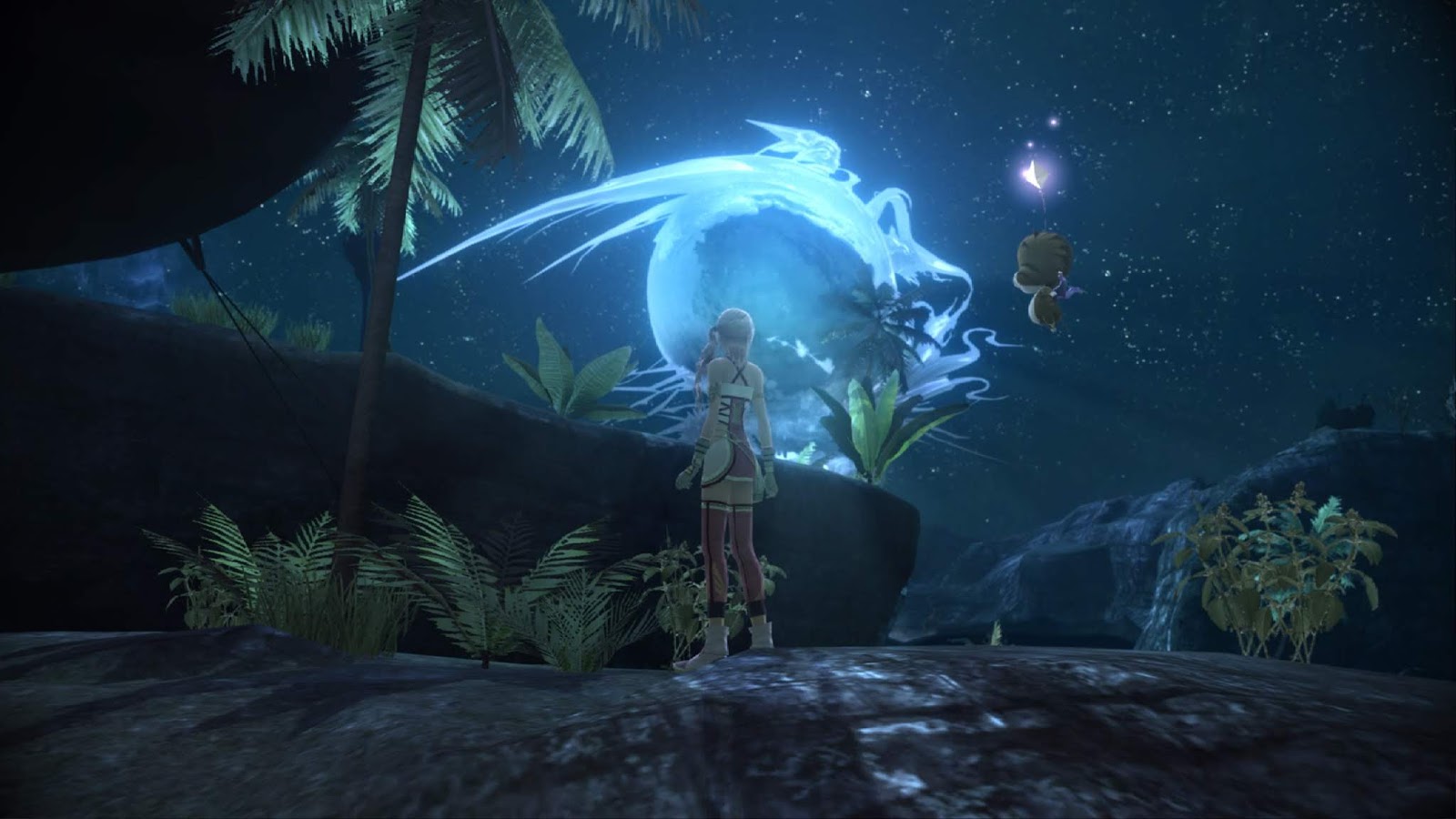


A lot of the enemies and music are re-used from Final Fantasy 13. It makes sense, considering it takes place in the same world, but it's still something to consider. We'll get into the gameplay side of this later, but 13-2 has a lot more optional content and a lot more NPCs to talk to for sidequests. Their voice acting is generally fine, but there's a very limited amount of different models with very limited animation. It can be a little bit grating to watch the repetitive mouth flapping of the same face you've seen a few dozen times after watching the truly gorgeous cutscenes reserved for the game's important characters.

13-2's soundtrack can be described as having higher highs and lower lows than its predecessor. Most of the battle themes you'll hear are excellent, combining synth with orchestra to emphasize the game's journey through different time periods.

https://www.youtube.com/watch?v=wdframgnBVE

But some tracks have an almost 'grunge metal' feel to them, with screaming vocals that absolutely do not fit the beautiful landscapes and emotional story of a Final Fantasy game. The track that plays when you ride a red Chocobo, 'Crazy Chocobo' is infamous at this point. Listen at your own risk:

https://www.youtube.com/watch?v=hEUOOgNzOv4

In short, FF13-2 offers more visual variety, especially in environments, but NPC and enemy designs are still regularly re-used and not particularly impressive in the former's case. The soundtrack recycles some tracks from 13, but the original pieces are mostly excellent. A few of the tracks are bad.

Time's Teachings (Gameplay)

Final Fantasy 13-2 is an evolution of Final Fantasy 13 in many ways. In this segment, I'll focus on the ways 13-2 differentiates itself in its exploration and battle system.

The endless complaints about Final Fantasy 13's overly linear nature were clearly heard and applied to 13-2.  While there are still linear segments, the game opens up almost immediately and many of its environments feature branching paths or are completely wide open. Not only that, there are many optional locations and time periods to visit for players who explore thoroughly. As free and open as the exploration is, though, the areas and time periods can feel a little disjointed because you access them from a somewhat disorganized level select screen referred to as the 'Historia Crux.' This is a small price to pay for the sheer amount of freedom and optional content, however.

Some small things were added to the exploration in 13-2 as well. You can now jump at will, and you can find secret treasures hidden in the environment by using your companion Moogle's special detecting ability or by throwing him to treasures out of your reach, an act that he very much doesn't appreciate. Enemy encounters have also been reworked; FF13 did away with random encounters entirely with enemies simply existing in the overworld. 13-2 partially returns to the traditional system, with enemy encounters appearing at random in the overworld, but not necessarily initiating a battle like the JRPGs of old. Once an enemy appears, the player can choose to try to run away, or deal a first strike on the enemy to gain an advantage in battle. This system allows you to grind certain types of enemy more easily, but can be frustrating in cramped areas when faster enemies that can actually chase you down spawn. 

In FF13's linear environments, there weren't many NPCs you could actually interact with. In 13-2, however, there are a boatload of NPCs with sidequests and lore, although most sidequests boil down to finding an item in the area or killing a specific enemy. The best sidequests play with the game's theme of time travel and have you visit an area in multiple different time periods to figure out what to do. The game even has a lot of dialogue options, but we'll discuss those in more detail under the story segment.

One final thing to mention about the exploration is that sometimes, to progress, you need to resolve a 'paradox' by solving a puzzle. These puzzles offer some welcome variation when done on occasion, but can often overstay their welcome by either being simple and repetitive or frustratingly hard. As an example of the former, there are puzzles where you just connect crystals of the same color over and over again. As an example of the latter, there are complex clock puzzles that would take more time to explain than they're really worth, but basically, you move the arms of a clock to numbers which then decide how many steps you can move the arms of the clock again, and using this method, you need to find a way to have the clock stop at every point without ever landing on the same point again. If that sounds confusing, that's because it is.

So, all in all, the exploration has changed a lot. But what about the battles?

Final Fantasy 13 shifted a lot of the focus in battles from actively choosing options to preparing and switching between 'paradigms,' where you assign each character a role like Commando or Medic. Final Fantasy 13-2 uses the same system but expands upon it in a few ways. For starters, your characters throughout the entire game are Serah and Noel, and you decide which Roles to teach them when as you level them up. This means that you not only need to think about which paradigms to use, you also need to choose between improving your current roles/paradigms or learning new ones. 

It is a little disappointing to only have 2 characters instead of Final Fantasy 13's six, but the other addition to the battle system makes up for it: monster taming. Most monsters you encounter can be tamed and acquired for use in battle. The third party member in any paradigm is a tamed monster of your choice and there are dozens upon dozens of monsters you can tame, level up, combine with each other for powerful passive abilities and even name and equip with cute cosmetics. 

Unlike Noel and Serah, tamed monsters only ever have one Role, but that makes sense considering the sheer amount of tameable monsters you can acquire.

Next to the major additions, there are also minor conveniences. A paradigm shift now happens without a small cutscene demonstrating to which role each character has switched, and if the character the player is controlling gets knocked out, you automatically switch to the other instead of getting an instant game over.

You'll notice that these additions do indeed expand on the system that was present 13, but don't fundamentally change it. I have a lot of respect for the decision to not throw the baby out with the bathwater here. A lot of people complained about the streamlined battle system in 13 because it was different, not because it was actually fundamentally flawed on a game design level. It's very satisfying to plan out some perfect paradigms and then watch your team destroy an enemy with little effort thanks to your thinking ahead, and this game pushes that system even further with added convenience and customization.

I think most of the changes made in 13-2 are for the better, but there are a few bad ideas mixed in. One of those is the quick time events in cutscenes. Usually the finishing blow against a boss is handled by awkwardly performing a series of timed button presses over a cutscene, which feels unnecessary and pretty tedious. It feels completely contradictory to how the battle system works - you've spent all this time planning ahead, setting up your Paradigms and switching between them - now watch an elaborate cutscene where Noel and Serah destroy the boss while you press the buttons it tells you to. Considering this only happens after major boss battles, though, it's not too much of a bother.


All in all, Final Fantasy 13-2 is a shining example of listening to feedback while maintaining your vision. Exploration was massively expanded, with huge open areas and optional content to explore. Random enemy encounters in the overworld generally allow for easier grinding and monster taming, but can be tedious if faster enemies spawn in enclosed areas. The 'paradox' puzzles add nice variety but outstay their welcome if you're trying for full completion.

13-2's battle system is fundamentally like 13's but with more customization. The quality of life improvements and extensive monster taming system make this one of the most fun and addictive JRPGs I've played, though the QTEs tacked at the end of some boss battles can sour the mood a little bit.

Broken Timeline (Story)

As its name implies, Final Fantasy 13-2 is a direct sequel to Final Fantasy 13. As such, there will be Final Fantasy 13 spoilers in this segment.

The Premise

The story of Final Fantasy 13-2 takes place a few years after Final Fantasy 13. It's immediately apparent that something is different from what we remember. Lightning survived the events of FF13, but when the story begins in 13-2, it's believed by everyone that she died in the battle to save Cocoon and disappeared alongside Vanille and Fang. The only person who remembers otherwise is her sister, Serah, who is one of the two main characters in this game. This premise is immediately quite interesting and it's hard not to feel sympathy for Serah. She's spent a few years knowing her sister ought to be alive because she actually remembers it happening, but almost everyone else thinks she's just been in denial all this time, incapable of accepting the simple truth.

She finally sees her memories validated when Lightning, who is now stuck in a place outside time known as Valhalla, sends a person called Noel her way. Noel is the second main character in FF13-2, a hunter from a horrific future where all of humanity has died out and he is the last remaining person. Noel brings Serah a message from Lighting; that the timeline has been messed with, leading to Lightning's disappearance and the existence of this awful future. Noel and Serah set off on a journey through time together to find Lightning and prevent this apocalyptic future from ever taking place. To help, Noel has also brought Mog to help Serah. Mog is a Moogle who can transform into a bowsword and be wielded as a weapon.

After Serah time travels for the first time the story structure goes on a little bit like this: Serah and Noel enter a new area and time period and discover there is a 'paradox' to resolve before they can move on. Paradoxes are things that don't belong in that specific time or location but have ended up there due to the damage the timeline has suffered. They resolve the paradox, open one of the 'time gates' in the area, move on to a new time/location and the cycle repeats. Along the way, they gather clues as to what caused the timeline to change the way it did in hopes of ultimately saving Lightning and the future itself.


The Characters

The protagonists of the story are Serah Farron and Noel Kreiss. Serah is a returning character from FF13, where she played a central role in the story as Lightning's sister and Snow's fiancée. A major goal in the story of FF13 was to save Serah from her crystallized state, which makes it interesting that the roles are reversed in this game, with Serah setting out to save her sister Lightning. Noel Kreiss is a new character, a time traveler from a distant future he wants to prevent from ever happening. They're accompanied by Mog, a Moogle sent by Lightning to help Serah. Serah is a very likeable and sympathetic character and we can empathize with her goal of reuniting with her sister. She does have some character flaws, like a dangerous temper, but this unfortunately doesn't come up very much in the story, which may lead some people to feel she's a bit too perfect as a person. Even though the premise of the story very much makes it look like this is all about Serah, I actually felt Noel was the real 'central' character. The journey to reunite with Lightning often feels like it takes a back seat to the journey to save the future he's from, and most character relations and interactions revolve around him. For example, Caius and Yeul (more on them later) have a connection to Noel, and when returning characters like Snow appear, they mostly clash with Noel while Serah stays in the background. To push this point further, the leitmotif that appears in all the battle themes comes from 'The Last Hunter,' which is Noel's theme. I'm conflicted about this because I think it's great they brought a new, well fleshed out character to the table but it's disappointing to see Serah fall into the background again after she spent most of the last game frozen as well. Mog is a cute character, but he's mostly there for comedy and doesn't have much to learn or achieve in the story outside of an optional quest about his home. But the victory animation where Serah hugs him is heart meltingly adorable, so at least there is that.

The antagonist of the story is a mysterious man called Caius Ballad. He fights with Lightning at the very beginning and follows the protagonists through their time travels, fighting them or hindering them at every opportunity, proclaiming that changing the timeline is a 'sin.' He's accompanied by a mysterious girl called Yeul. Caius is easily the most sympathetic and interesting villain from these three games. I can't fully explain why without getting into spoilers, but to give a brief overview: he's been made immortal to serve as Yeul's guardian, but Yeul is not immortal. She, instead, dies and is reborn as a new person time and time again. Witnessing this girl die over and over and over is what drives Caius to do the things he does in the story and paints his otherwise horrible actions in a sympathetic light. Yeul herself doesn't really have the opportunity to become an established character because every time you encounter Caius, he's with a different Yeul from a different timeline. As a result, who I'm calling 'Yeul' is actually a group of several different characters with the same voice and appearance, none of whom get very much time to be developed. It makes for an interesting character concept, though, and some Yeuls get more screentime than others.

The returning characters from FF13 are a mixed bag. Lightning provides a strong opening for the story but then passes the torch on to Noel and mostly stays in the background for the rest of the game. Characters like Fang, Sazh and Vanille barely appear at all. 


That leaves Snow and Hope, and I have a lot to say about both. I'm very disappointed in the way Snow is, or rather, isn't implemented in this story. After Serah confides in him that she remembers Lightning being alive, he proves himself the worthy fiancé by believing her without hesitation and going off to find Lightning, something that makes me like him even more than I already did. But then he just stayed away for 3 years, never coming back to Serah. When you run into him again, he's gained a stupid haircut and a new fal'Cie brand. Even weirder, there's barely any chemistry or interaction between him and Serah at this point. I really don't understand this, but the best I can think of is that the developers wanted to leave room for a Serah and Noel romance instead. Snow mostly just clashes with Noel and disappears from the story after you fight alongside him in one of the time periods, with much of what he did in the past years relegated to the data logs you can read. Most encounters afterwards are optional. Hope, on the other hand, plays a much better role in the story. He's grown up into a renowned scientist who is playing an important role in the recovery of society now that the fal'Cie are no longer functional. He believes Serah and Noel are indeed time travelers and is very eager to help them for the sake of the friends he fought alongside in FF13. He and his attempts to help facilitate a better future play a major part in the story across multiple time periods, and I only wish other characters from the first game had this kind of presence as well.

Thinking back on FF13-2 made me realize that the game's cast of important characters is pretty small. This might be a consequence of people complaining about how convoluted the story got in FF13. The only other significant side character I can think of is Alyssa, Hope's assistent. Because she's with Hope, she gets a lot of screentime, and she's actually an interesting character. The only other newcomer that sticks out to me is Chocolina, an enthusiastic Chocobo girl and trader, but she only really comments on the story rather than being part of it. Her origins aren't even explained in the main story. 

Pacing & Progression

FF13-2's story can often feel like many smaller stories stringed together. The overarching story has a strong presence near the beginning and end, but sometimes feels like it takes a backseat to the immediate threat or conflict in each given time and place. In a few words, the story feels episodic and disjointed. Many threats and enemies occur simply as a result of "meddling with the timeline," and don't really relate to Caius at all. Other conflicts do relate to Caius, but this is only explained if you happen to come across a specific bit of lore or an alternate ending. This problem only gets worse if you take the time to do all the optional content as it becomes available.

It should be said that just because parts of the story are disjointed, that doesn't mean each individual part is bad. I'll keep it vague to prevent spoilers, but at one point in the story, you enter a city in the future. This city is in a truly awful state, a miserable place to be for you and all its inhabitants. Due to some actions in the past, you then create an alternate 'good future' version of this city. Entering this 'good future' version was one of my favorite moments in the game because it communicates so clearly that the future can be changed. It's a hopeful thought that plays into the overarching story quite nicely and gives a clear sense of progression that most other areas lack. 


Quests & Optional Content

Due to the disjointed nature of the story we established earlier, it can sometimes be hard to follow. Many things are explained in the data logs, and a lot of lore is hidden within optional areas or quests. Some of the best character moments and interactions, especially between the FF13 original cast, are found in worlds that can be completely skipped over if you simply want to go straight to the end. This could've been a cool extra if the main story wasn't so starved of good interactions between the original FF13 cast to begin with. But with the caveat that some of the optional content probably should've been integrated in the main story, there is a lot of good optional content. Each unique location in the Historia Crux has its own story and its own problem to solve.

The Ending

This segment and article have already run on for much too long, so I can't fully do the discussion about FF13-2's ending justice here. But if you've heard anything about the game, you'll know that the way it ends is controversial and my opinion on it is very mixed as well. If people are interested, I may write an article just about the ending.

In Summary

FF13-2s story starts with a strong premise and characters with understandable and believable motivations, but the overarching story often falls into the background and ends up feeling disjointed in the middle. It may be disappointing to FF13 fans just how meager the presence of the original FF13 cast is and how few their interactions are. There are many highlights, however, like the antagonist Caius and several very compelling optional locations and quests.


After All (Conclusion)


Final Fantasy XIII-2 is, in most ways, a perfect example of how to make a sequel. It takes FF13's attempt at streamlining JRPG combat and makes it more involved, faster, more customizable and all-around more fun. The QTEs are a mistake, but they're rare enough that they don't ruin the experience. It allows for much more open exploration and has many hours of optional content to offer that doesn't just involve talking to a stone that asks you to kill some enemy.  Its presentation expands and experiments, and this is generally a success as well - I come back to its battle themes almost every day when I need something exciting to listen to. 

The only major disappointments the game presents are in its story. While its opening and arguably ending are strong, the main quest often falls into the background of only tangentially related conflicts. The cast from FF13 has a limited presence and many things are not well explained in actual dialogue and scenes, being resigned to data logs instead. That's not to say that the separate fragments of story are not good, but that they sometimes lack a proper connection to each other, and rarely ever connect back to Final Fantasy 13.

All in all, a great sequel - the story just wasn't what I hoped it would be.

_

Wow! It's been a few months since I wrote any articles. I've been stuck on this one for a while because I wanted to articulate how good 13-2 is, but also how many frustrations I have with the story. I hope it was a good read and I hope my next article won't take as long. Stayed tuned, and all feedback is appreciated!


Tuesday, September 17, 2019

Miwashiba's RPGs

Today, I'd like to talk about a lesser known game developer called 'Miwashiba.' This Japanese developer has created various games in an RPG Maker program, specifically the WOLF RPG Editor. Miwashiba's games were initially released for free, but have since been released on Steam for a small price. In this article, I want to talk about said games - in a sense, this article will be a collection of mini 'Some Thoughts About' segments.

LiEat

LiEat on Steam is actually not one game, but a collection of 3 short games in the same series. It was released on Steam on February 26, 2016. LiEat takes place in a world where humans and dragons coexist; but the dragons in this world are magical, humanoid creatures that are each born with a special ability. The protagonist of all three games, Efina, is such a dragon. When people tell lies, she can allow them to manifest as physical creatures and eat them.

The LiEat games set a few standards that all of Miwashiba's future games adhere to: they're mainly focused on story, have bad endings you can run into if you fail critical battles or miss vital details and they all have truly adorable artwork. In LiEat specifically, the game looks alright in general, but the unique scenes drawn for important story moments are especially charming.


LiEat's gameplay is pretty basic. Outside of battle, you walk around and interact with objects and people from a top down perspective. Battles are much like in any turn-based RPG, and about as basic as it gets. The range of abilities is limited to attacks that hit single enemies, attacks that hit multiple enemies and healing. Aside from bosses, of which there are few, the enemies are also all the same.

The real fun comes before battles. After all, where would a lie detecting dragon be most useful? When solving crimes and mysteries, of course. At certain points a character will make a few statements, and these statements will manifest as little lie creatures. You need to fight the correct one to progress the story, although there's no penalty for fighting the wrong ones as well. The concept of listening to "testimonies" and figuring out the lies would return in 1BitHeart, but we'll get to that one a bit later.

There's a separate mystery in each of the three games, but there is an overarching story as well about Efina's true purpose. Dragons are always born to a specific human, for a specific purpose. But I don't want to spoil the story or its conclusion, so you'll have to play it to find out what it all leads to. Will you be able to find Efina's true purpose?

To summarize it briefly, LiEat is a set of 3 short RPGs with a focus on story, cute art and some light exploration and battling.

Alicemare

Alicemare was released on Steam on 22 November, 2016. It's quite different from LiEat and a lot more like other popular games made in RPG Maker and Wolf RPG Editor - it could easily be listed with games like Crooked Man, Mad Father, Ib and so on. While you can explore and interact like in LiEat, it has no combat and is purely based on exploration and puzzles. And while it still has cute art, it is tagged as horror and has some disturbing scenes.

In Alicemare, the player takes on the role of Allen, a young boy who ends up at a mysterious orphanage. Allen explores the dreams, or nightmares, of the other children at the orphanage and learns dark secrets about each of them as a result. As the name implies, the game draws some inspiration from Alice in Wonderland and its dreamlike setting, even featuring characters such as the White Rabbit and the Cheshire Cat.


The game has a good atmosphere, but is very simple in terms of actual gameplay. It also has many endings depending on a difficult choice you have to make at the end, but like so many RPG Maker games, a 'perfect' ending can be reached by collecting all the little collectibles.

All in all, I really liked the game's atmosphere and visuals, but its gameplay was very basic and its story rather ambiguous. But it's a short and easy ride, so if you're looking for something a little spooky and atmospheric, you won't regret trying it.


So, in short, Alicemare is a purely exploration based Wolf RPG Editor game with light puzzle solving and a mysterious and spooky atmosphere.


1bitHeart

1bitHeart is Miwashiba's largest and most ambitious game project... as far as I know. It was released on Steam on August 28th, 2017.

The game is set in Japan, in the nearby future, where technology has progressed to a point where it dominates the lives of everyone. In this game we take on the role of Nanashi, a young man who spends most of his time indoors. He's quite intelligent, but rather socially awkward. He meets a girl called Misane and learns of a frightening plot to take control of people via hacking, which is entirely possible in this technology-dominated future where everyone is hooked up to technology one way or another. Together, the two set out to stop this evil plot and hopefully make some friends for the rather lonely Nanashi.

1bitHeart shares some fundamental qualities with the prior games, like the cute art and characters and mystery aspect, but there are many notable differences and improvements. First off, while the game is still mainly exploration based, it's a 2D side scroller now instead of using the top down perspective the other games did. I think this was a good decision; it makes going from A to B a lot more straightforward, and it allows for larger side view portraits of the game's many characters, which really allows the game to emphasize's Miwashiba's incredible skill at designing cute characters. The portraits themselves are also larger and much more detailed during dialogue.


The game doesn't have turn-based battles like LiEat, but it also doesn't solely hinge on exploration like Alicemare. Rather, it has its own unique systems. First, when hackers attempt to hack the player characters, you defend yourself with a series of directional inputs; it's pretty basic. The real fun happens during investigations and the subsequent confrontations. There are various cases to solve in the game's chapters, during which you gather evidence and information. You subsequently use this evidence in discussions with suspicious characters, in what is more or less a rudimentary version of the Cross Examinations in Ace Attorney or the Nonstop Debates in Danganronpa. Miwashiba clearly expressed an interest in mystery solving gameplay in LiEat, and in 1bitHeart, it comes to fruition quite nicely.


Speaking of Danganronpa, the game takes some structural cues from that series. Between the chapters, you'll get the opportunity to give gifts to the characters that hang around the city and trigger unique scenes with them once you become better friends. This leads to one of the game's most impressive parts: There are actual dozens of characters spread across the city, and each has several fleshed out scenes that form an overarching story with a conclusion - which vary from heartwarming to sad to hilarious. The end goal, of course, is for these characters to become the main character's friends. And as I mentioned before, each character has a unique design. It's impossible to ignore the amount of love and effort that was put into this game. The backgrounds during dialogue could use a little work, though - they look like basic shapes with Photoshop filters applied to them. They do the job, but that's about it. They pale in comparison to the amazing characters.


Even so, there are things to criticize about the character interactions as well. Like I mentioned, you need gifts to build up your friendship with characters, but you need money to buy gifts. You get money by playing Tetris-type minigames. You can spend as much time befriending characters as you want between the chapters, but it'll take a lot of grinding to get enough money to befriend everyone. Fortunately, it seems the developer was aware of this weakness, as there is a secret in the game to acquire endless money, and thus, endless gifts. You do this by interacting with a secret panel in the virtual world where the minigames are played. I recommend this approach if you were planning to befriend all the characters. You probably don't want to be playing Tetris for hours just to get a few scenes.

The game's soundtrack is fine, but I was truly baffled by the clash between the art and the music during the first confrontation - when I was greeted with something I can't do justice by describing it. Just view the adorable characters and colors and then imagine this playing as you watch that:


But most of the tracks suit the game and its pleasant atmosphere just fine:


Minor gripes aside, 1bitHeart is a truly impressive leap forward for Miwashiba. The game is comparatively long, consisting of several chapters, has a cast of dozens of characters with their own designs, stories and interactions, it has its own investigation and interrogation gameplay for mystery solving and so on.


1BeatHeart

Miwashiba has created a follow-up to 1bitHeart called 1BeatHeart, although it's focused more on muder mysteries than hacking and making friends. The art is even more detailed in this one, although it sheds some of its cuteness. Note the more muted colors:


This game has been translated, but is not officially released on Steam yet. I don't know if there are any plans to do so, which is why I've held off on playing it for now. If it turns out there are no plans, I may simply download the free version and share my thoughts at a later date. You can try the game yourself, if you're interested: http://vgperson.com/games/1beatheart.htm Do note that it'll spoil some events from 1bitHeart, though, so play that first if you care about chronological order.

The Faceless Double

Miwashiba has created an impressive library of adorable and interesting RPGs, but it's clear the well of creativity has not run dry. In fact, 'The Faceless Double' is currently in production, and is listed on Steam as 'coming soon' as of writing this article. We don't know a lot yet, but I'm already hooked just by reading the description:

"In this world, there sometimes appears a comet that grants wishes.
It is said that the comet will grant any wish – however, payment for a granted wish takes the form of a curse.
The people of this world called the comet “God”.

When Double awakened, he had lost his previous form.
He can’t remember how this happened.
Cloena proposes to Double that they embark on a journey to seek out God, in order to remove the curse."


Having a faceless, cursed figure seek out God sounds like a fascinating premise and invites you to speculate who this character, 'Double,' was before he lost his form and whether the 'God' in the story is benevolent, malevolent or neither. Either way, this journey of discovering one's purpose has been a prevailing theme in all of Miwashiba's games right from the start and I can't wait to see what new form it will take in this next adventure. From eating lies to exploring nightmares to saving the future from hackers to seeking out God - we're definitely going into new and exciting territory!

Closing Thoughts

I've been wanting to write this article for a long time. I discovered Miwashiba's RPGs just last year and immediately fell in love with the charming art and interesting settings. 1bitHeart is easily my favorite of the bunch, pushing both the art, mechanics and story to the best they've been, but all these games are worth playing as far as I'm concerned.

I'm also excited to try the game I haven't played yet, 1BeatHeart. I genuinely considered putting off this article to play through it first, but the game looks and feels so different from the other games that I think it needs its own article. I'm especially looking forward to seeing what Miwashiba makes of The Faceless Double as well, and hope we can expect an English version. Speaking of which...

Translators are often unsung heroes, so I want to give a quick shoutout to the individual who goes by 'vgperson.' If you've seen any Wolf RPG Editor or RPG Maker game from Japan translated to English, there's a good chance it was done by vgperson. They also make original works, and translate many things besides games as well. Check out vgperson's website to see what I mean: http://vgperson.com/

In writing this article, I misspelled Miwashiba's name as 'Miwashibi' and 'Miwashabi' various times, proving that I'm not good with Japanese names. I hope I haven't left any of those errors in here.

_

And that's it! Hopefully, I've convinced you to try at least one of these games! Or if you've tried them already, can you let me know what you think? Are there obscure RPG Maker or WOLF RPG Editor games I should know about? All comments are appreciated.

Saturday, July 27, 2019

Some Thoughts About HEARTBEAT

Recently I played the adorable indie RPG, HEARTBEAT. This isn't going to be a full-blown review, just some random thoughts about the game.

HEARTBEAT is a traditional turn-based RPG that takes place in a fantasy world inhabited by humans and Mogwai. Mogwai are a huge group of magical creatures, divided into subcategories based on their elemental affinity - a bit like Pokémon that can talk. Certain special humans, called Conjurers, can form special bonds with Mogwai and thus draw power from each other. Conjurers are rare and most towns have a single one to protect them from any threat. In HEARTBEAT, you play as Eve Staccato, the Conjurer assigned to protect a small village, as she ventures further and further from her home and gets wrapped up in a larger conflict.

Gameplay

Gameplay-wise, I don't really have that much to say about HEARTBEAT. It functions very much like any other turn-based RPG, but I will make a note of some of its unique qualities.

- The HEART meter charges up your Limit Break, but it's shared between all characters - as their hearts are all connected. This means all damage dealt and taken to and from all characters charges the meter, but only one character gets to use a Limit Break type attack before the meter depletes again. A shared or combo attack like in Chrono Trigger might've been fun, but I understand why it was resolved the way it was.

- Mogwai have elemental affinities, but humans do not. That means that Eve, your main character, is neither strong nor weak against any element by default - however, when a Mogwai becomes her friend, she will often get a shard of their core, essentially their soul, which will allow you use up a turn to switch to their element and gain its strengths and weaknesses on the fly. This offers some neat strategies, though it's still very simple.

- There are two characters in the game that attack on their own, outside your control, when they join you. One of them, a kind of moth baby that you get to give a name to, stays with you throughout the entire game. The 'moth baby' can transform into a baby version of most friends and foes you encounter and can level each of its forms. It's the only other character besides Eve that you can control the elemental affinity of, adding another layer of strategy.

- In spite of its cute presentation, this game is not recommended for beginners. In battle, information appears at the top screen in rapid succession and disappears just as quickly, and the phrases are often full of icons and abbreviations that you'll have to learn to recognize. I think the interface in battle could've used some work, like a log showing the events of the last few turns. There are plenty of examples of this, but for some reason Heartstone - which is really more a card game than a turn-based RPG - comes to mind.

- The overworld works as expected for any JRPG, but the characters that accompany you each have a unique ability they can apply in the overworld. These are used to solve simple environmental puzzles or reveal secrets. They're usually fine, but puzzles that require precise timing can get a bit annoying. To clarify, when you press on a switch to start a timed event, you may immediately press the button to start running, but because you weren't fully on the tile yet or because the switch was still activating, it doesn't work, costing you valuable time. Enemies are not random encounters but can be seen and (if desired) avoided on the map, which I think is a plus.

Presentation

HEARTBEAT's presentation is one of its main attractions. It features a large cast of expressive, distinctive characters with beautiful sprite portraits.


HEARTBEAT's world is a delight to explore. Vibrant colors, catchy tunes and hundreds of beautiful and detailed sprites are just the tip of the iceberg, and the clean and sharp interface ensures you won't be distracted from it. Each character has a unique design, and most characters come with their own musical theme and a battle variation of said theme. A tremendous amount of effort was put into realizing this world and characters. If I had to say something negative, I guess not all of the music is as memorable - but with as many tracks as the game has, not every single one could be equally iconic.


Story

I'll keep this mostly spoiler free, but as I mentioned at the start, you take on the role of Eve Staccato - a conjurer with the power to form pacts with Mogwai - on a quest that gradually increases in scale. She's accompanied by the Mogwai she made her first pact with, Klein Gremory, a Cat Sith Mogwai with a mysterious background. Eve and Klein are the protagonist and deuteragonist, with other characters coming and going in the story while they remain. Its huge cast is one of HEARTBEAT's strengths, but also one of its weaknesses, as the story cannot focus on a single character and their arc for too long. Characters' conflicts are resolved quickly or relegated to the background while the story continues without them in favor of another character.

MINOR SPOILERS:
 ___
I don't feel I have the authority to give in-depth feedback on a game's story, but I personally have my doubts about the pacing. While I appreciate the way the conflict escalates from something relatively minor to a larger scale over time, it takes a long time for the real "goal" to come into view.

A game that does a similar thing is Chrono Trigger; the initial hook is time travel and the potential dangers of it, but the game shows its hand soon after, revealing that the time travel is a means to prevent the eventual apocalypse. In my opinion, Chrono Trigger's initial hook is more engaging, and I personally prefer that it reveals its ultimate goal a bit earlier. What this amounts to is that HEARTBEAT's story takes a while to get to the point, which means you may lose interest if you're not invested in the characters. Once the story picks up, though, it picks up in a big way.

Like so many of the story based RPG Maker games of yore, HEARTBEAT boasts multiple endings. There's only one true, good ending, with all the other endings ranging from somber and unsatisfying to shockingly grim, especially considering the game's otherwise mild content. I was impressed by the detail in some of the bad endings; most of them feature unique portraits, a fair bit of dialogue and even a unique battle or two. It's a shame so few people will get to see them, though, because the good ending is incredibly easy to get. I feel like the game could've asked a little more of me to get it, but it's preferable to the alternative - the last thing I would've wanted was a bad ending because you failed to talk to character X seven times in a row on two missable occasions (yes, I AM talking to you, Ib).
 ___

Other Thoughts

- One thing I really appreciate about RPGs with a lot of dialogue is that they acknowledge when certain conversations have been had. Say, a character has a long confession to make - then when you speak to them again, all they say is 'Thanks for listening' instead of repeating the same thing again. Unfortunately HEARTBEAT does have a few occasions, which I won't spoil, where a conversation that has value in the context of the story repeats when the character is spoken to again. It's a minor annoyance, but an annoyance nonetheless.

- Some moments that are otherwise well written - like an emotional climax of a character's story - can feel less deserved because of how quickly characters are shuffled in and out of the party. I wonder if this is a fair critique on my part, or if I'm just being too harsh on a game that simply has a lot of characters? Unfortunately, no one I know personally has played the game; maybe I should look up a few playthroughs to get some other perspectives. If you do play it, let me know what you thought!

- The game has a fair bit of humour. It got a few chuckles out of me, but some jokes land better than others. 


Some of the portraits for humorous side characters did get a laugh out of me; the game's visuals are its strong point in more ways than one.

- Because the game is otherwise lighthearted, rare unsettling moments hit hard. A few music tracks and visuals gave me chills.  I'd post them here, but I am still trying to avoid spoilers.

- The vast majority of important characters are female and all playable characters are. This is justified in-universe; a Conjurer needs to be attuned with a Mogwai, which are either 'Yin' or 'Yang' (essentially male or female). Two characters that are not female accompany you at a given point (those are the characters you can't control I mentioned under gameplay), but because they're not "attuned" to you, they can't be instructed and take actions on their own accord though they're still on your side. This idea is neat, but it doesn't play much of a role in the story itself beyond lore. I've always found the idea of having characters on your side that act on their own interesting; Susie from Toby Fox's Deltarune is a great example of a character acting on their own in a way that is less interesting from a gameplay point of view (always attacks the top character in the same way, and enemies are always warned the same way by ACTing) but more interesting from a story point of view.

- You can collect cards of the locations and characters in the game, if you're into that kind of thing. IO definitely didn't spend two hours buying packs (just in-game money, no worries) to get the rare card I wanted.


Conclusion

HEARTBEAT is a competent turn-based RPG that distinguishes itself in some minor ways. Its story is slow and features too many characters for its own good, but the story gets good and the characters are entertaining and well designed. The game's presentation is excellent. If you're into the genre, give it a shot: https://store.steampowered.com/app/984560/HEARTBEAT/

Saturday, June 16, 2018

Rakuen (Review)

I don't usually post 'traditional' reviews on this blog, but I really wanted to share my thoughts on this game with you. I posted this review on Steam first, but felt it would be worth uploading here as well.

Rakuen is a beautiful adventure/puzzle game about a Boy and his Mom. The Boy has to stay in the hospital, but using a special storybook, his Mom shows him the way into the magical world of Morizora's Forest. This game is played from a top down perspective like an RPG Maker game.


Story:

I don't want to spoil anything, but I will offer a general overview: The hospitalized Boy visits Morizora's Forest in hopes of getting a wish from the forest guardian Morizora. But to get his wish, he needs to help the other patients resolve their problems by going through their history and finding out what led them to where they are. As a result, the story is filled to the brim with charming and interesting characters who you really get to know as you work to help them out. And of course, there are plenty of emotional moments. There are lines that'll make you laugh, and there are lines that'll hit you like a punch in the gut. If you're looking for a story with powerful emotions across the board, look no further.

Presentation:

Having heard Laura Shigihara's work in Plants vs. Zombies and To The Moon, I had lofty expectations for the soundtrack, but even those were surpassed. The soundtrack is filled to the brim with beautiful tracks, from atmospheric pieces to melodies that will get the most stoic people teary eyed. Not only are Laura's amazing vocals present, she has also brought in several guest vocalists who all perform their pieces admirably as well.

The visuals are also strong, with plenty of recognizable character designs and vibrant areas. The visuals and story work together in smart ways, too; the colors in the hospital are much more desaturated than the bright colors of Morizora's Forest, for example.

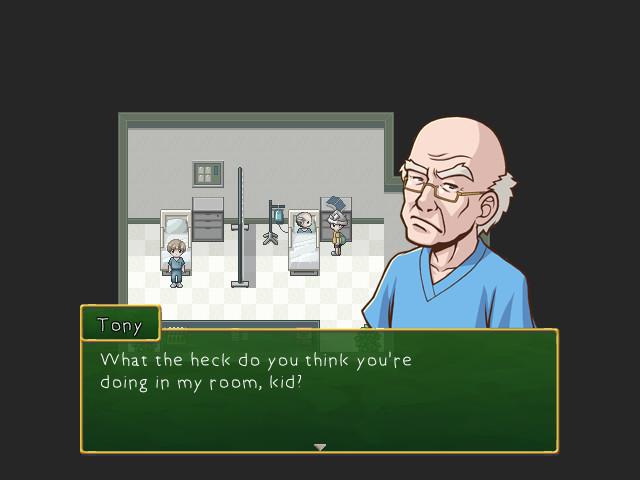
My only minor problem, if you can even call it that, is that some characters in Morizora's Forest don't have many character portraits. Tony Bear could have used maybe one more portrait, just to shake it up. Not a completely unique pose, just a few more facial expressions, like his human counterpart.


Gameplay:

Rakuen mostly revolves around exploration with some light puzzle solving. Fortunately, the puzzles generally tie into the story and history of the characters you are helping out. They are usually not very challenging but offer a nice change of pace. Some areas are reminiscent of classic RPG Maker horror games like Ib and The Crooked Man in how they require you to figure out the environment and its interacting pieces.


My one minor problem with the gameplay, I would say, is that the game asks if you want to look at or read something a bit too often. Sometimes you'll be looking at an item with two separate 'do you want to read it?' or 'do you want to look?' questions. I understand why this is - there are lots of things to read, and you don't want to accidentally read the same thing twice, but in that case it might have been better to separate it into two interactable items instead.

Conclusion: 


Rakuen is a beautiful game with amazing visuals and music as well as a powerful story, with plenty of fantastical and frightening places to explore. Any complaints I could have are too minor to make a difference. Recommended for everyone.

Try it here: https://store.steampowered.com/app/559210/Rakuen/

Monday, June 26, 2017

Paper Mario: Color Splash Critique #1 - Streamlined, Yet Cumbersome

I recently finally got a chance to try Paper Mario: Color Splash. I've been a fan of the series from the very beginning, so I was interested to see the changes and how informed they are (or aren't) by proper game design. I want to make it clear that Color Splash is a fun game with a beautiful presentation, and this critique isn't intended to condemn all the work that went into it. In this first article, I'll examine my main problem with the game, the battle system, and how it tries and fails to streamline the series' formula.

Paper Mario: Color Splash's battle system is, in a word, odd. Rather than allowing the character a set amount of moves to strategize with, the player instead relies on a finite set of cards acquired or bought in the overworld. In that sense this is very much an evolution of the battle system present in Paper Mario: Sticker Star.


There really is no in game justification for why Mario requires cards to use the jump and hammer he is naturally armed with, but the lack of an in-world explanation doesn't necessarily condemn the battle system - only the degree to which it meets its intended goal does.

So what is its intended goal? It seems to me that Intelligent Systems attempted to streamline and simplify battles. Your average battle in Paper Mario: Color Splash takes one or two turns at most, for a few reasons: All attacks do a lot of damage (and that includes the enemies') and Mario can perform many actions in a one go. To name an extreme example: If you were two play 2 'worn-out hammer x 5' cards, you would be doing 10 hammer attacks in a single turn. You wouldn't be interrupted by any menus, everything would simply come down to your timing until your cards have run out of paint.


I understand and respect the basic idea of this system. You could potentially face down a tough group of enemies, and by choosing just the right cards in just the right order, defeat them before they land a hit on you. You can pack the strategy of what prior games would do in multiple turns, in just one. To further support this, the game always takes special note if you get through a battle without taking any damage and rewards you for it with a 'perfect bonus.'


That doesn't sound so bad, does it? But that's just the concept. Let's talk about the execution.

To choose your cards in Paper Mario: Color Splash, you are required to look down at the Wii U Gamepad. From there, you can choose your cards from a list. Unfortunately, however, the UI for selecting cards was obviously not designed with the sheer number of cards in mind. You might find yourself awkwardly dragging past a dozen of the same kind of card before finally finding what you want, even if you use the game's 'organize' button. Next, you have to drag said card - and later, cards - up to its spot to confirm you want to use it. Sounds pretty cumbersome, right? But it only gets worse.

Once you have selected your cards and confirmed your selection as a separate action, the game then requires you to paint in the cards. Even if all cards you selected were pre-filled, which they thankfully can be, the game still shows this screen and requires you to confirm that you are done painting the cards. If they weren't, you are expected to hold down on each card for a while to paint it. It's slow and feels extremely unnecessary. Why have a step deciding the strength of your cards when the cards themselves already do this? You have worn-out hammers, ordinary hammers and even big and giant hammers; and you can find and buy them at will. Other cards, like the jump, are much the same. Was the extra variable and the extra time it costs to fill in the cards really necessary or useful? Most of the time, you'll want to fill the entire card, since you're unlikely to ever run out of paint anyway. On top of that, Mario's attacks don't do a clear number of damage, so it's impossible to use an "informed" amount of paint.

So after making you find, select, drag, confirm, color and confirm your cards again, the game decides to waste your time just once more by forcing you to drag the cards up. After that, you're finally in business, and can perform Mario's attacks with their Action Commands as you would in any other Paper Mario.*

The underlying thought of the dragging is cute - you're sliding the cards from your Wii U screen up to your television - but the sheer amount of dragging and selecting actions the game asks you to take every turn makes me think they never tested it for extended periods of time.

Compare this to Paper Mario: The Thousand-Year Door, where it'll never take more than three button presses to start an attack - and it lets you actually select the enemy you want to attack, whereas Color Splash simply attacks the enemies in order, with the first card attacking the first enemy, and so on. Regardless of how many cards are at your disposal, it ends up limiting the player's choices in the end. In the end, the vast majority of them are simple variations of the hammer and jump attack.


In conclusion, Paper Mario: Color Splash had a good idea to streamline battles into intricately planned out turns, but the poor implementation of the Wii U Screen, cards and paint make it so cumbersome that each battle ends up taking an unnecessary amount of effort. The system absolutely does not lend itself for the amount of battles and how repetitive they are. Paper Mario: Color Splash, like its predecessor, tries and fails to streamline the perfectly convenient battle system of Paper Mario 1 and 2.

In the next article, 'Overworld Joys and Overworld Woes,' I'll discuss the overworld you navigate in Color Splash outside of battles. Thank you very much for your time, and I look forward to your feedback.

* Update: On Reddit, I received a reaction about something I glossed over because I was too focused on the interface itself. In Paper Mario Color Splash, the Action Commands are almost exclusively timed button presses. In the first and second game, the Hammer Action Command worked by tilting the control stick, and there were a variation of Action Commands and stylish moves on top of that. This is another simplification that ends up making the battle system more tedious and monotonous than it could have been. Thanks for pointing this out, /u/rendumguy!

Saturday, June 11, 2016

The Many Layers of Darkest Dungeon

Darkest Dungeon is a roguelike turn-based RPG, developed by Red Hook Studios. It came out of early access and was officially released on the 16th of January 2016. Over its time in Early Access and after its release, it amassed a huge following thanks to its gorgeous artstyle, incredible atmospheric soundtrack and Wayne June's excellent narration. In this piece, I'd like to highlight some of the game's qualities and why I personally appreciate it. 

The Role in 'Role-Playing Game'

Right off the bat, Darkest Dungeon distinguishes itself from other RPGs and roguelikes with its introduction. If you haven't seen it, please, do give it a look:


It's a very cool intro that establishes the story and atmosphere, but what I'd like to highlight is the way the player is addressed. Now, RPGs have some conventions, depending on the region they're from. Japanese RPGs generally let the player play as an established character or a set of established characters (think of games like Final Fantasy), while western RPGs generally let the player play as a heroic version of themselves (think of games like Mass Effect and the Elder Scrolls series). In either case, the player is right in the thick of it, playing the 'role' of a hero. Darkest Dungeon immediately sets itself apart from such conventions by instead putting the player in the role of a leader who watches his group of heroes fight from a distance- not unlike how many real-time strategy games establish the player's role if they establish one at all.


This actually fits the tone of the game rather well; while your heroes are not quite as expendable as any given unit in an RTS, they're a lot more expendable than your usual RPG heroes. It represents lost time and money if one dies, but you can always get more willing heroes from the stage coach. This really helps establish the grim, hopeless atmosphere, but also makes room for an interesting twist on the roguelite genre; the game does use permadeath, but you - the player - are not the dying heroes. What the heroes have brought back to you, what they have achieved - that is all permanent. This allows Darkest Dungeon to incorporate all the risk and tension of roguelites, with the lengthy campaign and story of a full blown RPG.

So, the player is not in fact a hero facing the dangers of the dungeons - they play as the unnamed Heir to the Ancestor. After receiving the Ancestor's last letter, they travel to the Hamlet in hopes of cleansing it of corruption and eventually defeating the Darkest Dungeon itself, and thus clearing their family name. To this end, they'll recruit heroes, send them to fight and use whatever they bring back to restore the Hamlet to its former glory.

Madness, our Old Friend

One of the most interesting mechanics of Darkest Dungeon is the stress mechanic. Depending on a lot of factors, like a fear of certain areas or creatures, heroes will be inflicted with Stress from certain events and enemy attacks. If a hero's stress reaches 100, their resolve will be tested and they'll gain an affliction. An affliction is a debilitating state of mind that can cause serious problems for the whole party. A hero may, for example, become Paranoid and refuse healing even when they desperately need it.


And should the hero's stress reach 200, they'll get a Heart Attack which will immediately put them on the brink of death. On rare occasions, a hero may bounce back from the stress instead and gain a virtue. Unlike afflictions, virtues will benefit the party greatly.

What I appreciate about the stress mechanic - and so many of Darkest Dungeon's inner workings - is that it is interesting on both a narrative and design level. In a game with a dark, Lovecraftian atmosphere, it makes perfect sense that the heroes could mentally break under the weight of what they must face. But for an RPG, it's also really interesting to have to consider a completely seperate kind of "damage" being done to your heroes, which seems harmless enough until your heroes snap and their insanity begins to interact with and affect all the other mechanics. And to me, that's one of the greatest strengths of the game- there is a lot to consider. Which heroes you take, what order your position them in, which attacks you give them, which Trinkets you equip them with, what their camping skills are, which quirks they have... and all of these things represent percentage chances. Just because a character's a kleptomaniac, that doesn't mean they'll steal every time. A character who's afraid of beasts might do fine in a given battle against beasts. But you have to pay close attention and plan for every possibility, or your lack of preparation could betray you at the worst moment.

A Moment of Clarity in the Eye of the Storm

The Hamlet is where you prepare for the horrors to come. It is a calm place- the safest, most stable area in an altogether unpredictable world. In the dungeons, you are a general leading soldiers, very possibly to their death. In the Hamlet, you are merely the owner of the estate, choosing who to let in, attending to those who need stress relief, and investing money and heirlooms into improving the facilities. The organized, peaceful overview of the Hamlet stands in stark contrast with the dungeons.

In an earlier version of this post, I had planned to offer at least one point of criticism - namely that the Hamlet becomes a bit too dull and predictable after you've upgraded most of the buildings. But then Red Hook Studios added the Town Events update to the game, which causes special events to occur in the Hamlet depending on a few factors, effectively eliminating that "problem." Apparently, they were way ahead of me!


Death Waits for the Slightest Lapse in Concentration

As mentioned, it's the dungeons where things get challenging. I've briefly touched upon the Stress mechanic, but that is just one of the many mechanics that interact with one another in Darkest Dungeon.

Each Hero has a class. Each class has a set of eight possible attacks, of which you can equip 4 at a time. Most attacks can only hit a limited amount of spots in the enemy formation and can only be used from specific spots of your party's formation. Additionally heroes have positive quirks, negative quirks, and if it comes to that, diseases - and all of these things act as modifiers on top of their natural stats, based on their class. Similar to the embedded quirks, the Afflictions and Virtues born from stress add additional modifiers to your heroes' actions and how they are affected. How light or dark it is, based on your usage of torches and certain special attacks, also influences the game. The darker it is, the more damage and stress enemies cause, but the more loot you'll able to find. In fact, a lot of modifiers in the game work this way; from which Heroes you pick, to which Trinkets you equip them with, there's often a catch to everything.

Indeed, Darkest Dungeon is absolutely full of  risk/reward considerations. Consider, for example, choosing whether to take a Vestal or an Occultist as a dedicated healer. A fully upgraded Vestal can heal an ally for 7-9 health. A fully upgraded Occultist can heal an ally for 0-20 health. In other words, the Vestal is very reliable, but the Occultist has the potential for far greater heals - although his heal has a chance to cause Bleed, as well. Similarly, the Abomination is immensely powerful and versatile, but religious classes like the Vestal, Crusader and Leper will not enter the dungeon with him, and his Transformation will cause the rest of the party Stress. Some characters like the Jester do low damage, but have attacks with a very high crit rate, while others, like the Leper, hit like a truck but have poor accuracy. There are many more examples, but the end result is this: Every combination of heroes, with any combination of quirks and trinkets, against any given set up of enemies in any location, can all lead to uniquely effective... or uniquely terrible results. You can plan for just about any situation, but you can't be prepared for every situation.

This level of complexity is what I love so much about Darkest Dungeon. In the past, I've written about RPGs that use a lot of big numbers to imply progression or simply for the sake of spectacle. Not only is Darkest Dungeon actually quite modest with its numbers - the largest bosses won't have much more than 300 HP - but the player is offered a clear perspective on most of the numbers and how they interact. There are exceptions to this transparency - the exact modifiers of Afflictions aren't shown - but that makes perfect sense: It highlights the unpredictability of a broken psyche.


In Closing

So, what does all of this amount to?

Darkest Dungeon cleverly plays with the player's role to combine the detailed worlds and stories of RPGs with the tense, permanent nature of roguelikes. Its battles involve hundreds of interacting variables and modifiers that demand you think and prepare for what lies ahead, which may become especially tense if your heroes' minds break and their behaviour becomes completely erratic. In many situations, you're asked to think about the risks you want to take. Reliable solutions are often weaker solutions.

On the mechanical side, all of this - and more - is what makes Darkest Dungeon such a great gothic RPG. The mechanics that portray this dangerous, hopeless world align so perfectly with the art, music and narration that do the same.

And that, in summary, is why I had such an amazing time playing Darkest Dungeon.

_

Thanks for taking the time to read my blog! I don't generally use my blog to articulate why I personally like something, so this post was a little bit experimental. Feel free to post any feedback!