Pagina's

Showing posts with label the. Show all posts

Monday, September 2, 2019

Some Thoughts About 'Bloodstained: Ritual of the Night'

Ritual of the Night represents another Kickstarter project by a group of dedicated developers to revive a series the company that originally made it abandoned. In this case, the man at the helm is Koji Igarashi, the designer of famous PlayStation classic Castlevania: Symphony of the Night. Bloodstained: Ritual of the Night is a spiritual successor, a revival of Symphony's flavor of Metroidvania which is sometimes called Igavania after its designer.

I was recently able to experience this game, and streamed it from start to finish. I'd like to share some thoughts about it. I'll focus on what the game learned from its predecessors, and to contrast, on what's brand new.

Ancient Rituals, New Rituals (Gameplay Comparison)

Ritual of the Night draws from many of its Castlevania predecessors. Like any Metroidvania worth its salt, it offers a huge area to map out and explore as you gain more abilities and knowledge, but it's easy to name a few specific inspirations.


The game draws from Symphony of the Night - including its name -  but actually has very strong parallels with Castlevania: Aria of Sorrow and Dawn of Sorrow. Like Soma, the protagonist of those games, Miriam absorbs the abilities of the demons she fights. In Soma's case, he collected their souls; in Miriam's case, she collects their "shards" - which is functionally the same thing. In fact, Miriam's abilities as a Shardbinder are a logical evolution of that system after Order of Ecclesia had its own iteration with Shanoa's Glyphs. Soma could equip an offensive, defensive and passive soul - 3 in total. Miriam can equip 5, and the additions can be attributed to modern hardware. The GBA and DS don't have many buttons to manouver with and no joystick, so the Directional Shards that Miriam can use could never work on those systems - they require 360 degree rotation, after all. These new shards offer Miriam some mobility and attack options no other Castlevania hero has had. and the sheer amount of shards in so many categories means you could play the game a dozen times and still find new synergies.


Bloodstained: Ritual of the Night has a town with friendly NPCs. Like in Aria and Dawn, these NPCs buy and sell items. Like in Castlevania: Order of Ecclesia, the townspeople also give you quests. There are also many parallels between Ritual's story and that of another Castlevania, but you'll have to play it to find out which. Another point about the town - Ritual of the Night has dedicated crafting system. Johannes, the Alchemist, can craft all sorts of items for you - and even food items, which give you permanent stat increases. The permanent stat increases represent something completely new for the 'Igavania' genre. I had an absolute blast trying to make as many dishes as possible. I've always really appreciated games that incorporate cooking, like The Legend of Zelda: Breath of the Wild or Paper Mario (I will use any excuse to bring that game up) - after all, what's more relatable than improving yourself by eating good food?


Miriam also moves at a good speed and has many possible ways to attack enemies depending on your preference. Guns, swords, spears or a good kick to the face; whatever suits you, and every playstyle has secret combos to discover and experiment with. These combos can even be mastered so they can be used with even more weapons. Combine that with the aforementioned shards, all of which can be upgraded in two ways for even greater effects, and you've got hundreds of ways to play. The variation is truly impressive.

All in all, Ritual of the Night is the sum of many great ideas across the Castlevania franchise with improvements across the board and a few great new ideas. It plays it fairly safe, but it's everything a revival of the genre could hope to be.

Rebirth (Presentation)

Ritual of the Night got a lot of flak when the first gameplay footage came out. With weak lighting and a distinct lack of vibrant color and contrast, people began to worry that they might have another Mighty Number Nine (a famous example of a Kickstarter game that failed to meet expectations) on their hands. But instead of ignoring the fans or labeling them as haters, the dev team took the criticism to heart and delayed the game to overhaul the visuals completely. And the results really do speak for themselves - Bloodstained: Ritual of the Night turned out very pretty indeed. It's fascinating that Ritual of the Night represents a rebirth for its particular kind of Metroidvania, but that the game itself also had such an extreme overhaul.


The characters and enemies are all very distinctive, and the amount of detail is appreciated - for example, each weapon has a unique look and each equippable hat or headpiece shows up on Miriam in game as well. You can also customize various other facets of Miriam's appearance, like her hair, hair color, skin color and clothes, among others. There are a few decorative objects in the background that could use a few more polygons, though, and Miriam's swimming animation is very odd and basic (she basically stands upright and waves her arms a bit). But while there are minor rough edges, all in all the game looks beautiful.


The game has voice acting, and I feel the voice actors did a good job. Unfortunately, there are some problems with how the game uses the voice acting; for example, some attacks will cause Miriam to call out the name of the attack or some other vocalization, every single time the attack is used. In a hectic battle where you're trying to sneak attacks in every second, hearing Miriam's voice clips repeat can get pretty grating. This is purely a problem with the implementation of the audio. For example, why not give a voice clip a 10-second cooldown after it's been used so you don't get so many repeats? Many of the voice clips could've used a few more takes, as well, just for variation. Implementation aside, though, the performances are great. It should also be mentioned that the game stars David Hayter, famous for doing the voice of Solid Snake, as Zangetsu. It also stars Robert Belgrade, who did the voice for Alucard in Symphony of the Night on the PlayStation. It's a real treat to hear David Hayter's gravely voice from Zangetsu, and seeing Robert Belgrade symbolically return to the role he's most known for is poetic, not to mention his excellent performance and deep voice.


The soundtrack is brilliant and I have no gripes with it whatsoever. Michiru Yamane, the genius composer responsible for so many classic Castlevania soundtracks, handled this game's soundtrack and she outdid herself again. Every track represents the atmosphere of the moment or environment perfectly, and many of them instilled a sense of wonder in my as I listened to them. The Garden of Silence is one of my favorite tracks:


The game's presentation has a few rough edges in its visuals and audio implementation, but the plentiful creative designs, great looking models, great performances and excellent soundtrack make it a treat worth experiencing. 

Shards of a Story (Narrative)

Bloodstained: Ritual of the Night's overarching story is very similar to the Igavania Metroidvania's that came before at its core. A castle has been summoned from Hell, and it's up to our hero with her special powers to send it back where it came from. The backstory is a little different, though, as there's no Dracula in control of the castle this time. Rather, the castle was summoned by Gebel, a Shardbinder (people who can absorb and use demon powers, like Miriam), as revenge for how the Alchemists sacrificed the lives of so many Shardbinders to summon demons to our world. As Miriam and Gebel were friends, she makes her way to the castle to see what has happened to her old friend and what has driven him to take such drastic measures - and to stop him by force if necessary.


As usual, I don't want to spoil the story, so I'll keep this vague:

There are a few emotional moments in the story, and while they are well written, we spend so little time with the characters that the impact is lessened a bit. The game is definitely not focused on its story too heavily, with much of it hidden in optional conversations with the alchemist Johannes and on the bookshelves you can encounter. You spend much of your time exploring, and it can be easy to forget all about Gebel and the tragic story of the Shardbinders when you're just running through the halls kicking demons to death and having a great time. But even though the time you spend with them is limited, the characters are pretty well realized and the dialogue is enjoyable. Miriam in particular is a very likeable protagonist with a friendly and enthusiastic demeanor, in contrast to Shanoa from Order of Ecclesia who was (justified by the story) lacking in emotion and expression.

In short, the story is fine; it offers enough justification to move the game along and has interesting and entertaining characters, but it mostly stays in the background and can easily be ignored, for better or for worse. This does mean that when emotional scenes come along, they may be less impactful.

Conclusion

Bloodstained: Ritual of the Night is everything it sets out to be. Learning from the best ideas of its predecessor while implementing a few new ones, it's truly a revival of the 'Igavania.' It's big, it's fun and there are more ways to play than you can count. Its visuals thankfully got a necessary overhaul before release, and the results are a shining example of how taking feedback to heart can lead to major improvements. There are rough edges, but it's hard to be judgmental when you see how far the game has come. The game's audio is fine, with only some repetitive voice clips potentially harming your immersion. The soundtrack is a magnificent work of art. The story, like the game, is classic - but with new elements. It unfortunately stays in the background to the point that you may not get invested, but this will vary from player to player.

_

And that's it. I had the pleasure of streaming this game, and it was a really amazing experience for me. Streaming the game definitely helps me get my thoughts out as I play through the game. If you've played Bloodstained: Ritual of the Night, did you enjoy it? What were your favorite Shards? How did you customize Miriam? All thoughts are welcome in the comments below and I'd be happy to answer any questions.


Wednesday, August 14, 2019

Customizing Miriam (Bloodstained: Ritual of the Night)

I've played a lot of Bloodstained: Ritual of the Night - a Metroidvania and spiritual successor to the Castlevania series - recently. I haven't finished the game and am not ready to share my general thoughts yet. But one of the things I'm really enjoying about the game is the option to customize the playable character with various hairstyles and colours. Character customization is very uncommon in Metroidvanias, so I think there's value in talking about it. So! I just wanted to write a fun article to show off a few of the "looks" I've given Miriam so far. This is a 'just for fun' article, not a serious analysis or critique.

For context, you can customize Miriam's hairstyle, hair color, skin color, eye color and pick two colors for her clothes. She can also be equipped with various accessoires.


Unfortunately this is the only picture I have of the original look I gave her, with red hair, purple clothes and a pirate hat. Fortunately, this does give me the opportunity to express how happy I am that Robert Belgrade got a small role in this game as the vampire on the right, Orlok Dracule. Robert Belgrade was the original voice of Alucard in Castlevania: Symphony of the Night and hasn't starred in any Castlevania since, so it feels poetic and just right to have him return like this.


I really like this one, though I probably should've taken the mask off. The blue and green clothes with the blonde hair and bow make for a pretty striking look in my opinion. It's a bit reminiscent of Elsa from Frozen, especially with the braided hair.


I like to call this one the 'dapper' look. It's mostly because of the hat, but Miriam is already pretty dapper by default. I decided to experiment with darker skin in this look as well, as you can even change that. That lead to my most distinctive experiment yet:


I call this one the 'demon' look. I think it's very striking how the blue skin contrasts with the red clothes, and the haircut and demon mask definitely help with the feel. Probably the most aesthetically pleasing look I've given her, in my own opinion.

Have you played any Bloodstained: Ritual of the Night? Please share how you customized Miriam and why.

I'll share my serious thoughts about the game in a future article.


Saturday, June 16, 2018

Rakuen (Review)

I don't usually post 'traditional' reviews on this blog, but I really wanted to share my thoughts on this game with you. I posted this review on Steam first, but felt it would be worth uploading here as well.

Rakuen is a beautiful adventure/puzzle game about a Boy and his Mom. The Boy has to stay in the hospital, but using a special storybook, his Mom shows him the way into the magical world of Morizora's Forest. This game is played from a top down perspective like an RPG Maker game.


Story:

I don't want to spoil anything, but I will offer a general overview: The hospitalized Boy visits Morizora's Forest in hopes of getting a wish from the forest guardian Morizora. But to get his wish, he needs to help the other patients resolve their problems by going through their history and finding out what led them to where they are. As a result, the story is filled to the brim with charming and interesting characters who you really get to know as you work to help them out. And of course, there are plenty of emotional moments. There are lines that'll make you laugh, and there are lines that'll hit you like a punch in the gut. If you're looking for a story with powerful emotions across the board, look no further.

Presentation:

Having heard Laura Shigihara's work in Plants vs. Zombies and To The Moon, I had lofty expectations for the soundtrack, but even those were surpassed. The soundtrack is filled to the brim with beautiful tracks, from atmospheric pieces to melodies that will get the most stoic people teary eyed. Not only are Laura's amazing vocals present, she has also brought in several guest vocalists who all perform their pieces admirably as well.

The visuals are also strong, with plenty of recognizable character designs and vibrant areas. The visuals and story work together in smart ways, too; the colors in the hospital are much more desaturated than the bright colors of Morizora's Forest, for example.

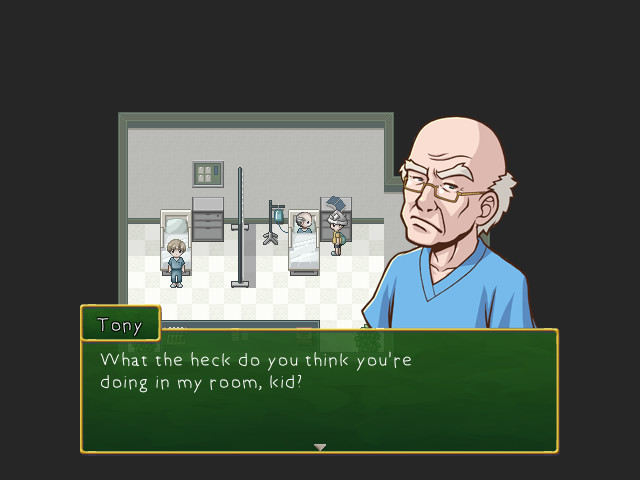
My only minor problem, if you can even call it that, is that some characters in Morizora's Forest don't have many character portraits. Tony Bear could have used maybe one more portrait, just to shake it up. Not a completely unique pose, just a few more facial expressions, like his human counterpart.


Gameplay:

Rakuen mostly revolves around exploration with some light puzzle solving. Fortunately, the puzzles generally tie into the story and history of the characters you are helping out. They are usually not very challenging but offer a nice change of pace. Some areas are reminiscent of classic RPG Maker horror games like Ib and The Crooked Man in how they require you to figure out the environment and its interacting pieces.


My one minor problem with the gameplay, I would say, is that the game asks if you want to look at or read something a bit too often. Sometimes you'll be looking at an item with two separate 'do you want to read it?' or 'do you want to look?' questions. I understand why this is - there are lots of things to read, and you don't want to accidentally read the same thing twice, but in that case it might have been better to separate it into two interactable items instead.

Conclusion: 


Rakuen is a beautiful game with amazing visuals and music as well as a powerful story, with plenty of fantastical and frightening places to explore. Any complaints I could have are too minor to make a difference. Recommended for everyone.

Try it here: https://store.steampowered.com/app/559210/Rakuen/

Thursday, June 8, 2017

Breath of the Wild Discussion: A Post-Apocalypse Without Murder?

This article will contain spoilers from various games in the series, including Breath of the Wild, so read at your own discretion!

Back in March, Nintendo surprised the industry with The Legend of Zelda: Breath of the Wild, a huge open-world game and a complete change in direction for the series. The game has many merits, but today I'd like to discuss a strange rule the game seems to stick with: Link isn't allowed to kill anything that is - or looks - human. 

Breath of the Wild's world is populated with many monsters such as Bokoblins, Moblins, Lizalfos, Chuchus and Lynels. But seasoned fans of the series will notice a few fan favorites are missing: Poes, Gibdos, ReDeads, Stalfos and Stalchildren, for example.


ReDead from Ocarina of Time 3D. Source: http://zelda.gamepedia.com/ReDead

What do these enemies have in common? They are all undead people. (Though Nintendo has admittedly tried to retcon the ReDead into being a magical, non human creature.) Indeed, though Breath of the Wild has tension and atmosphere, it very rarely engages with the dark locations and enemy designs that Majora's Mask, Twilight Princess or even Ocarina of Time dealt with.

At this point, you may question the premise, pointing out that the absense of the aforementioned enemies simply resulted from Nintendo's choice to steer away from disturbing locations and enemies, and not actually a problem with killing humanoid enemies specifically. However, considering which enemies are in the game, the problem with this argument becomes clear: most common enemies have a 'Stal', or skeletal, equivalent.

Link fights a Stalnox. Source: Robinotta on YouTube

In other words, Nintendo had no problem involving undead skeletal enemies... so long as they weren't human or Hylian. On top of Stalnoxes, Breath of the Wild includes Stalkoblins, Stalmoblins and Stalizalfos, but the classic Stalfos and Stalchild - humanoid skeletons - are missing.

However, Breath of the Wild actually does have humanoid enemies. It's time to address the elephant in the room: The Yiga Clan.

Link is ambushed by a Yiga Clan assassin. Source: DivDee on YouTube

The Yiga Clan, though masked, are confirmed to be Sheikah defectors and thus part of the same race of people, and Link is able to fight them. However, the way these fights end proves the original premise furter: unlike monster enemies, which visibly die and drop guts and teeth, people of the Yiga Clan teleport away from Link when defeated, dropping only Mighty Bananas and money. They are completely unique in this regard.

The one exception is Master Kohga, who does seem to die after you defeat him.

Master Kohga in all his splendor. Source: Zelda Gamepedia


But rather than having Link strike him down, in the cutscene after his battle, Kohga brings about his own demise by summoning a large metal sphere which ends up pushing him into a chasm. Words don't do it justice; You can view the clip here.

And even Ganon himself, whose human form Ganondorf met a grisly end in Wind Waker and Twilight Princess, has no such form in this game. Instead, his first form is a monstrosity with a vaguely human head.

Calamity Ganon. Source: Boss Fight Database on YouTube

Interestingly, though thousands must've died in the events leading up to Breath of the Wild, Link isn't allowed to seriously harm any human being, alive or undead. Human enemies are kept to a minimum, with even their skeletons replaced by those of standard enemies, and human enemies that do appear aren't killed. That's why I think Nintendo consciously decided that Link wasn't allowed to kill any human in Breath of the Wild. 

That's my conclusion from these design choices, but I could be completely wrong. I'm very interested to hear your thoughts on why Nintendo made these choices, and whether or not you feel there is any meaning to them at all. Depending on responses, I may write a follow up to address the best arguments and theories.