I recently started playing the Resident Evil games, starting with the HD Remake of the first installment in the series. The game is often discussed as a great example of survival horror, and most of its qualities have been thoroughly discussed. That's why I want to take the approach I did for my Mario Odyssey article and focus on something specific I thought was interesting about the game: The fact that there is a cost to saving, that keeping your progress is a finite resource.
Running out of Ink
Resident Evil is possibly the biggest horror franchise in all of videogames. The first game didn't just define what the rest of the franchise would look like, but had an effect on the genre as a whole. One of the cornerstones of this survival horror classic is limited resources. There are only a finite amount of healing items and bullets, and only a few spots of inventory space to keep them in. I was aware of that, but I wasn't aware of one other resource the game limited.
In their journey to escape the zombie-infested mansion, Jill or Chris - depending on who you picked to play as - need to use typewriters to save their progress. But it's not as simple as approaching a typewriter and hitting the button; you actually need to use an Ink Ribbon to use the typewriter. And Ink Ribbons are a resource you need to find, put in your inventory and take with you just like bullets and healing items. And once you've used them, they're gone.
This idea really caught me off guard. I've seen games that reduce your ranking if you save, or games that have a super hard mode with finite save points like LISA: The Painful, but never a game that requires you to use a specific finite item for each time you save.
Inky Black Horror
Limited resources have a way of building the tension. You don't want to waste all your bullets, but being too stingy will just get you injured or slow you down a lot. It's the same for healing items, and in this case, for the Ink Ribbons as well. Waste too many Ink Ribbons and you'll have to go long periods of time without saving until you find more... but if you're too stingy and wait a long time before you save, you'll lose significant progress if you run into trouble and die. I both loved and hated this idea.
People with a passion for videogames often declare that the best games communicate their atmosphere or aesthetic with their mechanics, not just their presentation. To clarify, for example, a horror game shouldn't just be scary because it looks and sounds frightening - playing it should be a frightening experience in and of itself due to how the game actually works. The limited Ink Ribbons definitely made playing the game a lot scarier because every enemy was now a huge threat to my progress. In one of my streams of the game I ended up stuck for a few hours and wasted too many Ink Ribbons on small bits of progress - I ended up having to cross two new areas filled with new enemies before I could finally save, and that hour of excitement was one of the scariest experiences I've ever had with a videogame. Because your progress hangs in the balance, you need to be twice as careful about your other resources and be intimately familiar with the layout of each area - and even that won't protect you entirely, because some rooms in the mansion change over time.
Good ideas and effective scares, however, can eventually turn into mere frustrations when you're exposed to them too often. We saw a bit of this in Silence of the Sleep, where a certain frightening monster appeared so often and reset your progress so often that it lost its impact and turned into an annoyance. The situation with the Ink Ribbons eventually became similar, though not quite as bad. You see, the fear that comes from limited Ink Ribbons is at its strongest when you haven't lost your progress yet. The true brilliance of the idea shines in those moments of tension where you decide to bite off just a bit more and see if it pays off, or when you're desperately going from room to room with zombies on your case. But once you've actually died and lost your progress, the tension is released and replaced with frustration and disappointment. Now you have to retrace your steps, and though you're more efficient about it, it gets old fast if it happens multiple times.
The Ink Ribbons really are a double edged sword in this regard. Ideally you'd have a situation with the same tension, but not the resulting frustration, but there's no way to change the Ink Ribbons that would make that a reality. The fear of losing your progress and the frustration of losing your progress are two sides of the same coin. If you died and you didn't lose your progress, then the tension wouldn't be there, but the fact that you do lose your progress inevitably leads to frustration and repetition. As a designer, a possible middle ground I could suggest is that the Ink Ribbons are required to save major story progress, but minor things like killing zombies and gaining resources are preserved. Of course, this could easily be exploited and break the game, so I understand why they didn't go for that.
All in all, Ink Ribbons really increase the tension and really put the survival AND horror in "survival horror." But having something as necessary and usually taken for granted as saving depend on a finite resource could be very frustrating for some people. The threat of losing progress is great for horror, but actually losing your progress can lead to repetition. I think how you feel about Ink Ribbons will ultimately come down to preference, but while it's a love-hate relationship for me, I love it more than I hate it because of the exciting experience it gave me. I'm excited to experience the rest of the Resident Evil franchise and see if the way resources are handled changes much throughout.
_
October's over, but I couldn't resist writing another article about a spooky game! Since I'm planning to do the whole franchise, you can probably expect more Resident Evil articles in the next few months. I hope you'll stick with me as I experience another series I missed out on. I want to thank the people on Steem again for all their support; you've made writing a lot more fun for me.
What do you think? Is it fair to have a function like saving your game depend on a finite in-game resource? Is that brilliant horror design or irritating artificial difficulty? Would love to hear your thoughts.
A blog for discussing the art and design of games, popular and obscure, triple A and indie.
Showing posts with label design. Show all posts
Monday, November 4, 2019
Thursday, January 12, 2017
Choosing Through Gameplay in Undertale, Part 2
In part 1, we discussed the implementation of player choice in Undertale. I argued that the battle system was a great vehicle for organic choices, but that the impact of choices in the overworld left something to be desired. At the end, I conceded that there are certain choices in the overworld that do have a major impact. In this article, I'd like to have a closer look at those choices, how exactly they do affect the game and what I think about them.
Let's get right into it. The most important choices in the overworld concern three story-critical characters.
First up, there's Papyrus. None of the dialogue choices with Papyrus matter at any point. All that matters is that, after Sparing him in battle, the player visits him at his home and agrees to have a "date." This date consists of more dialogue and choices without consequence, though it is a very charming scene. It is a shame, though, because the 'date' switches to a perspective and style similar to the game's battles; it would've been great to forge a more specific relationship with Papyrus through it.
Once the player has "dated" Papyrus, he is seen as befriended, a fact that will contribute to getting the 'true pacifist' ending. This will also allow the player to later befriend Undyne, but let's start at the beginning with her.
The first meaningful choice concerning Undyne starts with Monster Kid, who follows the player around Waterfall for some time. Near the end of the area, Monster Kid trips and hangs from a ledge, pleading for the player to save them. The player can choose to walk away, approach Undyne, simply stand and watch or save the Monster Kid - a real choice using the overworld's mechanics. If the player does not approach and interact with Monster Kid, they will fall and Undyne will jump after them to save them. This doesn't have any effect on the ending, but it does change some of Undyne and Monster Kid's dialogue. The really interesting part, though, is that it decreases Undyne's health if she had to jump down. The dialogue in the scene actually hints at this fact.
The effect of this choice is minor but I really respect its inclusion. The fact that such a clever and natural way for a choice in the overworld to affect the subsequent battle is included really makes me wonder why it isn't more common in the game.
But the interesting choices and interactions with the overworld involving Undyne don't stop there. If the player follows the Pacifist route, the only way to Spare Undyne is to run away from her and run away to the next area. This area, aptly named Hotland, causes Undyne's armor to heat up, after which she collapses. A convenient water cooler is the only thing in sight, clearly instructing the player what should be done.
Though I appreciate having another meaningful choice in the overworld, this choice is notable because it's the only choice that can outright lock you out of acquiring the 'true pacifist' ending. If the player ignores Undyne, or worse, pours all of the water on the ground, Undyne will spend the rest of the game in her house because she's suffering from heatstroke. Thus, she is impossible to befriend, and as a result, the player cannot befriend Alpys either. This means the True Lab will not be discovered and the player's friends will not interfere with the battle against Asgore, making the true pacifist ending impossible to acquire on this run.
So, arguably, this moment is exactly what I was asking for in my previous article. However, the problem presents itself when we consider the following facts:
1. Unlike the "dates," this interaction can be missed permanently if the player moves on without giving Undyne the water.
2. It's the only choice of its kind, meaning an explorative or comedically inclined player may intentionally pour all the water out or ignore Undyne as a joke or to see what happens, without realizing what they missed, because prior choices in the overworld never had any permanent consequences - including calling Papyrus a 'loser' and answering negatively to each and every one of this questions in the "date."
3. It's only barely a choice, due to how obvious the 'right solution' is.
A sensible counterargument to point 2 would be that the choice is also unique in the sense that someone is obviously in danger, which only ever happens with Monster Kid and Undyne. I agree that there is some precedent for the kind of choice it is, but not necessarily for the kind of consequences it implies. Monster Kid gets saved regardless, and Undyne doesn't even die, but you're still locked out of the true pacifist ending.
On point 3, it's easy to argue that the obviousness of the solution also invalidates my critique of its consequences - but in that case, why is it a choice at all?
It may sound like I'm contradicting myself on what I think about this choice, so I'll summarize how I would've preferred it to be. Either...
- The context of the choice is more serious and presented more like a choice, or
- The impact of the choice is diminished.
Essentially, I don't have a problem with this kind of choice, nor with that kind of consequence. I just find attaching such a particularly serious consequence to such a simple and almost funny choice to be a bit out of place, especially because it happens nowhere else at any point. But I'll be the first to admit that this is a nitpicky complaint; it is a choice with consequences and it is in the overworld, so I'm still glad that it exists.
Once Undyne is properly Spared and watered, she can be met and "dated" much like Papyrus. And exactly like in Papyrus' date, nothing you choose makes a difference. You can explicitly state you do not want to be her friend, but you will end up as her friend regardless.
It's still good that the player has to go out of their way to visit Undyne after reaching Hotland, making the "date" a very conscious choice, but I still would've liked some variation within the the date itself and the player's relationship with Undyne.
After Papyrus and Undyne have been dated, the player must first see the Neutral Ending before they can befriend Alphys. I've already overanalyzed this odd requirement to pieces in another article, which you can read by clicking here. If the player dates Undyne before seeing the Neutral Ending, she will call them upon their return from the Core, asking to visit her in Snowdin so she can hand over a letter to Alphys. If the player dates Undyne after seeing the Neutral Ending, she'll give the letter immediately after the date, provided the player has passed through Hotland already.
Giving the letter to Alphys will initiate the third and final date, which is once again filled with many entertaining choices but nothing that'll ultimately impact the ending or overworld.
After Papyrus, Undyne and Alphys have been befriended, the player will gain access to the 'True Lab,' where much of the game's backstory is revealed. Successfully completing the True Lab and facing Asgore at LV1 with 0 EXP will then lead the player to the true final battle and the true pacifist ending.
That about does it for the story critical decisions in the overworld. Before I move onto my conclusion, there's one tool for connecting the overworld and battles that I haven't yet covered and which is used to great effect: Items. The reason I haven't featured them prominently is because they are almost exclusively used in battle, but it would be a shame not to mention some of the clever hidden interactions:
- If the player saves the butterscotch-cinnamon pie they get from Toriel in the Ruins all the way until they reach the fight with Asgore and eat it then, it will decrease Asgore's attack and defense.
- If the player saves an item purchased from the Spider Bakesale in the Ruins and eats in front of Muffet, she will Spare the player immediately.
As cool as these easter eggs are, however, they don't influence the story or ending.
What all this amounts to is that there are 4 choices in the overworld, outside of battle, that influence the player's ability to get to the true pacifist ending. To summarize them once more:
Dating Papyrus, giving Undyne water, dating Undyne and dating Alphys. The inclusion of such choices is, in my opinion, a positive - but I would've liked there to be more choices, or for the choices to have more options than a single date per character that decides whether or not you were a 'good enough' friend. However, credit where credit is due: Undertale's overworld is not a place without consequence, and the overworld and battle system aren't always completely disconnected.
If I missed any important choices or if there's something I got wrong, please feel free to post your feedback!
Let's get right into it. The most important choices in the overworld concern three story-critical characters.
First up, there's Papyrus. None of the dialogue choices with Papyrus matter at any point. All that matters is that, after Sparing him in battle, the player visits him at his home and agrees to have a "date." This date consists of more dialogue and choices without consequence, though it is a very charming scene. It is a shame, though, because the 'date' switches to a perspective and style similar to the game's battles; it would've been great to forge a more specific relationship with Papyrus through it.
Once the player has "dated" Papyrus, he is seen as befriended, a fact that will contribute to getting the 'true pacifist' ending. This will also allow the player to later befriend Undyne, but let's start at the beginning with her.
The first meaningful choice concerning Undyne starts with Monster Kid, who follows the player around Waterfall for some time. Near the end of the area, Monster Kid trips and hangs from a ledge, pleading for the player to save them. The player can choose to walk away, approach Undyne, simply stand and watch or save the Monster Kid - a real choice using the overworld's mechanics. If the player does not approach and interact with Monster Kid, they will fall and Undyne will jump after them to save them. This doesn't have any effect on the ending, but it does change some of Undyne and Monster Kid's dialogue. The really interesting part, though, is that it decreases Undyne's health if she had to jump down. The dialogue in the scene actually hints at this fact.
The effect of this choice is minor but I really respect its inclusion. The fact that such a clever and natural way for a choice in the overworld to affect the subsequent battle is included really makes me wonder why it isn't more common in the game.
But the interesting choices and interactions with the overworld involving Undyne don't stop there. If the player follows the Pacifist route, the only way to Spare Undyne is to run away from her and run away to the next area. This area, aptly named Hotland, causes Undyne's armor to heat up, after which she collapses. A convenient water cooler is the only thing in sight, clearly instructing the player what should be done.
Though I appreciate having another meaningful choice in the overworld, this choice is notable because it's the only choice that can outright lock you out of acquiring the 'true pacifist' ending. If the player ignores Undyne, or worse, pours all of the water on the ground, Undyne will spend the rest of the game in her house because she's suffering from heatstroke. Thus, she is impossible to befriend, and as a result, the player cannot befriend Alpys either. This means the True Lab will not be discovered and the player's friends will not interfere with the battle against Asgore, making the true pacifist ending impossible to acquire on this run.
So, arguably, this moment is exactly what I was asking for in my previous article. However, the problem presents itself when we consider the following facts:
1. Unlike the "dates," this interaction can be missed permanently if the player moves on without giving Undyne the water.
2. It's the only choice of its kind, meaning an explorative or comedically inclined player may intentionally pour all the water out or ignore Undyne as a joke or to see what happens, without realizing what they missed, because prior choices in the overworld never had any permanent consequences - including calling Papyrus a 'loser' and answering negatively to each and every one of this questions in the "date."
3. It's only barely a choice, due to how obvious the 'right solution' is.
A sensible counterargument to point 2 would be that the choice is also unique in the sense that someone is obviously in danger, which only ever happens with Monster Kid and Undyne. I agree that there is some precedent for the kind of choice it is, but not necessarily for the kind of consequences it implies. Monster Kid gets saved regardless, and Undyne doesn't even die, but you're still locked out of the true pacifist ending.
On point 3, it's easy to argue that the obviousness of the solution also invalidates my critique of its consequences - but in that case, why is it a choice at all?
It may sound like I'm contradicting myself on what I think about this choice, so I'll summarize how I would've preferred it to be. Either...
- The context of the choice is more serious and presented more like a choice, or
- The impact of the choice is diminished.
Essentially, I don't have a problem with this kind of choice, nor with that kind of consequence. I just find attaching such a particularly serious consequence to such a simple and almost funny choice to be a bit out of place, especially because it happens nowhere else at any point. But I'll be the first to admit that this is a nitpicky complaint; it is a choice with consequences and it is in the overworld, so I'm still glad that it exists.
Once Undyne is properly Spared and watered, she can be met and "dated" much like Papyrus. And exactly like in Papyrus' date, nothing you choose makes a difference. You can explicitly state you do not want to be her friend, but you will end up as her friend regardless.
It's still good that the player has to go out of their way to visit Undyne after reaching Hotland, making the "date" a very conscious choice, but I still would've liked some variation within the the date itself and the player's relationship with Undyne.
After Papyrus and Undyne have been dated, the player must first see the Neutral Ending before they can befriend Alphys. I've already overanalyzed this odd requirement to pieces in another article, which you can read by clicking here. If the player dates Undyne before seeing the Neutral Ending, she will call them upon their return from the Core, asking to visit her in Snowdin so she can hand over a letter to Alphys. If the player dates Undyne after seeing the Neutral Ending, she'll give the letter immediately after the date, provided the player has passed through Hotland already.
Giving the letter to Alphys will initiate the third and final date, which is once again filled with many entertaining choices but nothing that'll ultimately impact the ending or overworld.
That about does it for the story critical decisions in the overworld. Before I move onto my conclusion, there's one tool for connecting the overworld and battles that I haven't yet covered and which is used to great effect: Items. The reason I haven't featured them prominently is because they are almost exclusively used in battle, but it would be a shame not to mention some of the clever hidden interactions:
- If the player saves the butterscotch-cinnamon pie they get from Toriel in the Ruins all the way until they reach the fight with Asgore and eat it then, it will decrease Asgore's attack and defense.
- If the player saves an item purchased from the Spider Bakesale in the Ruins and eats in front of Muffet, she will Spare the player immediately.
As cool as these easter eggs are, however, they don't influence the story or ending.
What all this amounts to is that there are 4 choices in the overworld, outside of battle, that influence the player's ability to get to the true pacifist ending. To summarize them once more:
Dating Papyrus, giving Undyne water, dating Undyne and dating Alphys. The inclusion of such choices is, in my opinion, a positive - but I would've liked there to be more choices, or for the choices to have more options than a single date per character that decides whether or not you were a 'good enough' friend. However, credit where credit is due: Undertale's overworld is not a place without consequence, and the overworld and battle system aren't always completely disconnected.
If I missed any important choices or if there's something I got wrong, please feel free to post your feedback!
Friday, January 6, 2017
Choosing Through Gameplay In Undertale, Part 1
In many RPGs, the overworld holds the story while the battle system holds the gameplay. The result is choices are made outside of the game's primary game mechanics, through something like a dialogue system or choice-based menu. Undertale approaches its choices a little differently, and I'd like to discuss the successes and failures of that approach in this piece.
It's been over a year since Undertale was released. Its story, characters and music have made a permanent mark on the Internet and pop culture. A year ago, I joined in on the conversation and wrote a piece about Undertale's design and narrative. I argued that, based on Undertale's design, Toby Fox had intended the player to kill Toriel on their initial playthrough.
Looking back on the article now, I discussed how the game's mechanics were explained, but I spent very little time on the actual mechanics themselves - and how they reflect on the game's choice based narrative. I'd like to shed some light on that particular facet of Undertale now.
The fact of the matter is really quite simple: Undertale's choices are almost exclusively presented through its battle system. Each monster you encounter can be approached in several ways - by simply fighting them until they die, by convincing them to spare you and surprise attacking them, by befriending them and sparing them or simply by running away. All of these possibilities are presented through the game's battle system, with its four-option menu of FIGHT, ACT, ITEM and MERCY.
Such a system should be commended for the way it allows players to make their choice organically. But where does that leave the overworld and all the scenes that occur outside battles?
Like many RPGs of its kind, Undertale has a lot of text to read. There are hundreds of dialogues and descriptions, some of which change based on the player's prior choices. For an impatient player, it could quickly become cumbersome to have to read so much uninterrupted text. This is why Undertale smartly breaks up many of its conversations with choices as well.
But these choices ultimately don't influence the gameplay. All you'll get for your choice is a unique few lines of dialogue, with perhaps a wink back to your earlier decision later down the line. But a choice made during dialogue never influences the game's overarching story or the game's ending.
Is that a negative? I feel that it is, but it'll ultimately depend on the person playing the game. I would've liked it if your choices had a greater impact on the flow of the story, or even just the dialogue, since most dialogues return to a set path shortly after a unique choice has been made. To take it one step further, I feel like there could've been more nuance; characters are simply spared or not spared, and befriended or not befriended. What if the sum of your behaviour could form a unique type of friendship or relationship with the characters? However, I realize that this hypothetical demands a lot, and perhaps isn't fair. After all, we must not forget that the game was developed by a single person. Regardless, I would've liked to see just a bit more consequence in the choices made during dialogues or in the overworld.
Perceptive readers may have two complaints about my assessment so far;
1. I commended the battle system for allowing organic choices.
2. I stated only most of the choices in the overworld do not affect the story.
To address the first point: that is true. And I wouldn't have anything more to say about choices in the overworld if Undertale was a bog standard JRPG where the overworld served only as a pathway to new battles - however, Undertale's overworld itself also holds gameplay in the form of various puzzles (like Papyrus') and even mini-games (like Mettaton's). Not to mention, the dialogue in the overworld is almost consistently important to understand the characters' history and motivations, and for this reason, it regularly interrupts the gameplay. For those reasons, I really would've liked it if the player's choices in the dialogue and overworld had more of an impact.
About point 2: I hinted at this before, but there are a few choices in the overworld that do make a difference, specifically by influencing the ending. The choices concerning Undyne are particularly interesting in this regard.
To summarize what we've discussed so far, Undertale allows for the player to make organic choices in its battle system, but the choices in the overworld lack impact, even though a significant chunk of the game's story and mechanics do take place outside of battle. Please join me in part 2 as we delve deeper into Undertale's significant overworld choices and how they reflect on the game in general.
Feedback is appreciated!
It's been over a year since Undertale was released. Its story, characters and music have made a permanent mark on the Internet and pop culture. A year ago, I joined in on the conversation and wrote a piece about Undertale's design and narrative. I argued that, based on Undertale's design, Toby Fox had intended the player to kill Toriel on their initial playthrough.
Looking back on the article now, I discussed how the game's mechanics were explained, but I spent very little time on the actual mechanics themselves - and how they reflect on the game's choice based narrative. I'd like to shed some light on that particular facet of Undertale now.
The fact of the matter is really quite simple: Undertale's choices are almost exclusively presented through its battle system. Each monster you encounter can be approached in several ways - by simply fighting them until they die, by convincing them to spare you and surprise attacking them, by befriending them and sparing them or simply by running away. All of these possibilities are presented through the game's battle system, with its four-option menu of FIGHT, ACT, ITEM and MERCY.
source: Havoc teh Raven on YouTube
Such a system should be commended for the way it allows players to make their choice organically. But where does that leave the overworld and all the scenes that occur outside battles?
Like many RPGs of its kind, Undertale has a lot of text to read. There are hundreds of dialogues and descriptions, some of which change based on the player's prior choices. For an impatient player, it could quickly become cumbersome to have to read so much uninterrupted text. This is why Undertale smartly breaks up many of its conversations with choices as well.
source: Havoc teh Raven on YouTube
But these choices ultimately don't influence the gameplay. All you'll get for your choice is a unique few lines of dialogue, with perhaps a wink back to your earlier decision later down the line. But a choice made during dialogue never influences the game's overarching story or the game's ending.
Is that a negative? I feel that it is, but it'll ultimately depend on the person playing the game. I would've liked it if your choices had a greater impact on the flow of the story, or even just the dialogue, since most dialogues return to a set path shortly after a unique choice has been made. To take it one step further, I feel like there could've been more nuance; characters are simply spared or not spared, and befriended or not befriended. What if the sum of your behaviour could form a unique type of friendship or relationship with the characters? However, I realize that this hypothetical demands a lot, and perhaps isn't fair. After all, we must not forget that the game was developed by a single person. Regardless, I would've liked to see just a bit more consequence in the choices made during dialogues or in the overworld.
Perceptive readers may have two complaints about my assessment so far;
1. I commended the battle system for allowing organic choices.
2. I stated only most of the choices in the overworld do not affect the story.
To address the first point: that is true. And I wouldn't have anything more to say about choices in the overworld if Undertale was a bog standard JRPG where the overworld served only as a pathway to new battles - however, Undertale's overworld itself also holds gameplay in the form of various puzzles (like Papyrus') and even mini-games (like Mettaton's). Not to mention, the dialogue in the overworld is almost consistently important to understand the characters' history and motivations, and for this reason, it regularly interrupts the gameplay. For those reasons, I really would've liked it if the player's choices in the dialogue and overworld had more of an impact.
About point 2: I hinted at this before, but there are a few choices in the overworld that do make a difference, specifically by influencing the ending. The choices concerning Undyne are particularly interesting in this regard.
To summarize what we've discussed so far, Undertale allows for the player to make organic choices in its battle system, but the choices in the overworld lack impact, even though a significant chunk of the game's story and mechanics do take place outside of battle. Please join me in part 2 as we delve deeper into Undertale's significant overworld choices and how they reflect on the game in general.
Feedback is appreciated!
Labels:
analysis,
choice,
choices,
design,
dissonance,
game,
gamedesign,
games,
gaming,
ludonarrative,
meaningful,
mechanics,
narrative,
story,
undertale
Friday, February 26, 2016
The Power of Disempowerment #1 - The Designer Giveth and the Designer Taketh Away
You've heard the phrase 'player agency' thrown around, no doubt. Player agency is all about the control, the influence the player has over what happens in a game. In this series of blog posts, I'd like to discuss how enhancing and limiting the player's agency can contribute to an experience.
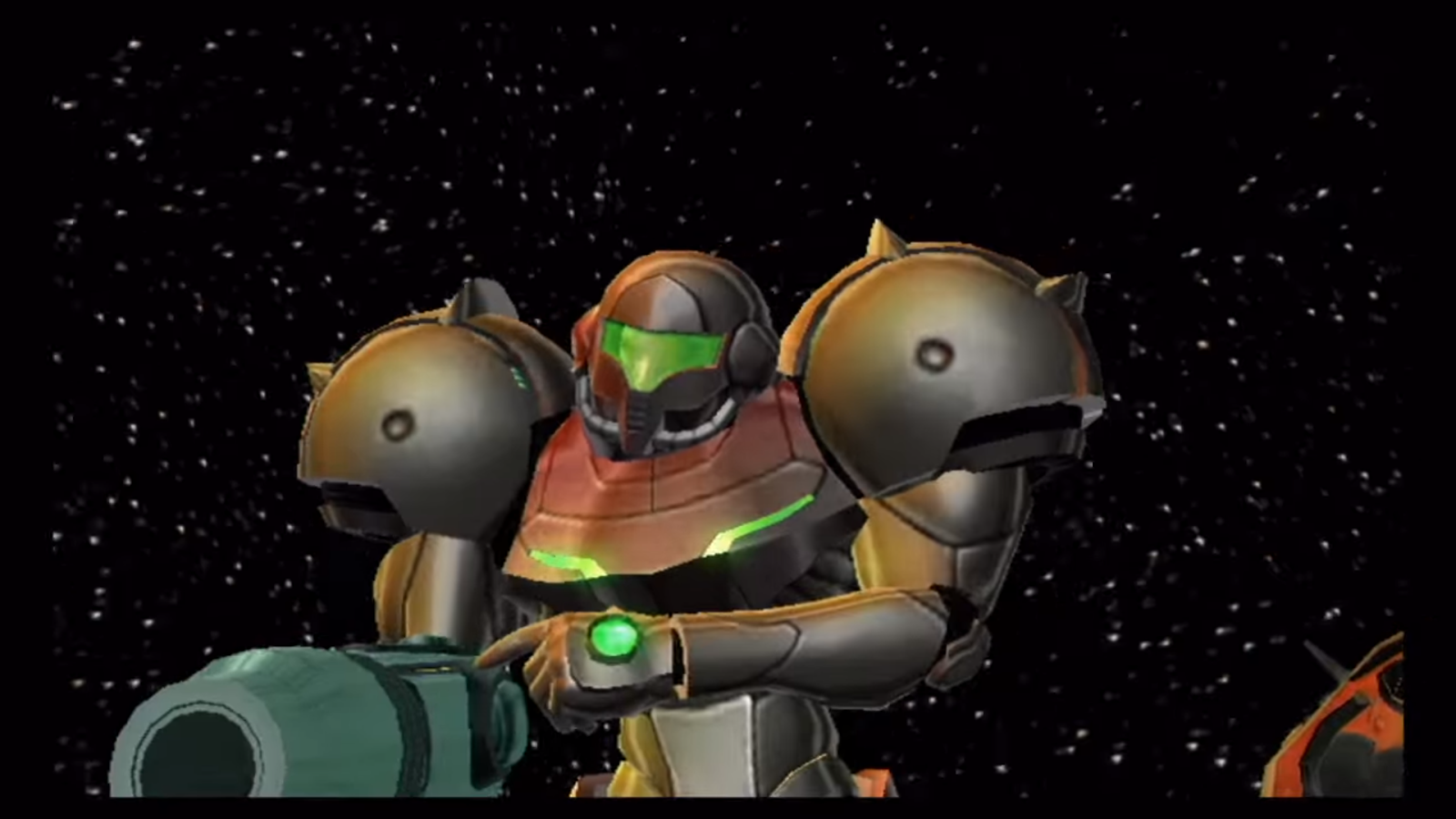
Before I go in-depth, I'd like to illustrate the topic with an example. In a game where the player explores a hostile environment, the ways in which they can traverse and influence this environment would be an important part of their agency. A good example of a game like that would be Retro Studios' Metroid Prime.
Metroid Prime had a lot to live up to. The Metroid series had skipped a generation where its peers had jumped to 3D, and the fans were anxious to see how a game from this franchise could work with an additional dimension. To ensure a smooth start, Metroid Prime lets the player control a very well equipped Samus in the first section of the game. Most of the power ups you'd usually be looking for in the early game are already available to you. This allows the player to experiment, traversing the environment in a flexible way - the player is given a lot of agency to begin with. This allows the player to learn the game's mechanics in a fun way.
But just as soon as the player has gotten their bearings, defeating a few enemies and even a boss, the designer kicks the crutch right out from under them. The ship that serves as the introductory area begins to explode, and although Samus escapes safely, her power suit takes a massive hit from the explosion and loses most of its functions.Suddenly, the player's left with only some basic functions.
Before I go in-depth, I'd like to illustrate the topic with an example. In a game where the player explores a hostile environment, the ways in which they can traverse and influence this environment would be an important part of their agency. A good example of a game like that would be Retro Studios' Metroid Prime.
source: ShadowMario3 on YouTube
Metroid Prime had a lot to live up to. The Metroid series had skipped a generation where its peers had jumped to 3D, and the fans were anxious to see how a game from this franchise could work with an additional dimension. To ensure a smooth start, Metroid Prime lets the player control a very well equipped Samus in the first section of the game. Most of the power ups you'd usually be looking for in the early game are already available to you. This allows the player to experiment, traversing the environment in a flexible way - the player is given a lot of agency to begin with. This allows the player to learn the game's mechanics in a fun way.
But just as soon as the player has gotten their bearings, defeating a few enemies and even a boss, the designer kicks the crutch right out from under them. The ship that serves as the introductory area begins to explode, and although Samus escapes safely, her power suit takes a massive hit from the explosion and loses most of its functions.Suddenly, the player's left with only some basic functions.
source: ShadowMario3 on YouTube
And it doesn't end there - the player is then let go on an enormous planet that they only have few ways to traverse. Suddenly, their agency is quite limited. After having been given a preview of what abilities they could have, they are now asked to build their arsenal back up from zero. But here's the thing: the game doesn't end when you're back up to where you started. In fact, by the end of the game, you're much more powerful than you were at the start. This is true for most games where the player increases statistics or acquires abilities and items, but the initial loss of your abilities makes reaching that point much more satisfying.
I cited Metroid Prime because I personally like the way you build your arsenal through exploration, which then allows you to explore better to then improve your arsenal further. But this is actually a pretty common trope in videogames; especially RPGs. TV Tropes calls it 'A Taste of Power,' which is apt. An entertaining fact: Often when I begin to write about something, the Tropers will have noticed it before I did.
But there's more than one way to disempower the player by "empowering" them. You can offer them a brief taste of power to show them what they will - at one point - be able to do... but you can also instill a sense of foreboding.
A series I've seen pull this off properly is Final Fantasy. Take Final Fantasy VII, for example.
Though this might be a bit of a spoiler, Final Fantasy VII is old enough that I feel comfortable to share at least a few details. At some point in the game, the player is given control of Sephiroth in a flashback. This is significant, because Sephiroth is actually the game's main antagonist. Cloud, the protagonist who also plays a role in this flashback, is incredibly weak by comparison. So, for just a short section, the player has a powerhouse of a character at their disposal; the catch is, they'll have to face him sooner or later.
One of its successors, Final Fantasy X, tries something similar.
After facing a challenging boss, Seymour - a character who laters turns out to be a major antagonist - joins your party for the rematch. Using his powerful magic, you can crush the formerly challenging boss into the ground with no effort. But again, at this point in the story, you likely already have your doubts about Seymour; again, while you're empowered now, you know you'll have to fight against him in the future.
It really is quite interesting to see the different ways Metroid Prime and Final Fantasy use these brief moments of empowerment to motivate and foreshadow in their own ways.
Some designers give the player a glimpse of what's to come to motivate them; to make the achievement of reaching and surpassing that point all the sweeter. Other designers use it to warn the player, to add tension and atmosphere. These are just some of the ways that the designer can mess with the player's agency to empower and disempower them. I'll be writing more about this topic in the future!
I'm interested - what moments of "empowerment" and "disempowerment" in videogames did you love? Which did you hate? Your responses and feedback are welcome.
I cited Metroid Prime because I personally like the way you build your arsenal through exploration, which then allows you to explore better to then improve your arsenal further. But this is actually a pretty common trope in videogames; especially RPGs. TV Tropes calls it 'A Taste of Power,' which is apt. An entertaining fact: Often when I begin to write about something, the Tropers will have noticed it before I did.
But there's more than one way to disempower the player by "empowering" them. You can offer them a brief taste of power to show them what they will - at one point - be able to do... but you can also instill a sense of foreboding.
A series I've seen pull this off properly is Final Fantasy. Take Final Fantasy VII, for example.
One of its successors, Final Fantasy X, tries something similar.
After facing a challenging boss, Seymour - a character who laters turns out to be a major antagonist - joins your party for the rematch. Using his powerful magic, you can crush the formerly challenging boss into the ground with no effort. But again, at this point in the story, you likely already have your doubts about Seymour; again, while you're empowered now, you know you'll have to fight against him in the future.
It really is quite interesting to see the different ways Metroid Prime and Final Fantasy use these brief moments of empowerment to motivate and foreshadow in their own ways.
Some designers give the player a glimpse of what's to come to motivate them; to make the achievement of reaching and surpassing that point all the sweeter. Other designers use it to warn the player, to add tension and atmosphere. These are just some of the ways that the designer can mess with the player's agency to empower and disempower them. I'll be writing more about this topic in the future!
I'm interested - what moments of "empowerment" and "disempowerment" in videogames did you love? Which did you hate? Your responses and feedback are welcome.
Labels:
analysis,
critique,
design,
designer,
disempowerment,
empowerment,
fantasy,
final,
game,
gamedesign,
metroid,
power,
prime,
sephiroth,
seymour
Saturday, January 16, 2016
A Million Points of Damage, Part 1: RPGs, Math & RNG
While some games hide the variables under their hood to preserve immersion or avoid confusion, some like to show off their numbers. I'd like to look at how different games handle the way they present these numbers to the player and why, starting with a few older RPGs.
Some games wear their numbers on their sleeves, and RPGs are a common example. After all, strategy is an important part of any RPG.
Take classic Square-Enix RPGs, for example. The damage dealt, the damage received and various stats are visible to the player in battle. Have a look at Chrono Trigger:
source: Xygor on YouTube
It's quite common for turn-based RPGs like this to boast rather high numbers. Characters may hit other characters for hundreds, thousands or tens of thousands points of damage. But then there are RPGs that are incredibly modest with their variables - take Paper Mario, for example.
source: Destiny Entertainment on YouTube
It's easy to dismiss this difference in design because Paper Mario was designed for a younger audience, as demonstrated by its visual style emulating a children's book. But I would argue there's a little bit more to it than that.
Consider one of turn-based RPGs common criticisms - repetition. Fighting the exact same enemy with the exact same moves using the exact same party; that gets old after a while. Of course, game designers have known this from the start, and this is how RPGs and RNG became bedfellows. Now, RNG simply stands for 'random number generator.' This may sound weird at first, but think about how often RPGs rely on a roll of the dice. From random encounters to critical hits, there's a lot of chance involved. To get back to the point, random numbers eliminate repetition to some degree. You're never quite sure which enemy or enemies you'll run into, never quite sure how much damage you'll deal or receive and so on.
So, why the big numbers? I believe one reason is because they allow for more flexible RNG. Note that the aforementioned Paper Mario, which uses tiny numbers, also employs no random numbers for the damage dealt and received. How could it? Were you to attack an enemy with 3 HP, using a base attack of 2, a random element would make a huge difference, because a single point of damage would. The game would rely far too much on luck. But allowing a few dozen points of variation against an enemy with thousands of HP adds a level of surprise that doesn't undermine strategy or skill, while still allowing you to just barely make or miss that last hit on the boss.
Of course, RNG is really just one facet of complex mathematics. I've claimed that RPGs are forthcoming with their numbers, but in reality, they only show you the end result of a few numbers that went through a dozen formulae. RPGs need to consider a character's attack power, the type of attack, the enemy's defense and many more things, and calculate a number based on that. Using only small numbers, those results would be robbed of all elegance; that 10 % buff a piece of armour gave, for example, will mean a lot more for a 1000 damage equip than a 1 damage equip, even if they have equal strengh within the context of their own game. As such, having big numbers behind the scenes has its advantages. A great example of an RPG franchise that is amazingly complex, yet pretends to be simple, is Pokémon. Take, for example, how the game calculates whether or not you catch a Pokémon.
Consider one of turn-based RPGs common criticisms - repetition. Fighting the exact same enemy with the exact same moves using the exact same party; that gets old after a while. Of course, game designers have known this from the start, and this is how RPGs and RNG became bedfellows. Now, RNG simply stands for 'random number generator.' This may sound weird at first, but think about how often RPGs rely on a roll of the dice. From random encounters to critical hits, there's a lot of chance involved. To get back to the point, random numbers eliminate repetition to some degree. You're never quite sure which enemy or enemies you'll run into, never quite sure how much damage you'll deal or receive and so on.
So, why the big numbers? I believe one reason is because they allow for more flexible RNG. Note that the aforementioned Paper Mario, which uses tiny numbers, also employs no random numbers for the damage dealt and received. How could it? Were you to attack an enemy with 3 HP, using a base attack of 2, a random element would make a huge difference, because a single point of damage would. The game would rely far too much on luck. But allowing a few dozen points of variation against an enemy with thousands of HP adds a level of surprise that doesn't undermine strategy or skill, while still allowing you to just barely make or miss that last hit on the boss.
Of course, RNG is really just one facet of complex mathematics. I've claimed that RPGs are forthcoming with their numbers, but in reality, they only show you the end result of a few numbers that went through a dozen formulae. RPGs need to consider a character's attack power, the type of attack, the enemy's defense and many more things, and calculate a number based on that. Using only small numbers, those results would be robbed of all elegance; that 10 % buff a piece of armour gave, for example, will mean a lot more for a 1000 damage equip than a 1 damage equip, even if they have equal strengh within the context of their own game. As such, having big numbers behind the scenes has its advantages. A great example of an RPG franchise that is amazingly complex, yet pretends to be simple, is Pokémon. Take, for example, how the game calculates whether or not you catch a Pokémon.
source: Bulbapedia
But all of this only shows the advantage of using big numbers behind the scenes, not why some RPGs present these numbers to the player. That still boils down to a level of unpredictability, as I mentioned before.
However, is that all? Using numbers in the hundreds or thousands should provide plenty of variance if it was just about the RNG and maths. Why is it, then, that some turn-based RPGs use numbers that are much, much higher?
To answer that question,we have to cover two things: Progression and spectacle. If you start the game dealing 1 damage, and you knock the final boss down with a 100 000 damage hit, you're going to feel incredibly empowered. You could've built from 1 to 10 damage, and if the game scaled at the same rate, it would've worked much the same as if the numbers would be higher. But it wouldn't feel the same, because the jump from 10 to 100 000 is so much greater than the jump from 1 to 10. Mechanically, it's completely arbitrary, but larger numbers allow for this greater sense of progress and have a way of looking spectacular. If your character spends a whole minute on a cutscene preparing the greatest attack you've ever seen, doesn't it feel like a dud if they deal 10 damage, even if that is a lot in the context of the game? Especially if there are spectators observing you playing, who have no way to contextualize the numbers, although that's a topic in and of itself.
So there you have it! The reason why turn-based RPGs have a fondness for large numbers is that they're flexible enough to use with RNG and complex mathematics, as well as the fact that they allow for a great sense of progress and spectacle.
That's my 2,458,948 cents, but it's entirely possible I'm wrong. Please feel free to respond! I'm planning to make 'A Million Points of Damage' into a series where I explore the transparency of variables in other genres and games as well, and your feedback is going to be an important part of how it develops. Have a great day, and I'll see you in the next one!
Tuesday, January 5, 2016
Undertale: Two Anomalous Bosses and an Arbitrary Blockade
Let's kick off with Undertale, a turn-based RPG by Toby Fox that has - since its release on September 15 - gained a huge and passionate fanbase. This isn't going to be a general analysis of Undertale, but rather, a look at a few specific things that stuck out to me about the requirements for getting a certain ending.
Be warned that I'm going to spoil a lot of things about the story and mechanics of Undertale. Read only if you've played it, or don't care about spoilers. I'm going to explain some things about the game, just to establish them, but in general I'll be assuming the reader knows the game.
One of Undertale's greatest virtues is in how many ways it can be played. Enemy encounters can be handled in two distinct ways; you can either attack the enemy until it dies, or Act to convince them not to fight you and Spare them. This is the first RPG I've seen that has an actual 'Mercy' button in its battle system interface.
Be warned that I'm going to spoil a lot of things about the story and mechanics of Undertale. Read only if you've played it, or don't care about spoilers. I'm going to explain some things about the game, just to establish them, but in general I'll be assuming the reader knows the game.
One of Undertale's greatest virtues is in how many ways it can be played. Enemy encounters can be handled in two distinct ways; you can either attack the enemy until it dies, or Act to convince them not to fight you and Spare them. This is the first RPG I've seen that has an actual 'Mercy' button in its battle system interface.
source: http://theawesomer.com/
Now, due to this option, you can play the game without harming a single creature. This is referred to as a Pacifist playthrough by most people. Completing a Pacifist playthrough is the only way to get the true ending. Now that's established, let's get straight to the point.
You cannot get the True Ending without first getting a Neutral Ending, which is a simple ending consisting of a phone call briefly discussing or demonstrating the consequences of your choices; even if your first playthrough is 100 % Pacifist, you'll still be pushed into the neutral ending. The reasons why, and what this means for the design, are what I'd like to examine.
The in-game reason why you're prevented from getting the True Ending is simple. To get it, you need to befriend three major characters: Papyrus, Undyne and Alphys. You have to befriend them in order; you cannot befriend Undyne before Papyrus, and you cannot befriend Alphys before Undyne. However, you're arbitrarily prevented from ever befriending Alphys until you see the Neutral ending. To complete her sidequest, you must deliver a letter from Undyne, which she simply won't give you until after having completed a 'neutral run.'
From a narrative perspective, it makes little sense for Undyne to only give you this letter until after you've seen an ending. After all, when you get the letter from her, as far as she's concerned, the "ending" never happened since you returned to a prior save. Regardless, this wouldn't be much of a problem in and of itself, as Undertale plays around with the idea of memories from previous timelines or "save points" carrying over into new ones.
The problem is simply this: Alphys doesn't cause the crucial difference between the Pacifist and Neutral endings. The penultimate boss of the Neutral Run is Asgore Dreemurr, the King of Monsters. On a successful pacifist playthrough, the battle will start, but Asgore will then be knocked offscreen by none other than Toriel.
source: KiteTales on YouTube
Toriel is the second character you meet, and the first major boss. She disappears from the story fairly early on. So, how come it's her that makes the difference? Why does she only interrupt Asgore after you've discovered Alphys' backstory? This all doesn't make a great deal of sense, until you realize this:
You're supposed, or at the least expected, to kill Toriel on your first playthrough.
Maybe that's a hasty conclusion to draw, but think about how much sense it makes considering the 'flow' of the narrative. She's the defining difference between the ending of a Pacifist and Neutral playthrough. But if you're not convinced, allow me to delve into the mechanics of her battle.
Toriel's battle sticks out compared to other battles. In Undertale, as a pacifist, every battle is solved in one of two ways: You either solve a puzzle using the Act menu, or outlast the enemy until you can show Mercy. In Toriel's battle, however, you have to specifically choose Mercy and then Spare many times in a row before she'll finally give up on fighting you - and it takes several Spares before Toriel will actually start to show any signs of being affected. Compare this with, say, Papyrus, who you only need to Spare at the very start and end of the battle. He also literally spells it out in red text.
So, consider the design here: In terms of explaining how to Spare bosses, Papyrus might as well be the first boss because his battle's design is perfect for it. The reasons for this are simple:
The battle won't even really start until you either Fight or Spare.
The battle shows clear progress, with Papyrus saying something new each turn and constantly hyping up his 'special attack.'
Papyrus literally tells you when Mercy becomes an option.
Most bosses after Papyrus work similarly, with only minor differences between them. But Toriel, in spite of her role as the game's tutorial, has no such structure or clues in her battle. Attempting to talk to Toriel eventually leads to the game stating outright that "talking isn't the solution." As it takes several Spares to show visible progress, it's not unnatural for a player to assume that Fighting is the only option.
I think it's important to sidetrack for just a minute here. You might have your doubts about that last statement, because actually, a lot of people do seem to successfully Spare Toriel on their first playthrough. This boils down to a related but seperate issue that I'd like to address in the future: Undertale's design assumes you're playing the game 100 % blind. The moment you hear the word 'Pacifist', or see that trailer proclaiming that 'no one has to die' in Undertale, the jig is up. One could say there's a conflict between the game's design and its marketing. It's important to realize this to understand where my "problems" with the design are coming from. In the future, I hope to look at Undertale's marketing in more detail.
So, now that we've established that, let's get right back to the heart of it. Comparing the design of Toriel's battle with Papyrus', it seems clear that either the game is explaining itself in the wrong order, or that you're expected to kill Toriel. And Undertale's design in general is too complete and well thought out for me to assume the former.
Toriel's battle isn't the only evidence supporting this theory, however. The fact that you cannot get the True Ending when completing the game for the first time also supports it- being unable to acquire Undyne's letter seems little more than a mechanical failsafe to ensure that. However, I'd like to present one more compelling piece of evidence:
source: Super Beard Bros. on YouTube
I briefly mentioned him before, but now we're going in depth: Asgore Dreemurr, Toriel's ex-husband and the second-to-last boss of any Undertale neutral playthrough. Like Toriel's, Asgore's battle is completely different from any other you encounter on a Neutral or Pacifist run. When the battle starts, Asgore destroys the Mercy button from your interface. This implies that there is no way he'll accept Mercy from you. But surely, if you're a Pacifist, there is some clever way to talk yourself out of it, right? Like with Toriel, there is some hidden way to convince him not to fight, right? The unfortunate answer is no. Even if you didn't touch the Fight button a single time, on your first run it's inevitable: you have to Fight him.
Not only does this seem out of place in the narrative, the battle also represents a major difficulty spike for Pacifists who aren't properly equipped. To compensate, a Pacifist is allowed to speak to Asgore to decrease his Attack and Defense, but that seems like a band-aid for the underlying issue; logically, the battle shouldn't even happen for a Pacifist who managed to spare Toriel. Fortunately, Asgore can be Spared once his HP reaches a certain point, but that doesn't change that you had to Fight him to get to that point.
With all of that said, it seems pretty clear that on your first run, a neutral playthrough wherein you kill Toriel is expected, which leads to the inconsistencies I've pointed out.
With all of that said, it makes a lot of sense for Toby to want you to see the Neutral Ending first; after all, at the end of it, Flowey will reveal how to get a better ending if you Spared him.
source: Super Beard Bros. on YouTube
This ties in with Flowey's role in the story, and the critical part he plays in acquiring the True Pacifist ending. After all, it's Flowey who gets Papyrus to call everyone together to interrupt the battle with Asgore - again, except for Toriel.
source: Cryaotic on YouTube
So, that's the gist of it; both the narrative and game design of Undertale expect you to kill Toriel on your first run, which seems to have lead to some small inconsistencies. I'd like to stress, though, that Undertale's design and story are amazing in general. That's really the only reason why these details stuck out to me. Also, nothing I've concluded here is factual. In fact, I hope to write a follow-up piece based on responses and feedback, so please do respond in any way you can!
Thank you for your time! Hopefully, we can discuss design again soon.
Subscribe to:
Posts (Atom)